


Distributive Justice and Climate Justice
As a reminder, there are five overlapping, interacting dimensions of justice in the climate struggle: generational, distributive (this current Subseries), climate, environmental, and justice for nature.
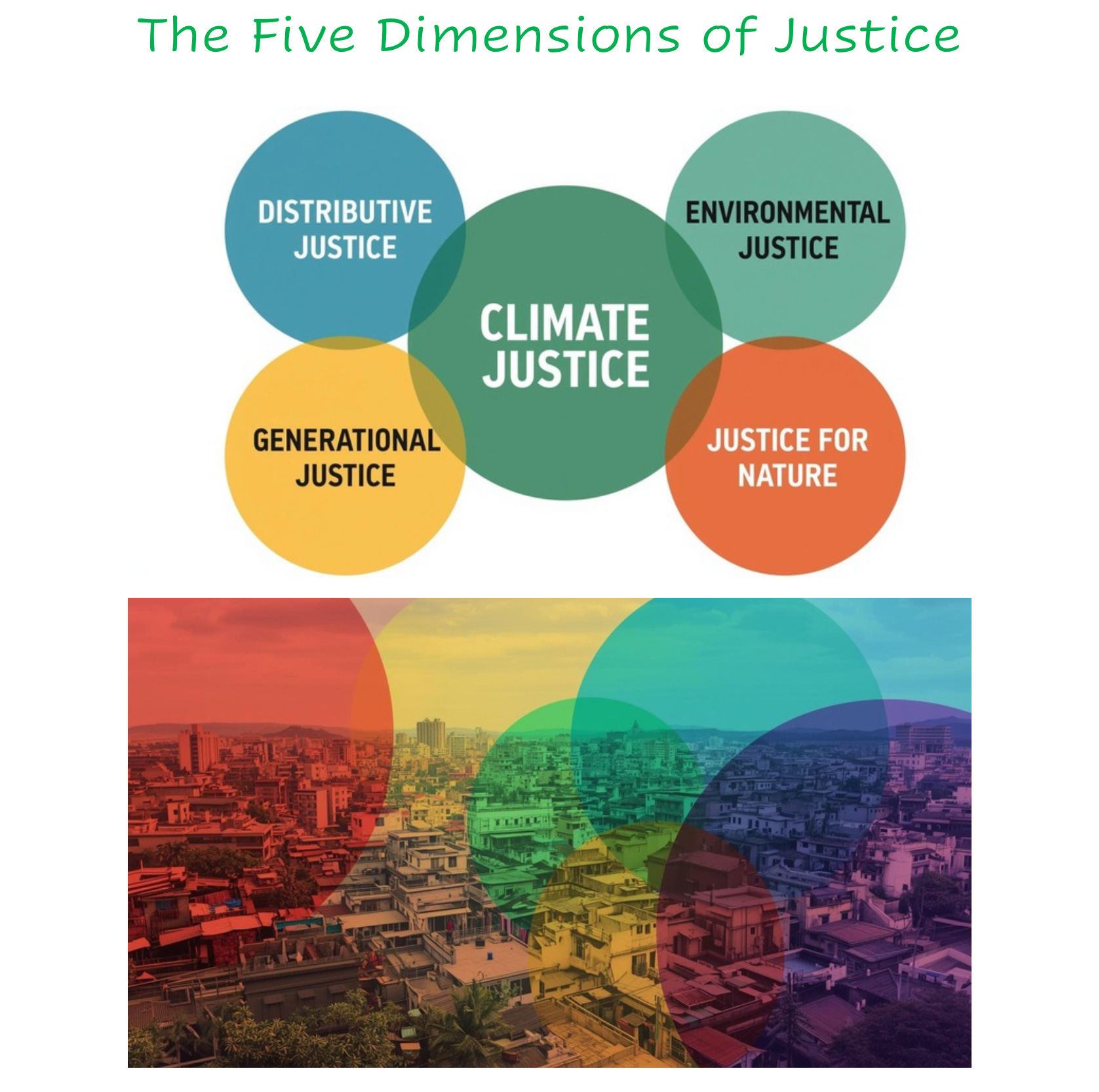
The Climate dimension of justice will be covered more fully in its own upcoming post. Here, as part of this Subseries on the distributive dimension, we are concerned with the climate-environment-distributive justice intersection.
Humanity has never faced a challenge to justice like climate change before. To sum up, it is:
generational, both in terms of its causes and consequences: “legacy emissions”; the erasure of margins of safety and tipping points; earlier generations benefitting from the causes while future generations suffer the consequences;
a systemic-aggregate problem, with the main culprits being the Big Producers of Polluting Products and not individuals;
highly unjust in terms of impacts, where the innocent, the powerless, and the vulnerable get hit the hardest while the primary polluting perpetrators get rich and even more resilient to any climate consequences they may experience.
Looking through a climate lens at the three components of distributive justice, climate impacts make each of them worse.
They make the distribution of resources and opportunities even more unequal.
They make who suffers the consequences even more unjust.
They will lead to solutions that will widen inequality and make a mockery of justice, with the rich and powerful reaping the rewards and benefits from what they have caused if the status-quo political-economic systems are allowed to do their thing.
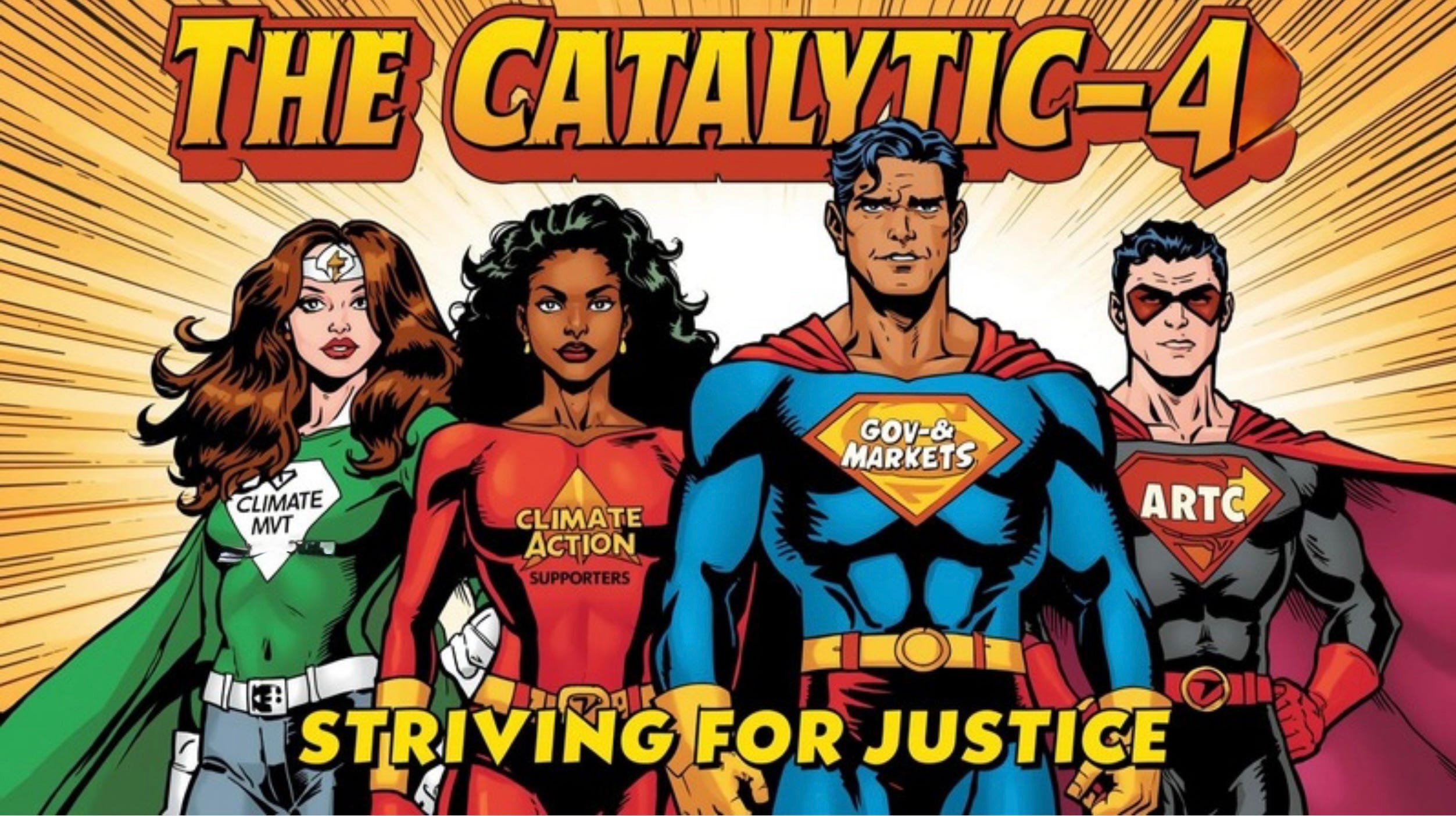
Only with strong intervention from the Climate Movement, Climate Action Supporters, and others of good will, tirelessly working to try to reverse these injustices, will a more just distribution happen of:
resources and opportunities;
adaptation to and resilience from impacts and compensation for loss and damage, and;
benefits from solutions.
The Catalytic-4 must work together for distributive justice.
The bottom line: if we don’t achieve distributive justice as fast as humanly possible we cannot achieve our vision, purpose, and Major Goal of overcoming climate change by creating a just and prosperous sustainability that enhances wellbeing for everyone and everything. For the Climate Movement, it undergirds what all of us are doing as Artist-Athletes on our Olympian Fields of Action.
Distributive Justice and Environmental Justice
Concerning the impacts from pollution and climate consequences, the Environmental Justice (EJ) movement lifts up the fact that it is fence-line and frontline communities that unjustly bear the brunt of both. Of course we are working to get rid of the causes, which will benefit everyone. But until then the consequences are unjustly distributed and we cannot let that stand. It is well past time for such injustices to end; justice for these communities cannot happen fast enough.
Frontline communities, who live in areas more in danger from climate impacts, precisely because they are poor, marginalized, vulnerable, with no power or much less power, have been at the forefront of our justice discussions.

But the EJ community reminds us that the Climate Movement and Climate Action Supporters cannot do what nearly everyone else has done: forget the fence-line communities, those closer to polluting industries and major transportation routes. These communities must not have to continue to shoulder a disproportionate burden from pollution. Climate policies and solutions — e.g. emissions trading — must not create air and water pollution hotspots, so-called “sacrifice zones,” thereby worsening the distribution of consequences.
If emissions trading or similar policies are implemented, they must be simultaneously complemented by policies to address other pollutants as well. No bait-and-switch, no check’s-in-the-mail promises of future environmental justice after trading schemes are set up. Simultaneously or no deal. That will begin to stop bad stuff.
But we must also set wrong right and make things better and a just future come faster for fence-line communities through compensation for past harm and a just distribution of the benefits, making sure that those wronged are at the front of the line. Throughout this struggle we must not lose sight of the fact that environmental racism has played and continues to play a major role in harming many of these communities.
The Climate Movement, inspired and guided by our Movement Values of love, justice, beauty, freedom, creativity, wisdom, pragmatism, non-violence, sustainability, and success, and working with the other members of The Catalytic-4, must reject and root out all forms of environmental racism and environmental injustice. This includes the unjust distribution of consequences onto frontline and fence-line communities, and the just distribution of benefits from solutions.
We want enhanced wellbeing for everyone, but those harmed will require more of our attention to ensure they are both restored and enhanced.
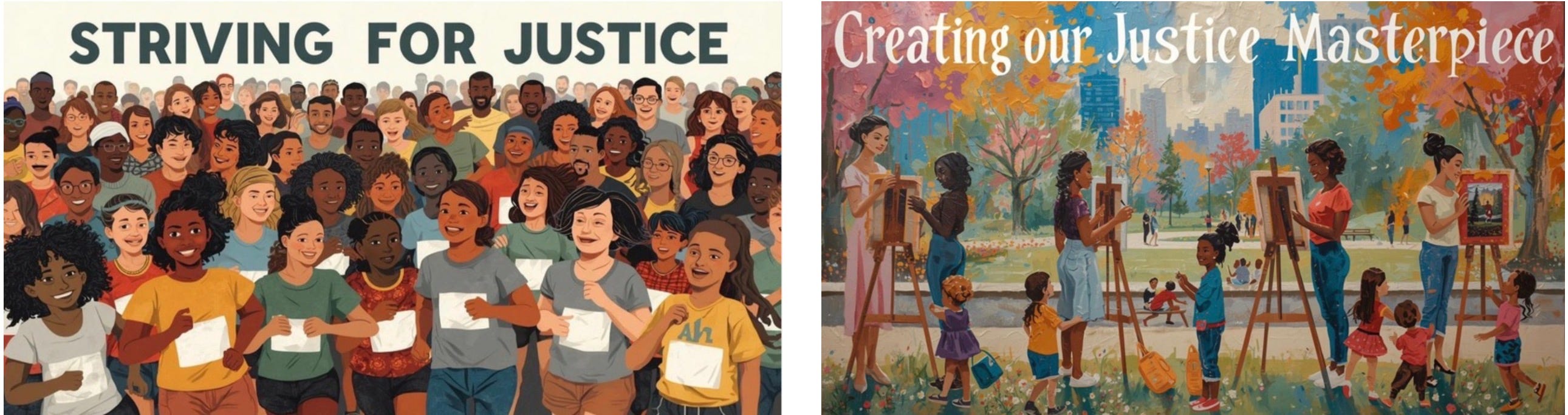
All people of good will want to live in a just world — it is what we hope for; as we see and understand what that means, as we strive to make justice come alive, we make hope happen and our just future come faster. As Climate Action Artist-Athletes, every stride forward in the race for justice is a victory of the human spirit, every brushstroke creating our justice masterpiece makes our world more beautiful.

If you are new here, check out our Intro Series, as well as other posts in our Hope & Justice Series. If you like this post, please “like,” comment, and share. And thanks for all you’re doing.