

Note from Jim: During this Holiday Season it is only fitting that we talk about the generational dimension of justice and the Better Future Covenant. Happy Holidays!

“I’m about to leave the world and leave it all behind me with all the mess, whereas young people grow up into it. That’s why they need every bit of help they can [get]. And if, you know, they succumb to the gloom and doom, which many have, then you lose hope. If you lose hope, that’s the end. Because if you don’t hope that there’s a way out, if you don’t hope that your actions can make a difference, then you sink into apathy and do nothing. So hope is absolutely crucial if we are to get through this.” — Jane Goodall, 2021
As I said in the introduction to this Hope & Justice Series, together they are a virtuous circle that fires our passion for action to make our future come faster and our world more beautiful.
As a moral movement, one destined to become the greatest and most long-lasting social change movement in the history of the world, we in the Climate Movement are striving to do the three desires, demands, and actions of justice on all of our Olympian Fields of Action:
stop bad stuff
set wrong right
make things better.

As Climate Action Artist-Athletes we help ensure that The Catalytic-4 works together for justice.
The Five Dimensions of Justice
Over the course of human history there have come to be various understandings of justice. As I said in part 3 of the Introduction to this Series, my sense is that there are at least five interrelated dimensions of justice that are at the heart of the Climate Movement and help fuel our passion for action:
generational
distributive
environmental
climate
justice for nature.
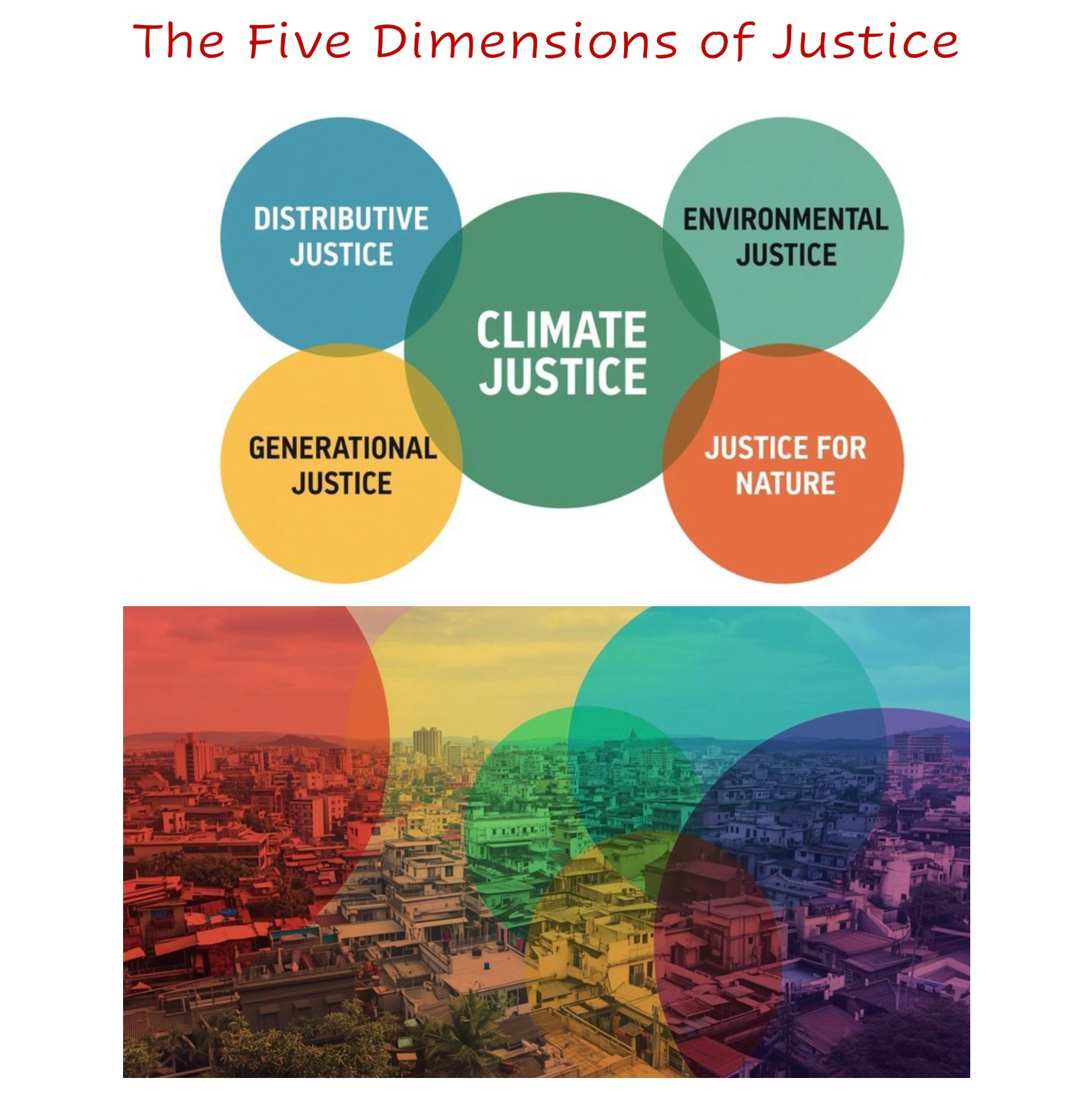
This post is about the first one, generational.
Justice for today’s children and their children and all subsequent generations is about giving them their due. This is the classic definition of justice going back to Plato — to give each their due.
And what is that for these generations? A better life, a better world. To make this better world we must also stop bad stuff and set wrong right. So to give them their due, we must do the three actions of justice.
The Better Future Covenant
Striving to hand on a better life, a better, more beautiful world, is the heart of the Better Future Covenant, which flows from a place deep in the soul of humanity, one given expression in the love of parents for children, in the stories about our forebearers, in our faith traditions, and for many, through who we strive to be as a citizen of our nation.
A covenant is where one party with power over the future of another makes a promise to ensure their future wellbeing. The Better Future Covenant is a promise by the older generation to make a better future for their children and subsequent generations. The latter have no political or economic power to make their future better; they must rely on today’s parents and adults to keep their promise.
A Generational Perspective
Families, tribes, communities, and all groups that share a common bond and purpose, have founders and those who have gone before who sacrificed or struggled to create a better future for their people, which is their legacy. When we look back and see what earlier generations did to create a better future it plants the seeds for looking forward. As our role models, we see their stories as helping create the future we live in in our current moment.
The human desire to leave a legacy, to be remembered as someone who made a positive contribution to the future, is deep in our hearts — maybe even in our DNA.
Most parents hope their children will be the literal embodiment of their legacy, as they pour love into them and strive to have their children become caring and productive members of their own families, and of society more broadly. A similar dynamic drives the work of teachers, coaches, and mentors of all kinds.
Besides legacies through relationships, one of the best examples of the desire for a legacy are revered prizes marking human accomplishment, such as the Nobel Prizes. As stipulated by Alfred Nobel himself, they are to be given to those who “have conferred the greatest benefit to humankind.” (Nobel established the prizes in his will after reading an erroneous obituary calling him a merchant of death and a war profiter. He wanted the prizes to be his legacy.)
For those of us who are adherents of faith traditions, we also know ourselves to be part of a generational chain of relationships stretching back to the founders. To them we were their future. This narrative of our faith community tells us we are part of something that came before us and will live on after us, and that we all have a part in paying it forward.
In the Bible God is described as having a profound concern for children and subsequent generations. God’s efforts at setting things right, at bringing about a better world for all generations runs right through the Bible, anchored in who God is. God tells us this with the giving of the Ten Commandments:
“I am the Lord your God, who brought you out of the land Egypt, out of the house of slavery” (Ex. 20:2, NRSV).
Who is the God of the Bible? A liberator, one concerned with the powerless and vulnerable. But not just of those in the present generation. God is the One who shows:
“steadfast love to the thousandth generation of those who love me and keep my commandments.” (20:6).
This God doesn’t want justice only for the present generation, but for all generations.
Because of God’s love for all generations, God’s people in the Bible have a generational perspective, stretching from the past into the future, from our forebears to all who come after us.
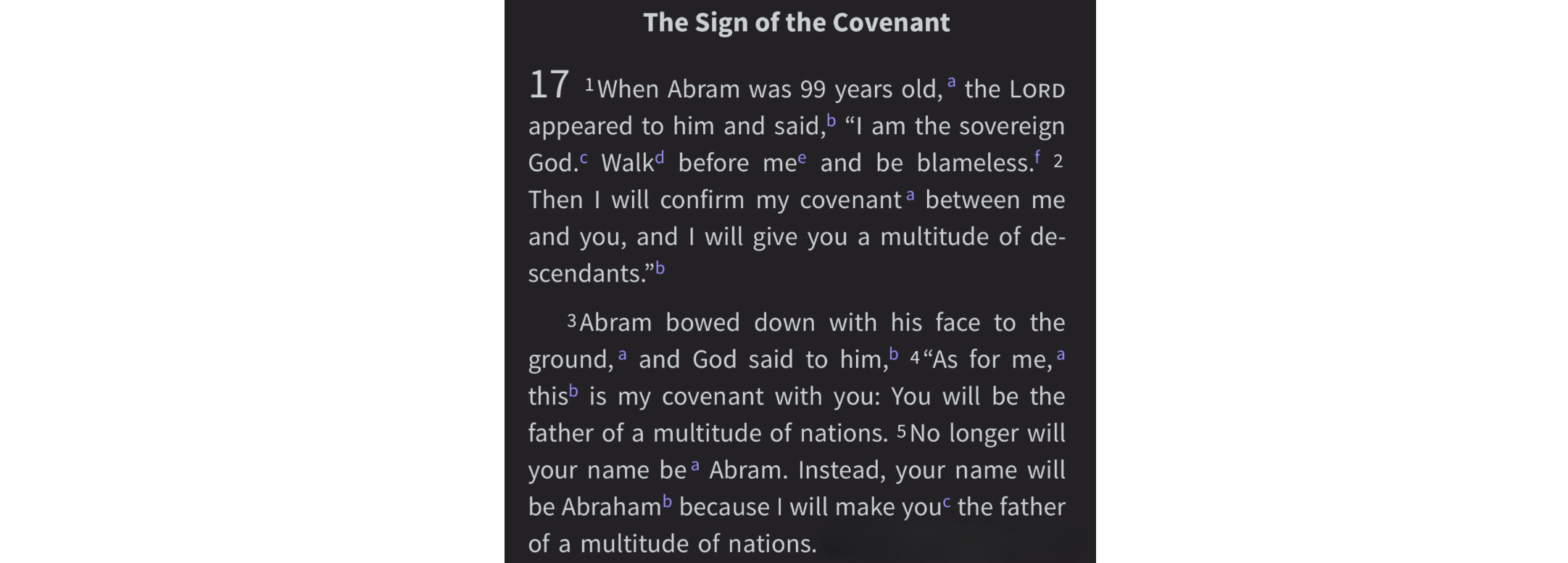
As a prominent example, God’s promise to Abram that he will be the forebearer of many nations in the future is so significant that it is recognized by the changing of his name from Abram to Abraham. Roughly 2,000 thousand years into the future the Apostle Paul will lift up this promise to Abraham in his letter to the Romans. And about 600 years after Paul the Koran will also lift up Abraham as an exemplar of the faith.
Today, Abraham is recognized as a central figure in the history of Judaism, Christianity, Islam, and Mormonism. But back when the Bible says God spoke to him all of this was in the future.
The Bible makes clear Abraham had some serious failings, which are not hidden or excused. The same is true for many major figures in the Bible. Yet despite their failures, we remember what they did to create a better future, our future. Their efforts inspire us and give us hope.
Citizens of the United States are also taught to see things through a generational perspective, as we learn about those who founded our country and the ideals upon which our nation rests. These ideals are what help give our citizenship, our lives together as Americans, purpose and meaning.
Like Abraham, the founding generation had many flaws, many moral failings as individuals that should not be hidden or excused. But as another Abraham put it, together we continue to strive for a more perfect union.
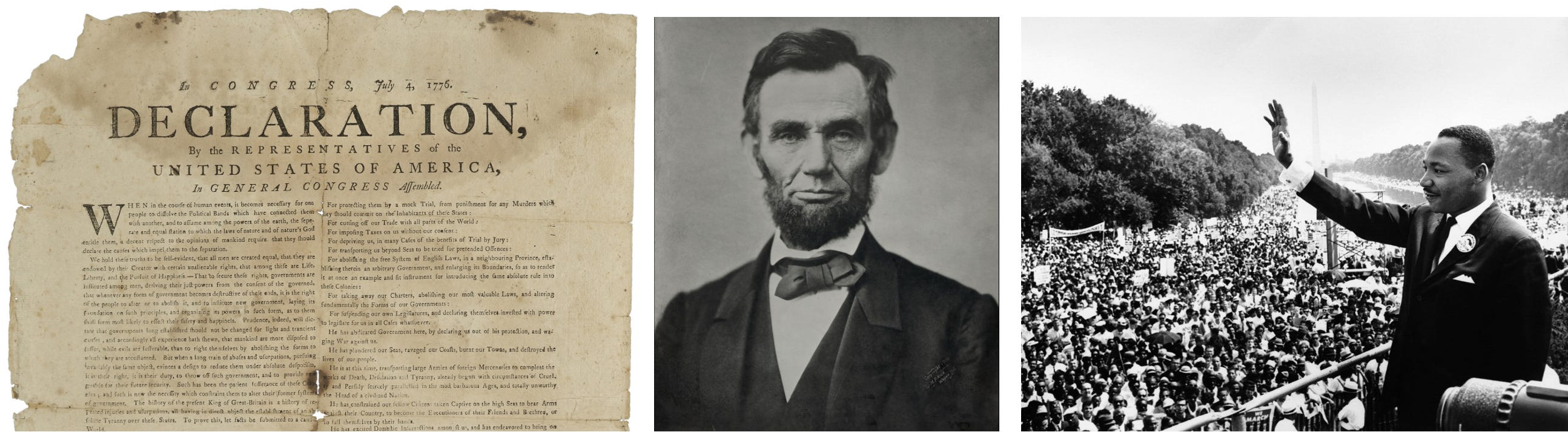
In the United States we affirm what our founding document, the Declaration of Independence, proclaims, that all have unalienable rights because all are created equal. No passage of time can abrogate such rights. We are to pass on to our children and subsequent generations what we received, even as we strive to make them true for everyone — the opportunities for life, liberty, and the pursuit of happiness. We still have a long way to go to fully live up to these ideals, and doing so is part of our Better Future Covenant.
In all of this we are being called, in our time, in medias res, in kairos-climate-time, in now-time where all action must take place, to be faithful to those who have come before us and those who will come after us. It is only fair for us to do our share.
The Better Future Covenant is based upon this connection of past, present and subsequent generations.
But however much we should remember our forebearers, we cannot be past-dwellers. Freedom to act exists only in the present. In our now-time we must be future-makers as we fulfill the Better Future Covenant for today’s children and their children.
Our motivation and commitment are not derived solely from the other four dimensions of justice, but also on making the future better and more beautiful. In other words, even if there were to be a time where things are good and the other four dimensions or areas of justice are fulfilled, we would still strive to make things better for those who come after us.
Justice enters in through our basic sense of fairness, of us doing our fair share, and our recognition that a better life is their due. Many of those who came before us did their part. Now it’s up to us to do ours for the sake of those who come after us.
To leave our children and subsequent generations a world ravaged by climate change isn’t justice — no matter how much gold, how much economic capital, narrowly conceived, we also bequeath to them, no matter even how much their future might be advanced technologically from today.
We will never, ever trade justice for beneficial ARTC products. Rather, we will make them work for us to create justice. As Climate Action Artist-Athletes and Climate Action Supporters we work to ensure that The Catalytic-4 works together for a just and prosperous sustainability that enhances wellbeing for everyone and everything.
In our gut we know this simple truth: we are to pass on to our children and their children a better, more beautiful world; it is their due — and our legacy. This is the heart of the Better Future Covenant. It is only fair for us to play our part, instead of selfishly saying “We got ours; let the future take care of itself.” That, in a nutshell, is the view of those who deny the Better Future Covenant, thereby taking from children and subsequent generations what is their due, a better life and a more beautiful world.
If you affirm generational justice then join us as we pull our destiny into the present and make the impossible possible and the possible actual and the actual beautiful and our future come faster for the sake of today’s children and all subsequent generations.
If you are new here, check out our Intro Series, as well as other posts in this Hope & Justice Series. If you like this post, please “like,” comment, and share. And thanks for all you’re doing.