

Introduction
In this Hope & Justice Series we have recognized several things.
First, hope and justice, create a virtuous circle where our hope for justice creates justice, which creates more hope, which creates more justice. Our passion and desire for justice pushes us to demand justice now, that our just future come faster.
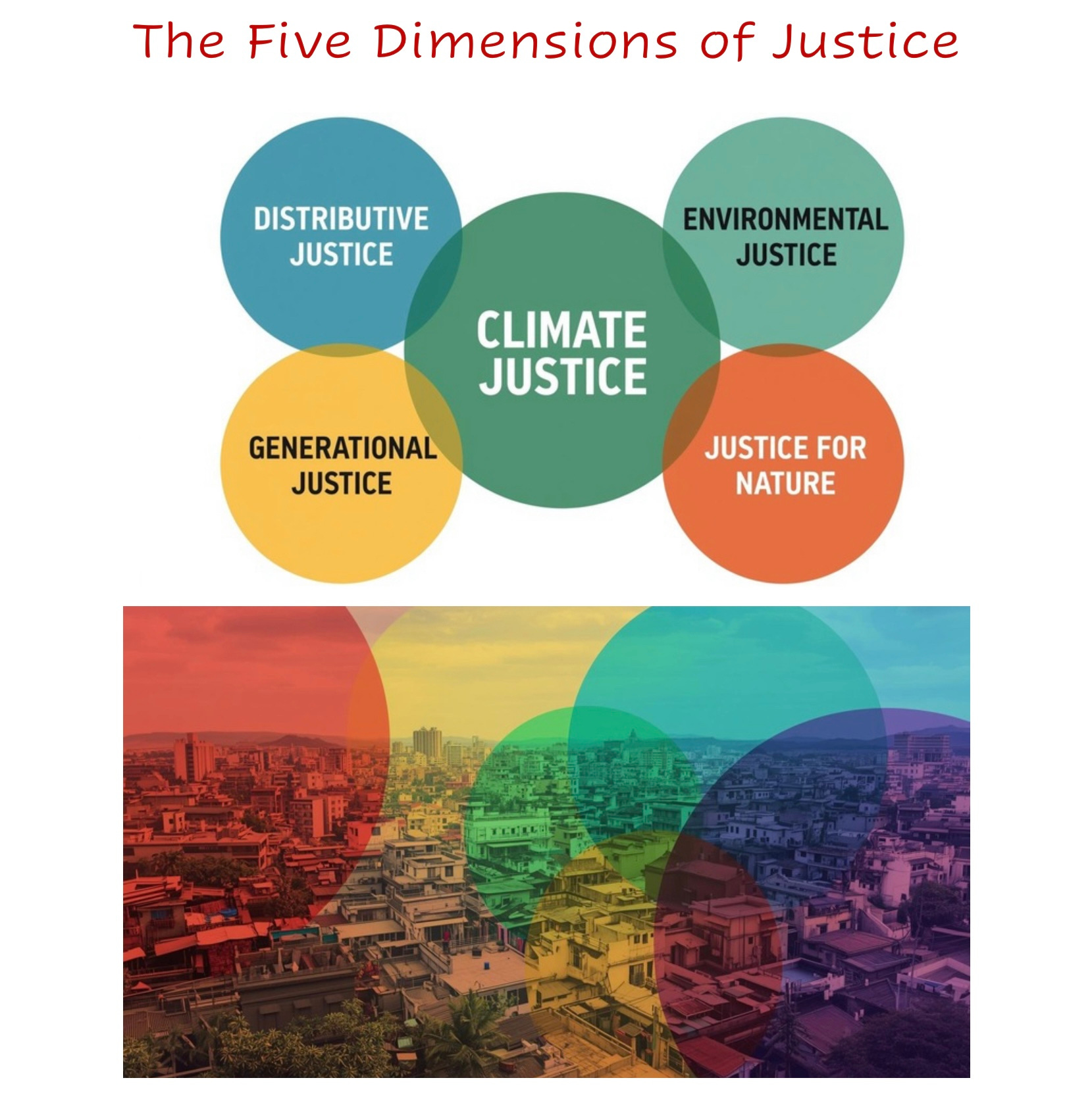
Second, there are at least five interrelated dimensions where the three actions of justice — stopping bad stuff, setting wrong right, making things better — are needed. They are at the heart of the Climate Movement and help fuel our passion for action:
distributive
environmental
climate
justice for nature.
Our last Hope & Justice post was on the generational dimension of justice.
Distributive Justice: Three Components
Our focus in this Sub-series is on distributive justice, and its relation to the other four dimensions. For social justice advocates, distributive justice is the very heart of what we are striving to achieve.
Anyone who has tried to divide cake or treats or something valuable among siblings or children knows that if you’re not careful, a child will protest: “But she got more than me!” It’s impossible to know whether this concern for achieving perceived fairness has been with us since we began to walk upright. But it sure seems like it has been baked into our DNA, perhaps connected to our fight to survive.
For many who fight for social justice, we are not talking about such trivial things as cake or treats, however revealing this homey example might be. We understand justice to be a just distribution of resources and opportunities.
It is the competitive side of human nature that can lead to unfair distribution, while the cooperative side can help to rebalance the scales.
Pollution, environmental degradation, and climate change present us with two additional aspects or components of distributive justice — related to consequences and solutions.
For climate action proponents, then, distributive justice has three interrelated aspects or components:
(1) resources and opportunities;
(2) consequences, and;
(3) solutions —both paying for and benefitting from.
When discussing the latter, we need to make comparisons between:
§ rich and poor, and
§ today’s adults, our children, and subsequent generations.
These are not mutually exclusive categories; indeed, it is vital that we combine them, so that we look at solutions as they impact rich and poor both now and in the future. (For who are meant by “the poor”, see the Who’s The Who of Justice Sub-series.)
Distributive Justice Sub-series in Six Parts
To explore all of this, this Distributive Justice Subseries will proceed as follows:
Post #6.0 — Introduction (this post)
Post #6.1 — Resources and Opportunities
Post #6.2 — Consequences; Solutions
Post #6.3 — Between Generations
Post #6.4 — Climate Justice; Environmental Justice
Post #6.5 — Nature
Post #6.6 — Conclusion to Subseries
For many social change types, when they use the word justice they mean distributive justice. Its importance cannot be overstated.
Distributive justice can be the most uncomfortable of all the dimensions of justice precisely because of its power to evoke strong emotions and reactions, precisely because it calls out the powerful who have too much and recognizes this as unjust, a moral failing, a wrong to be made right.
No one likes to be called out, whether because of feeling guilt or because they recognize the power inherent in this value to make a change they don’t want, or both.
However uncomfortable it can be, without distributive justice there is no justice.
The Climate Movement is about overcoming climate change by creating a just and prosperous sustainability that enhances wellbeing for everyone and everything. Achieving distributive justice helps make this our reality. Join us!

If you are new here, check out our Intro Series, as well as other posts in this Hope & Justice Series. If you like this post, please “like,” comment, and share. And thanks for all you’re doing.