

In my introductory post for this Climate Justice subseries I briefly introduced five distinctive aspects of the problem that are connected with climate justice:
1) so-called legacy emissions that become legacy pollution;
2) the systemic aggregate nature of the problem;
3) the simultaneous erasure of margins of climate safety, such as the destructive momentum built up in the oceans;
4) tipping points;
5) the unjust distribution of consequences.
This post covers the fifth and final distinctive aspect.

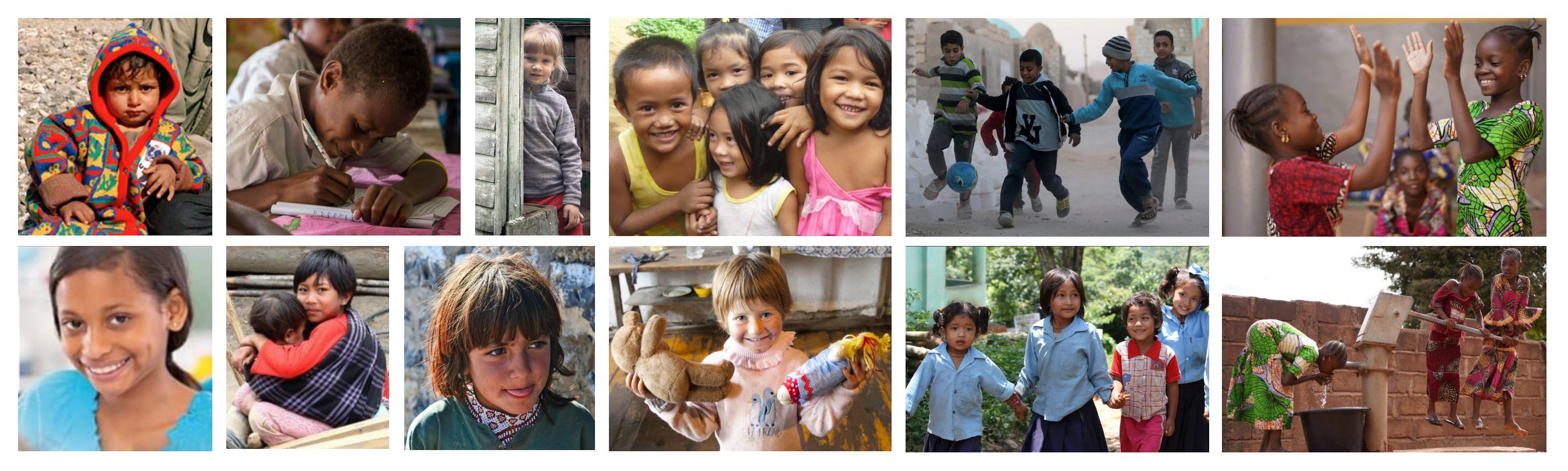
Discussions of climate justice must keep a strong focus on the unjust distribution of consequences due to the fact that Big Producers of Polluting Products have caused the problem, but the poor, the powerless and less powerful, the vulnerable, the marginalized, and children and subsequent generations, will bear the brunt of the impacts — even though they have done nothing or next to nothing to cause the problem.
The powerful creating conditions where they benefit while the less powerful suffer has been with humanity since our beginnings.
But the scale, longevity, inescapability, and the impersonal nature of this unjust dynamic, all of this synergistically combined, is something new.
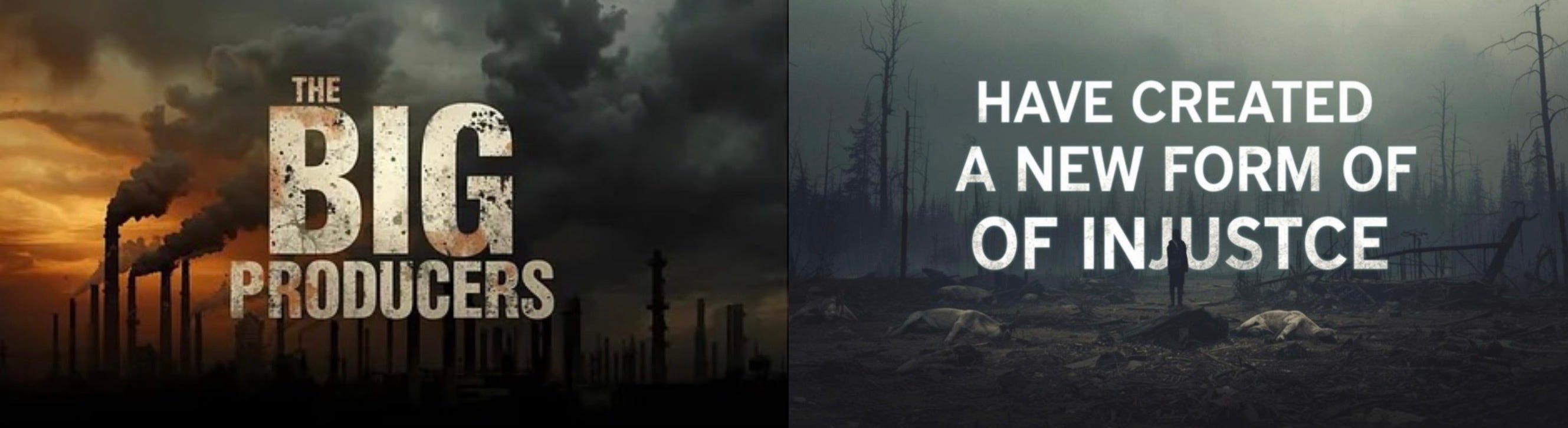
The powerful and Big Producers of Polluting Products are literally making the climate around the world unjust — the climate. Injustice is literally baked into our everyday lives. Making the climate where each of us lives unjust has also never happened in human history.
And because their gains from doing this will help shield them from the consequences they have created through the adaptation and resilience they can afford to make, the powerful and Big Producers can get away almost scot-free from climate impacts — at least for a time.
As for the impersonal nature, if, say, poor villagers in a poor country were to wonder who did this to them — who caused the weather to become more extreme, more floods and droughts and heat, more crop failures and devastation of livelihoods, more hunger and starvation, more disease, more stunting of their children that will last their lifetimes, with many of these impacts and more happening synergistically — who could they point to? Who can be hauled into court and held accountable.
Of course, court cases are starting to be filed. To no one’s surprise, the powerful and guilty are pushing their political flacks to issue them a get out of jail free card. Just another Epstein-like and Trump-like effort from “conservatives” & the fossils to escape responsibility and undermine the rule of law through politics. We must not let them.
What about holding them accountable in the court of public opinion? It has been pointing fingers at various actors. But the systemic aggregate nature of the problem makes this a much more complicated determination, than, say, a local industry that was polluting a river.
Finally, the unjust distribution of climate consequences includes the rest of nature, which is utterly powerless to do anything about what we, the human race, are doing to them through the synergistic impact of climate + environmental degradation and species extinction.1
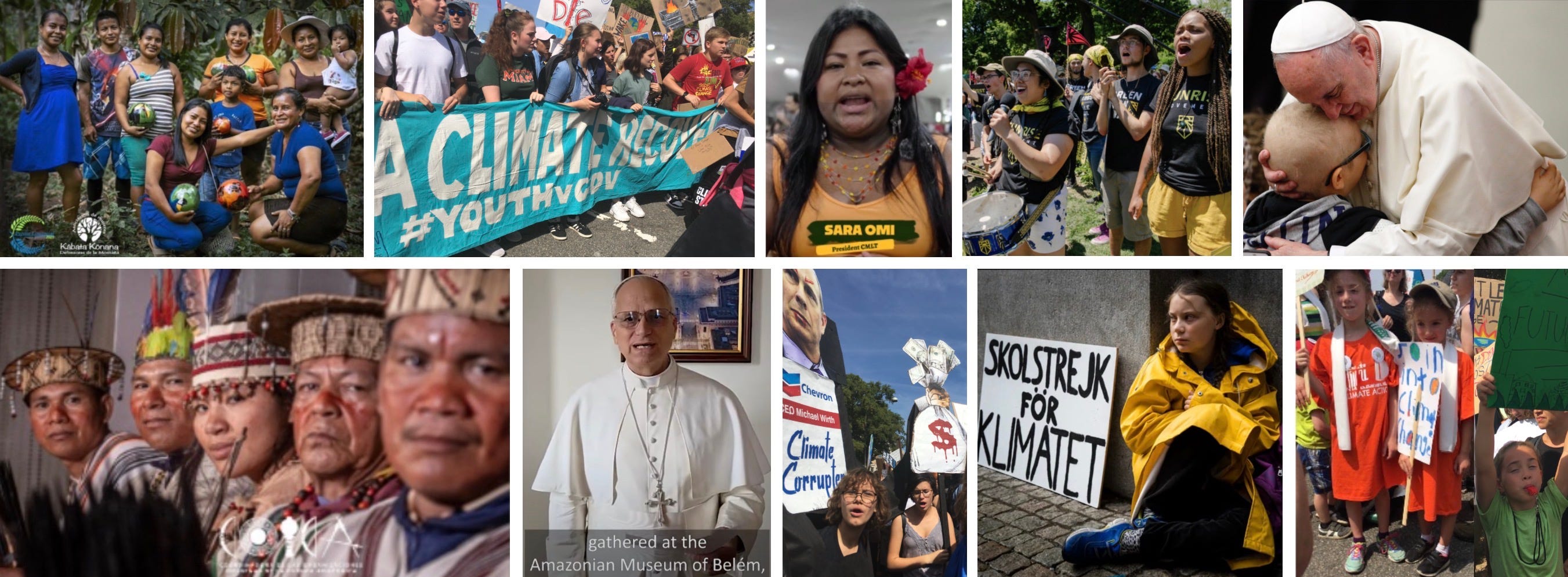
This unjust distribution of consequences may turn out to be the most terrible in human history, which is why our cause is one of the greatest causes for justice ever, and why we must become the greatest and most long-lasting social change movement in the history of the world on all of our Olympian Fields of Action.
Where’s the hope? We are the hope! Join us!
If you are new here, check out our Intro Series, and other posts in our Hope & Justice Series. If you like this post, please “like,” comment, and share. And thanks for all you’re doing.
Justice for nature is the fifth and final dimension of justice related to climate change that will be discussed soon in my coverage of these five dimensions.