

In my last post in this Climate Justice Subseries I covered the first two distinctive aspects that climate justice must take into account: (1) legacy emissions and legacy pollution, and (2) the systemic aggregate nature of the problem.
This post is about the third distinctive aspect: the simultaneous erasure of margins of climate safety, such as the destructive momentum built up in the oceans.
The world is not doing well when it comes to overcoming climate change. Climate pollution continues to rise, and a just published study in one of the most respected journals suggests a significant temperature increase since 2015 — the year the international climate talks that took place in Paris affirmed the 1.5C target. At the present rate we will exceed 1.5 by 2030.1
Sobering.
Even more sobering is the fact that right now things would be much worse if we didn’t have margins of safety built into many natural systems. Whenever we increase risk, such as the increasing risk of extreme weather events, as we do with legacy emissions combined with current climate pollution, we erase natural margins of safety.
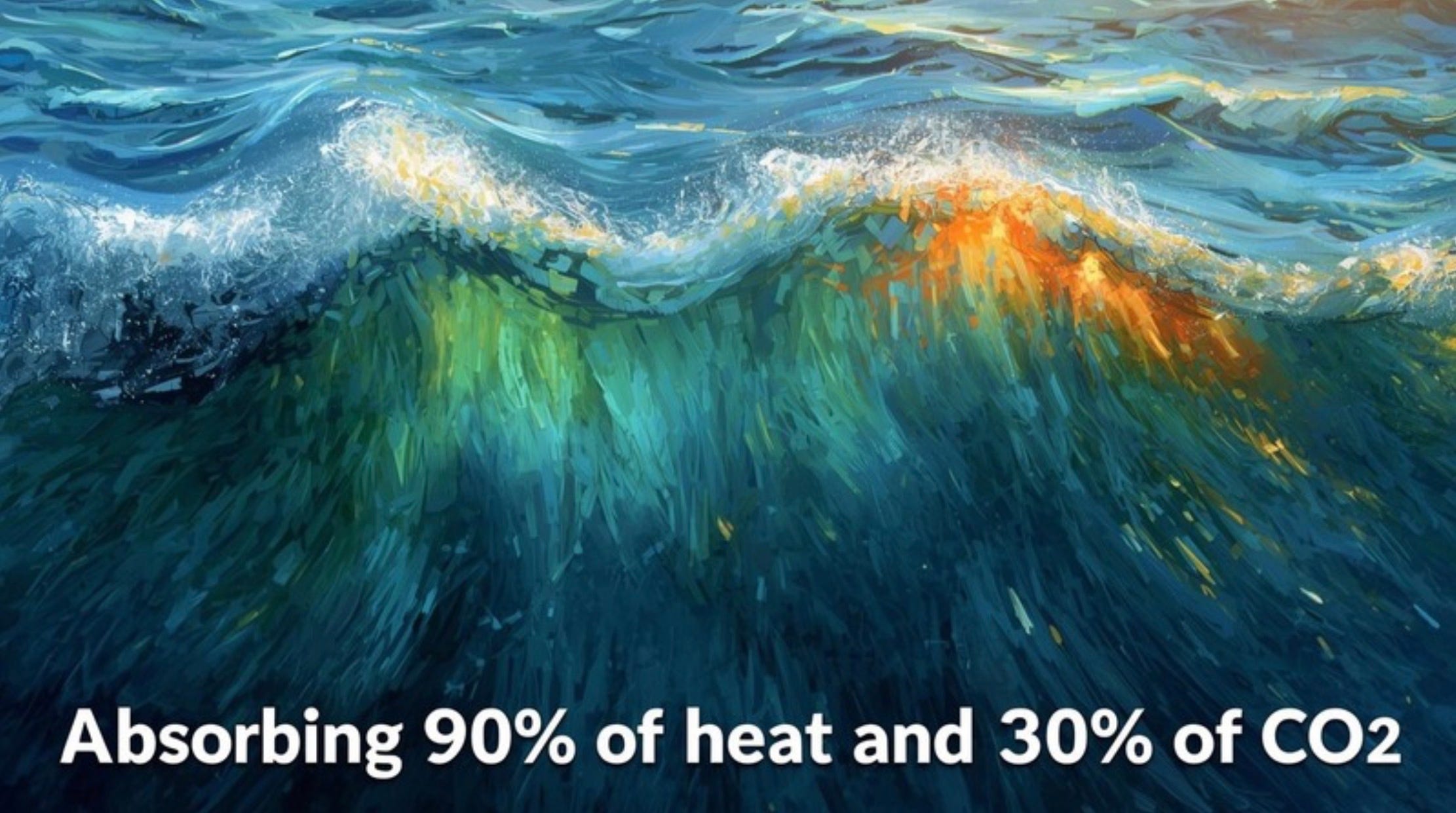
The erasure of margins of safety is especially true of the oceans, which have actually been keeping more dangerous and destructive terrestrial or land-based climate impacts at bay. They have been absorbing 90% of the heat from global warming, keeping the land much cooler than it would be, and are currently absorbing 30% of our CO2 emissions. Sadly, both are not without cost, and both have limits.
The oceans have been absorbing blows, protecting us from climate consequences, which has allowed many of us to be blithely unaware, shielding us from facing what we have wrought.
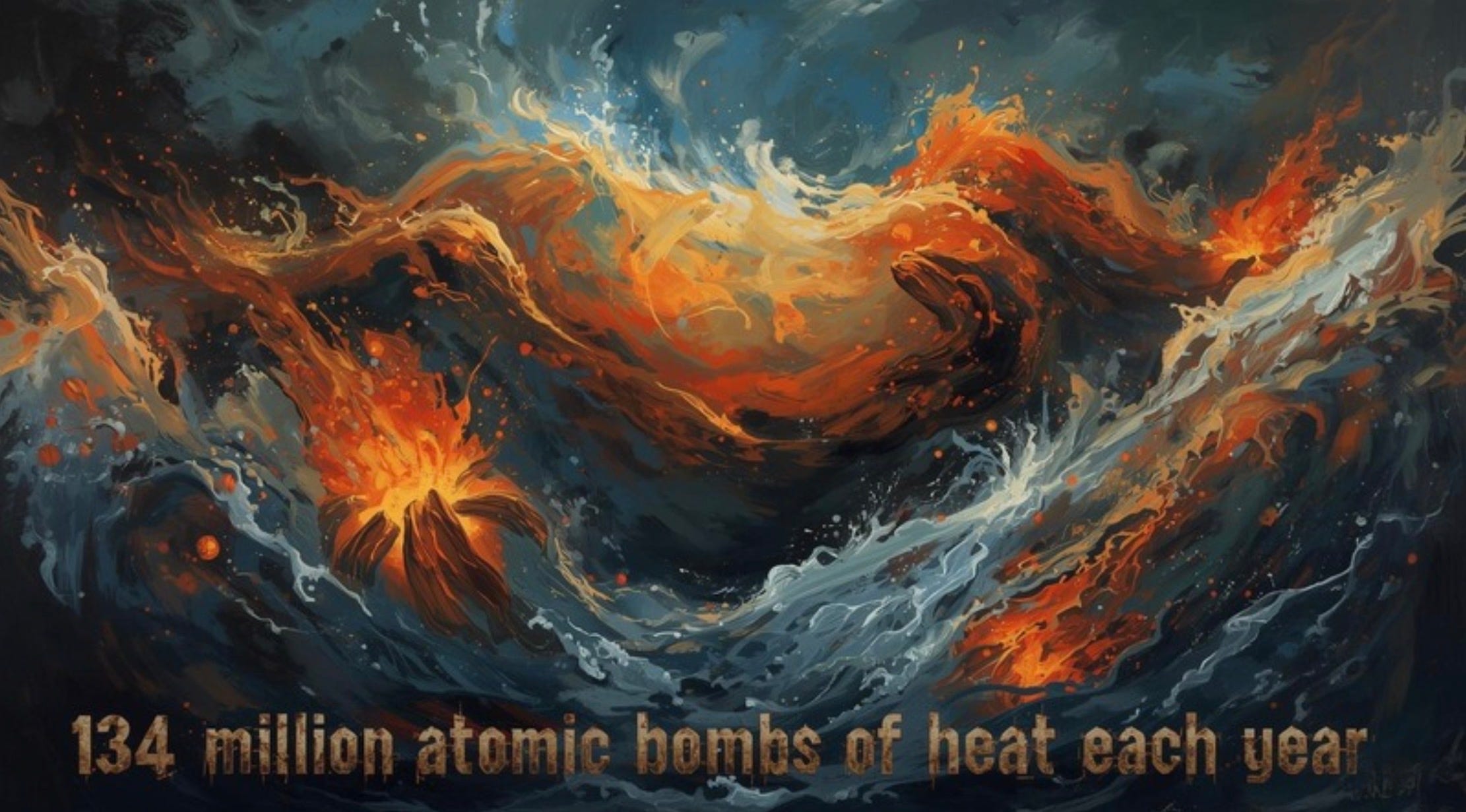
Concerning heat, as one scientist put it, “Every year about 134 million atomic bombs of heat is being trapped by the ocean. It has kept global temperatures down and kept the land livable but we have to realise that energy hasn’t gone.”
This warming is in the oceans themselves, which could have a dramatic impact on their webs of life, making survival for species at the top of the food chain much harder. Hot waters are killing plants and choral reefs where many species live. Lots of them are leaving the heated up waters of the tropics and heading towards the poles, while also trying to live further down where it is cooler, but also where there is less oxygen. In landlocked bodies of water like the Mediterranean the latter is the only option.
These heated up waters are already starting to have consequences for humanity: sea level rise due to thermal expansion; coastal inundation; intensified hurricanes; more extreme weather on land in the form of floods and droughts, and; bleached corals. All of this will lead to forced migration, food insecurity, and political and social instability, which will fall most heavily on the innocent and powerless.
Prof. Matthew England sums it up: “By absorbing all this heat, the ocean lulls people into a false sense of security that climate change is progressing slowly. … The oceans have stored the problem. But it’s coming back to bite us.”
There are also huge long-term consequences. We have already stored so much heat in the oceans that it will take hundreds of years to bring it back down. So even as our children and subsequent generations do their best to stop and even reverse global warming, it will take generations before this excess ocean heat is dealt with and planetary warming is brought back to where it should be.
And so not only are we bequeathing legacy emissions and legacy pollution, we are also bequeathing legacy ocean warming. But unlike the former, where natural climate solutions and direct air capture can suck up some of the legacy emissions, there is no known natural or technological solution for all of this ocean heat — at least none that I am aware of.
As for the cost of CO2 absorption, the creatures of the oceans are already paying the price due to the oceans becoming more acidic. The minerals used by some sea creatures to build their shells and skeletal structures — oysters, lobsters, clams, coral reefs — are being dissolved.
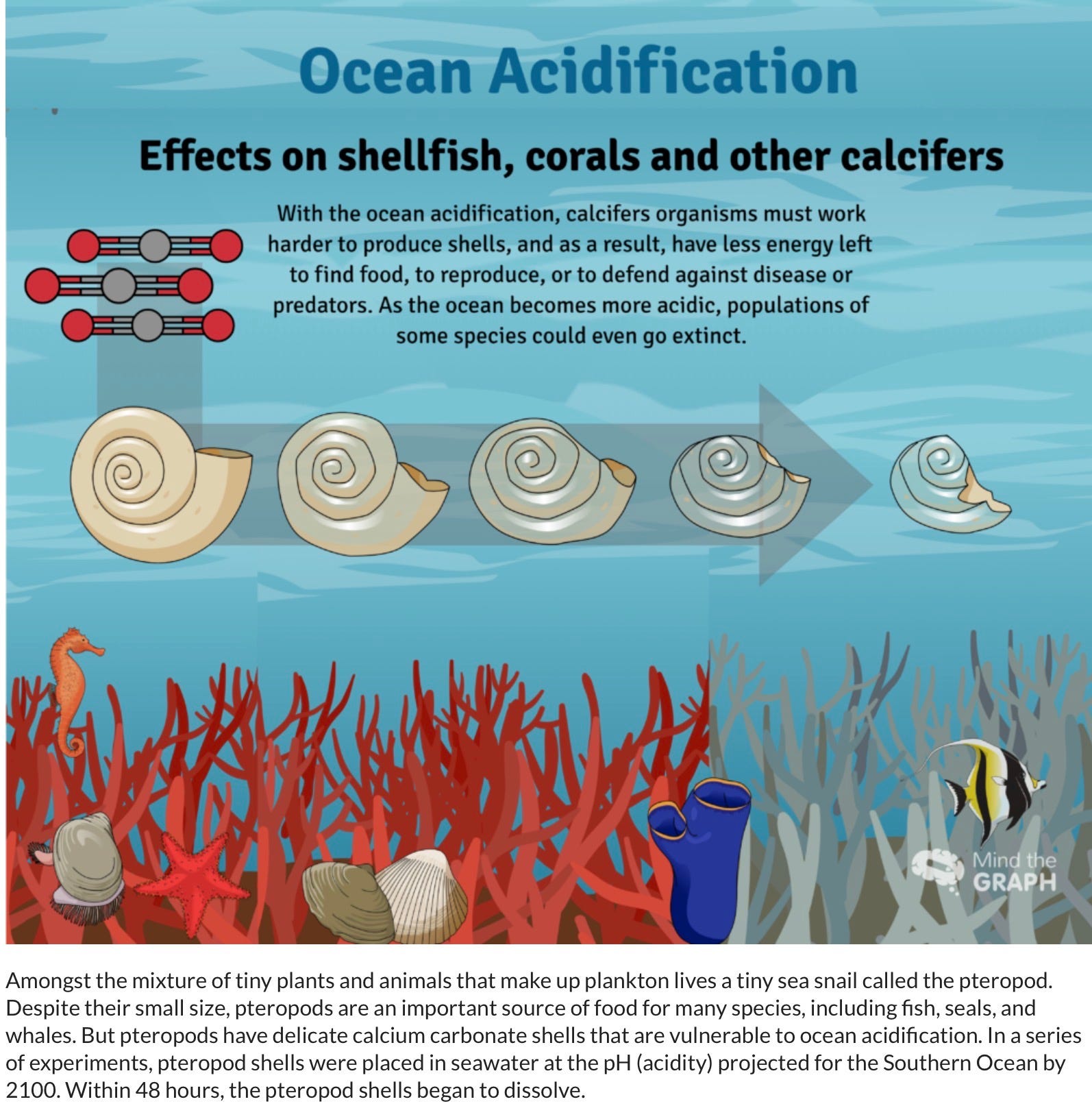
Without this 30% CO2 absorption buffer provided by the oceans we would have already crossed various tipping points by now. At some point, however, this margin of safety will be spent and the oceans will begin to lose their ability to absorb CO2, leading to greater warming. A recent study suggests this will happen around the turn of the century — one more thing we are taking from our children and their children.
It goes without saying that these things we are doing to the oceans are a profound violation of the Better Future Covenant and all of our Movement Values. They are another reason why we must become the greatest and most long-lasting social change movement in history, making the impossible possible and the possible actual and the actual beautiful as we make our future come faster. This will all happen through The Catalytic-4 working together.
All of us in the Climate Movement are about stopping the bad stuff that is erasing these natural margins of climate safety.
But to set wrong right and make things better, well some of us must help the rest of us discover what we must do. It could just be that this is your Olympian Field of Action!
Where’s the hope? We’re the hope! Join us!

If you are new here, check out our Intro Series, as well as other posts in our Hope & Justice Series. If you like this post, please “like,” comment, and share. And thanks for all you’re doing.
Foster, G., & Rahmstorf, S. (2026). “Global Warming Has Accelerated Significantly.” Geophysical Research Letters, 53.
“The erasure of margins of safety is especially true of the oceans, which have actually been keeping more dangerous and destructive terrestrial or land-based climate impacts at bay. They have been absorbing 90% of the heat from global warming, keeping the land much cooler than it would be, and are currently absorbing 30% of our CO2 emissions. Sadly, both are not without cost, and both have limits.
“The oceans have been absorbing blows, protecting us from climate consequences, which has allowed many of us to be blithely unaware, shielding us from facing what we have wrought.
“Concerning heat, as one scientist put it, “Every year about 134 million atomic bombs of heat is being trapped by the ocean. It has kept global temperatures down and kept the land livable but we have to realise that energy hasn’t gone.””