

[Please note: First published on 1/24/26 at 8am. Revised at 11:45am.]
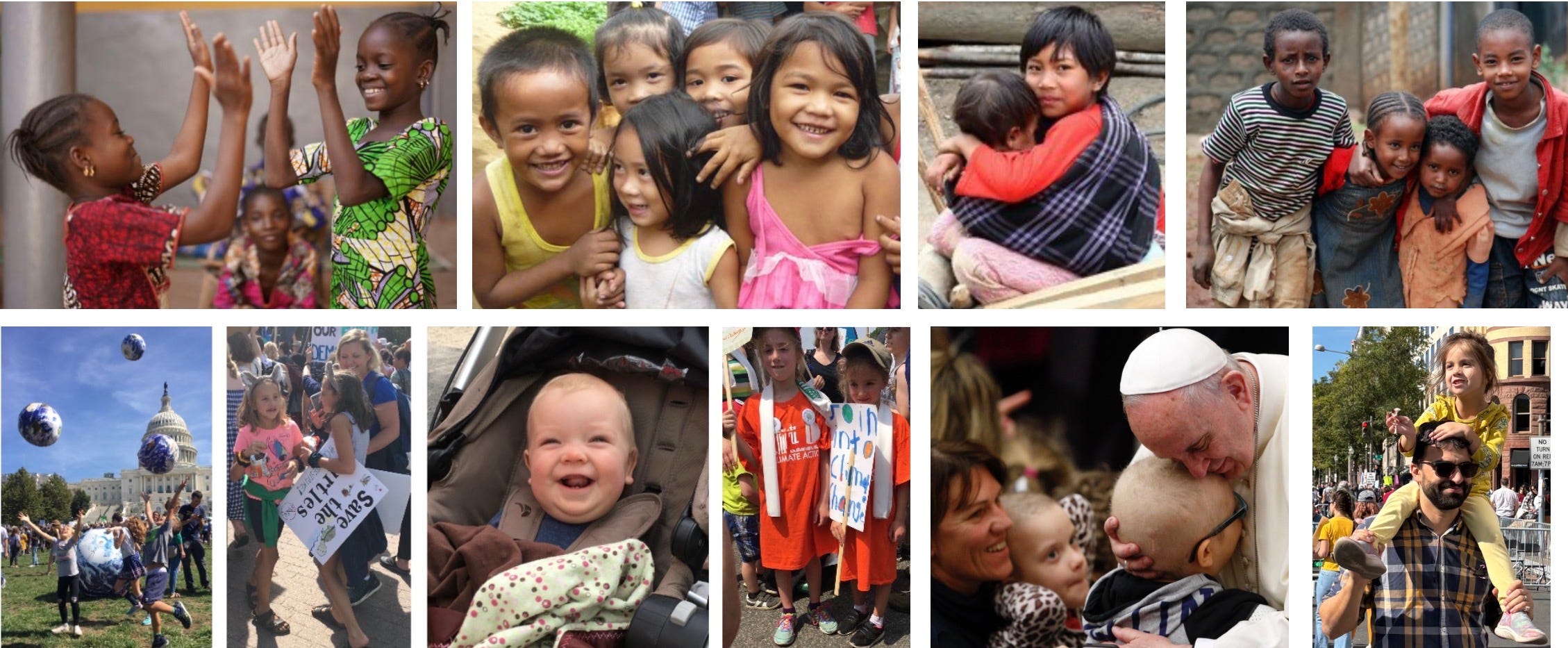
I have already discussed justice between generations, the first dimension of justice, which is called for by our Better Future Covenant. Instead of leaving them a less-bad world, or a just-as-good-as world, we want to leave today’s children and subsequent generations a better world. Indeed, as the ones in the present with power over their future, we have made a moral commitment, a Covenant, to do so, which means that within the intergenerational web in which we exist we do our fair share and give today’s children and subsequent generations what they are due, a better life, a better world.

But far from leaving them a better world, pollution, environmental degradation, species extinction, and climate change are unjust and deadly burdens we are bequeathing to our children and subsequent generations.
Remember, distributive justice involves not just resources (financial and otherwise), not just opportunities, but consequences and solutions as well.
As such, justice between generations calls us to do the three actions of justice: stop bad stuff, set wrong right, and make things better.
In contrast, some argue and assume that since future generations will be financially richer, those of us in the present, who are not as “rich,” must not be required to make ourselves poorer by paying for solutions to the mess we’ve made. So, they’ve narrowed the distributive justice focus down to the fairness of the distribution of financial wealth.
Instead of looking at the full distributive justice picture of (1) resources and opportunities, (2) consequences, and (3) solutions, for discounting advocates it’s all about the Benjamins, it’s all about the money.
Thus, for these folks this justifies applying a discount rate to the future — a hope-stealing procedure that is near universally applied by governments and researchers when determining how much we should spend in the present on the future — including climate action. Many discounting advocates argue that doing so is the moral thing to do, based on a stance described as “intertemporal inequality aversion” (ugh).
This can be more aptly described as the More-Bars-of-Gold-for-the-Wealthy-Few-on-a-Wrecked-Planet future.

For those of us in the Climate Movement who have affirmed the Better Future Covenant, discounting advocates have things completely backwards.
In striving to achieve distributive justice between generations as we overcome climate change by creating a just and prosperous sustainability that enhances wellbeing for everyone and everything, we must make sure that discounting advocates and others aren’t putting a thumb on the scale of justice against today’s children and subsequent generations. We cannot let the conversation be narrowed down to just money.
So what does the full understanding of distributive justice between generations mean in the climate context when combined with the Better Future Covenant?
Overcoming climate change must make today’s children and subsequent generations better off or richer in wellbeing and opportunities. This must be achieved by being inspired and guided by our other Movement Values: love, beauty, freedom, creativity, wisdom, pragmatism, non-violence, sustainability, and success.
When we do combine the full understanding of distributive justice with our other Movement Values we see that to be richer in wellbeing does not necessarily mean having more stuff. It certainly doesn’t mean a discounting scenario that ignores the distribution of consequences and solutions where some in the future have more cash on a planet wrecked by climate change, choked with pollution, and diminished by the loss of countless species because today’s generation left the mess for the future to clean up. Nor does it mean having more oil or coal or natural gas.
When resources are combined with opportunities, when consequences and solutions are included, distributive justice for both present and future generations means everyone having a sustainable and comfortable material wellbeing and the clean energy that helps make that possible, the time to enjoy the good things in life, as well as a lifetime of health and education, both of which are part of the foundation for a life filled with love, beauty, freedom, and creativity where we have balance and harmony with ourselves and the rest of the natural world.
Just a dream? It’s our vision, the one we are striving towards together as we make our future come faster. This is what it means to have enhanced wellbeing for everyone — both those present and those in the future — as called for in our vision, purpose, and Major Goal.
In doing so we must be ever mindful that the consequences of pollution, environmental degradation, and climate impacts have been and will be an unjust burden for subsequent generations.
But not just them. Today and tomorrow and into the future, the poor, the marginalized, the powerless and less powerful, and the vulnerable will be hit harder by climate consequences and environmental degradation. Thus, they must be at the front of the line until there is a just distribution of resources, opportunities, solutions, and benefits from overcoming climate change. Only then can we say that we have enhanced well-being for everyone in a just way.
As we have seen over the last few decades of ever widening economic inequality, a just distribution of resources, opportunities, consequences, solutions, and wellbeing isn’t a passive byproduct of today’s societies. The opposite has been the case.
Thus, achieving a distributive justice between generations, and justice in the future for the poor and less powerful, won’t just happen. We’ve got to make it happen. That’s why we must and will become the greatest and most long-lasting social change movement in the history of the world. Together we are making the impossible possible and the possible actual and the actual beautiful and our just future come faster.
We are justice-seekers, hope-makers, and beauty-creators. Join us!

If you are new here, check out our Intro Series, as well as other posts in our Hope & Justice Series. If you like this post, please “like,” comment, and share. And thanks for all you’re doing.