

In our previous post in this Subseries on distributive justice we discussed resources and opportunities, a concern that has been with us throughout human history.
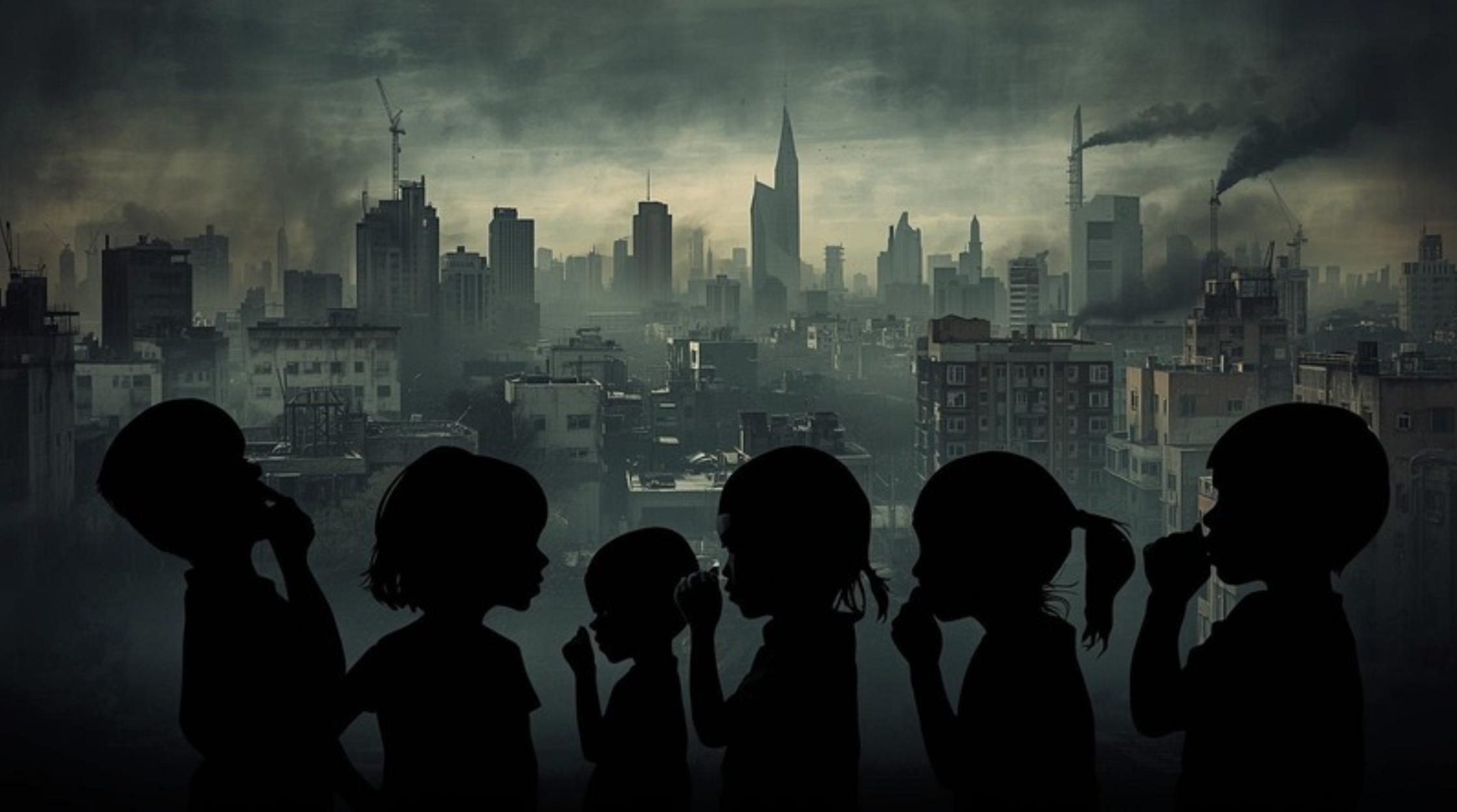
In our time pollution has created another aspect of distributive justice: the unfair distribution of both consequences and solutions.
To change this situation we must do the three actions of justice: stop bad stuff, set wrong right, and make things better.
Unjust Distribution of Consequences
The unjust distribution of consequences from fossil pollution include climate impacts as well as health and economic impacts from air pollution, water pollution, and toxic chemicals.
To set wrong right we must remove these burdens from those who have done nothing or next to nothing to create them. For the rest of us, we must share these burdens while they are being eliminated so that no one is unfairly weighted down with a load they cannot carry. Those most accountable, the Big Producers of Polluting Products, must help set wrong right by funding the just distribution and elimination of these burdens. They won’t do this on their own. The Climate Movement must push governments for this.
It was the fact that the poor, the vulnerable, the powerless would suffer the most from climate consequences, even though they were the least responsible for creating them, that was the driving force over 30 years ago in me devoting my adult life to overcoming climate change.
What was true then is still true today. This helps fuel my moral passion and keeps me in the fight — as I’m sure is the case with many of you.
I also came to understand how unfair the consequences of air and water and toxic pollution have been. We all deal with pollution, but the poor, the vulnerable, and people of color have borne a greater burden, an unfair burden. This reality has given rise to a new understanding of justice, Environmental Justice, one of the five dimensions of justice (discussion forthcoming). This newly recognized injustice is rooted in a very old human problem: those with power treating people differently because they are perceived to be a part of a different tribe or race or class.
One thing that the environmental justice movement has taught climate advocates is that we cannot have a myopic carbon/GHG-centric perspective. We must address pollution problems holistically, and not ignore other forms of pollution with a narrow and atomistic focus on carbon reduction. Such a limited viewpoint can blind us to the creation of pollution hotspots and “sacrifice zones,” where, for example, carbon is addressed but the air and water pollution from fossil burning are not.

Finally, there is a huge, unfair distribution of consequences between generations leading to two basic injustices.
First, today’s adults are creating a situation over which our children and subsequent generations are powerless to do anything about. They are utterly vulnerable to our actions, or lack thereof. They will inherit the world we have made.
Second, while everyone in the future will have to deal with our pollution and climate consequences, what is true today will continue to be true in the future: the poor, those least responsible, will suffer the most. This irreducible, undeniable fact has anyone with a conscience blurting out, “This is so wrong!”
Simply put: the unfair distribution of consequences today and across time, by itself, makes our cause one of the greatest struggles for justice in human history.
And yet our vision inspires us to do even more through all three actions of justice: we must not simply eliminate the bad stuff; we must set wrong right and make things better for everyone to enjoy, as fast as we can achieve it. Justice brooks no delay. We must make our just future come faster.
Solutions: Paying For and Benefitting From
Overcoming climate change by creating a just and prosperous sustainability that enhances wellbeing for everyone and everything requires that paying for and benefiting from stopping bad stuff, setting wrong right, and making things better be in accord with distributive justice. We want costs and benefits to be fairly distributed. Right now we have a long, long way to go before that’s the case. We are far, far, far from what’s fair. So there’s no time to lose.
All three of the basic actions of justice are involved here. But setting wrong right is more prominent. Those accountable have an obligation to make amends. That means they take the lead on paying for solutions.
But doing so doesn’t have to be punitive. Doing so doesn’t have to mean all cost and no benefit. Indeed, we want the exact opposite. We want all costs to lead to benefits — for everyone. That’s the difference.

In creating a clean energy future and employing nature-based solutions, we all can benefit as we make things better. We must design policies that ensure that everyone and the rest of nature benefits. The Catalytic-4 must work together to help make this so.
But here’s the crucial point: setting wrong right, making amends, means those who have been harmed, those who haven’t benefited, should be at the front of the line.
This includes: the poor; the powerless and less powerful; the vulnerable; the marginalized, and; children and subsequent generations. (See The Who of Justice for more.) We must ensure that they benefit as much or more than everyone else.
Seeing this dimension of our vision for justice, understanding that the distribution of consequences and solutions by themselves makes climate one of the greatest struggles for justice in history, should create within us both vision-hope and action-hope.
Knowing all of the ways our cause is just gives us hope, hope that together we can fulfill the Better Future Covenant and leave our children and their children a better more just world, which is their due. As Climate Action Artist-Athletes we are the hope we’ve been waiting for. We are making hope happen as we make the impossible possible and the possible actual and the actual beautiful and our future come faster. Join us!
If you are new here, check out our Intro Series, and other posts in our Hope & Justice Series. If you like this post, please “like,” comment, and share. And thanks for all you’re doing.