

In our last post in this Smog-Climate Subseries, Arie Haagen-Smit had just discovered the answer to the questions “What is LA smog and how is it created?”
Having the answer is one thing. Convincing others is quite another. It took him over five years for his photochemical theory of smog to gain acceptance.
Haagen-Smit faced opposition not only from the Oil Industry and its hired guns or “experts,” the Stanford Research Institute or SRI. Like nearly all new scientific findings he faced skepticism within the scientific community as well, including some colleagues at Cal Tech who felt the controversy might be harmful to the university.1 Initial efforts to get his findings published in a peer-reviewed journal were rejected.2 Haagen-Smit’s explanation first appeared in Cal Tech’s university magazine in December 1950.3
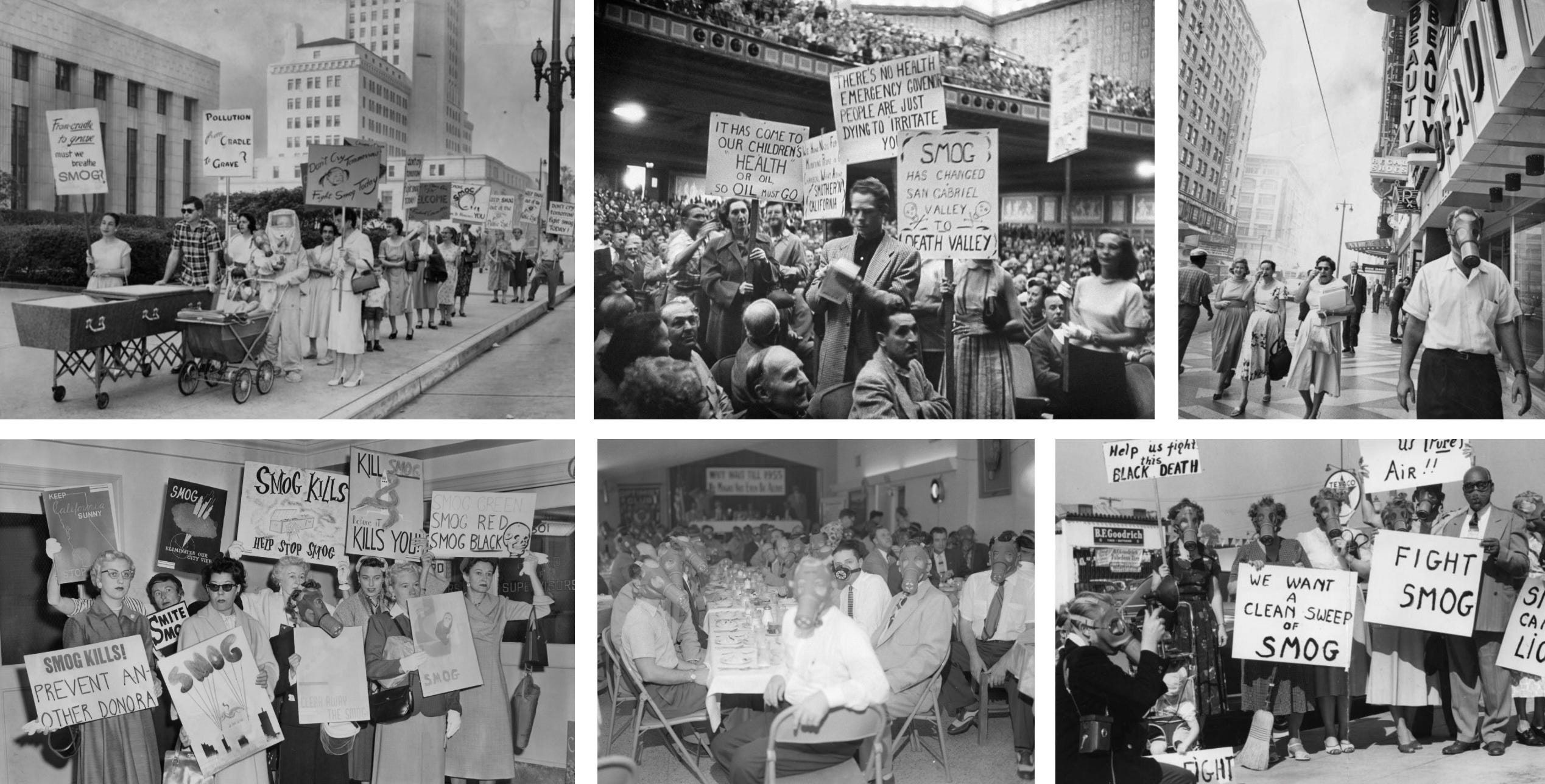
Of course this wasn’t some sleepy scientific affair argued only in journals. As we have seen, smog was a major political issue created by public outcry and bad press. Haagen-Smit had been hired by the Air Pollution Control District, and they had been making his findings public. The LA Times caught wind of his breakthrough, and on Nov. 20, 1950 published a major article with the headline: “Puzzle of Smog Solved by Caltech Scientist.” On Nov. 27 he presented the chemistry of smog at a public hearing of the California Assembly’s Air and Water Pollution Committee.4
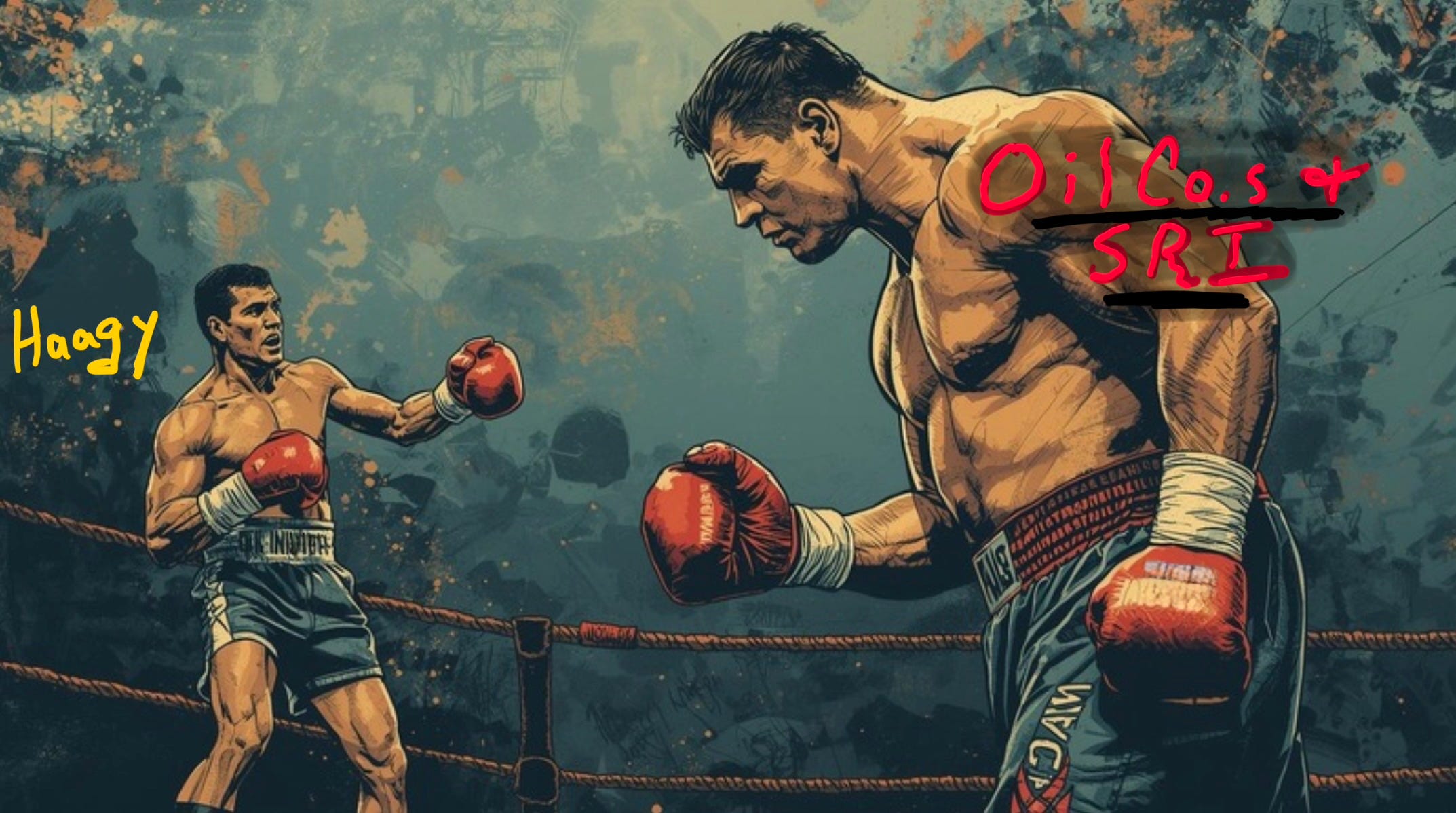
Vance Jenkins, the head of the Oil Industry’s Smoke and Fumes Committee, which had hired SRI, reports that by late 1950:
“the Los Angeles County Air Pollution Control District accepted as proven fact a theory on the origin and nature of smog proposed by one of its consultants [Haagen-Smit]. This caused a change in the nature of the Stanford Research Institute program which, since that time, has been concerned largely with investigations designed to determine the degree, if any, to which this theory coincides with facts.”5
Because they believed Haagen-Smit’s understanding of smog was now accepted by the regulatory agency, the Oil Industry and SRI drew and even bigger bullseye on his back. While they could continue to sow doubt about the lack of knowledge with the general public, with the regulators they could no longer get away with saying nobody knows; they must now say that Haagen-Smit was wrong.
But even as his views were gaining notice despite opposition and skepticism – including by some of the public who thought his findings were “a plot by ‘the interests’ to put the blame on the little man’s automobile,”6 – Haagen-Smit was the one who had to stand up to the skeptics and deniers and convince the public and the policymakers.
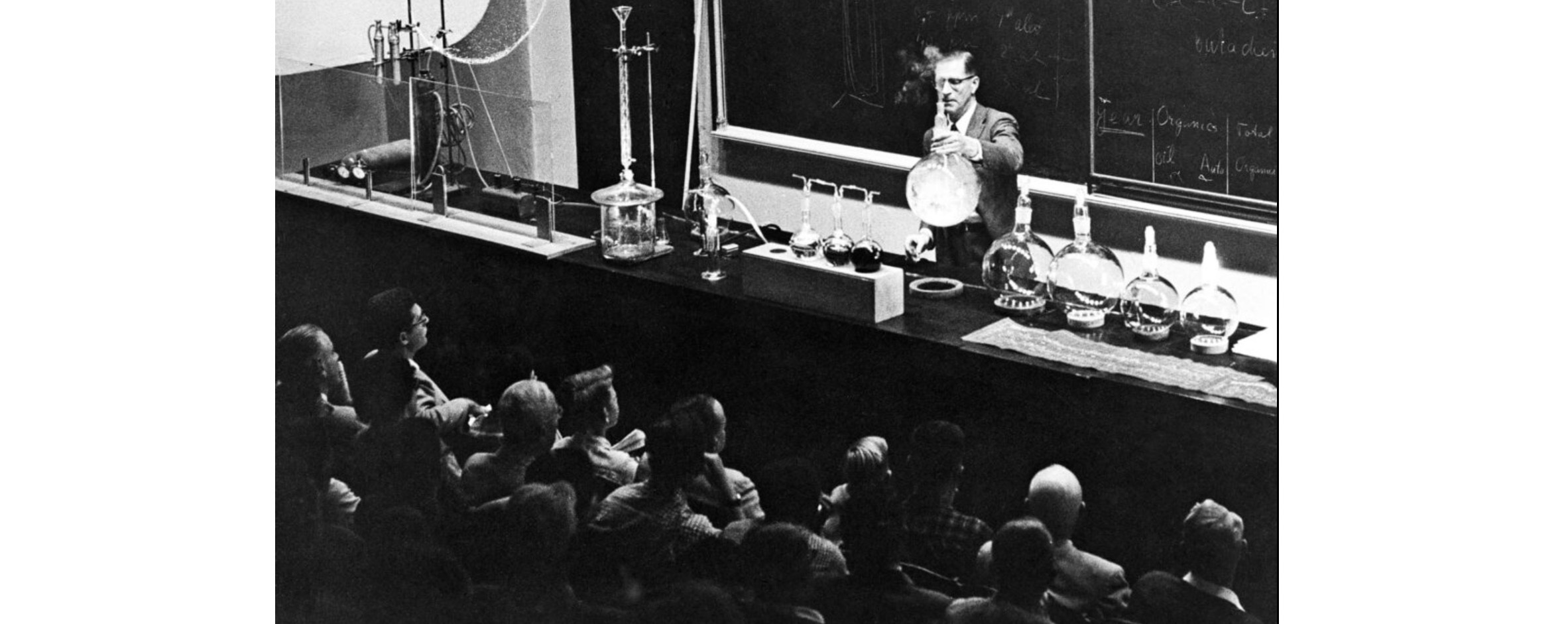
To get his own message out, Haagen-Smit would give lectures where he would whip up flasks of smog and release it into the room, making his audience cough, teary-eyed. He became known in Southern California as “Dr. Haagen-Smog.” In a PR stunt of his own, a student helped him build a “smog chamber” made up of materials found in a junk yard. They set it up in the Air Pollution Control District’s parking lot, where employees “voluntarily exposed their eyes to smog from the chamber while workers with stopwatches timed how long it took for tears to stream down the volunteers’ faces.” After breathing extremely high levels, Smith Griswold, who later became the head of the agency, developed bronchitis.7
Haagen-Smit later recalled SRI’s role in particular: ‘I didn’t have any public relations agent, but they had. And it was very unpleasant.’”8 As a result, SRI was a constant in press stories, and whiz-bang puff pieces appeared like the one in Popular Mechanics entitled “Smog Sleuths,” touting SRI’s methods and expertise. There was even a documentary film made promoting SRI’s views with a Noir-esque title, “The City that Disappears.”9 (It’s a mystery.)
In one attempt to discredit him — point #2 in operationalizing the message as part of The Denier’s Playbook — SRI claimed to have run his experiments without being able to produce the same results; indeed, his formula created something that “was no more irritating than fresh outside air.” Haagen-Smit fought back by showing that SRI “had not replicated his experimental method at all – it had ignored several important procedures crucial to his laboratory findings.”10
In an attempt to marginalize him, he was not even invited to speak at the first ever major scientific conference on air pollution organized by SRI in Nov. 1949.11
After early rejections, Haagen-Smit’s work and that of his colleagues was starting to appear in peer-reviewed journals, including one on the injury to plants submitted in July 1951 and published in January 1952.12 Haagen-Smit brought it all together for the educated layperson in an excellent article in Cal Tech’s magazine in May 1952.13 By this time the Air Pollution Control District had recognized the soundness of his findings and began to suggest it was time to consider how to deal with emissions from vehicles.14
But SRI kept running The Denier’s Playbook by opposing Haagen-Smit in public with their message of denial, as well as implementing Step #3 in operationalizing the message — we don’t know enough; more research is needed; the science isn’t settled.
In late 1953 an SRI representative told the local press that the smog problem was still way too complicated to say anything definitive. Pollution from “thousands” of sources “somehow meet in the air and undergo some mystic sort of chemical reaction to produce smog” (emphasis added).15
Mystic? When you have scientists appealing to spiritual mystery to justify their denial, a whiff of desperation, and maybe something else, is in the air.
But that was their story, and they were sticking to it. As such, “from so many potential sources, no single class of violators could be condemned.”16
And there you have it, a message straight out of The Denier’s Playbook. If you can’t deny the problem exists (Talking Point #1), then deny we know enough (Talking Point #2) and deny culpability (Talking Point #3).
It’s a mystery! So our guys shouldn’t have to do anything.
In a major report in Jan. 1954 for the Oil Industry’s Smoke and Fumes Committee, which was “distributed in the public interest,” SRI proclaimed this same basic message:
“It will be apparent to all who read this report that there is yet much to be learned before a complete understanding of the smog problem in Los Angeles is attained. Few problems have been more oversimplified than this one. … It appears that many factors enter into causing smog – some of them unknown or not yet fully understood.”17
Apparently, what should be obvious is that when it comes to smog nothing is apparent. In other word, SRI was still on message: we don’t know.
But with a plausible theory from Haagen-Smit, SRI couldn’t just keep on saying we don’t know. Even as they tried to discredit both Haagen-Smit and his approach, they did end up throwing out alternative theories during this time, which, of course, denied the culpability of the Oil Industry.
For example, Zarem theorized that stratospheric ozone seeping down through the inversion layer was the cause. Haagen-Smit explained how such a scenario was wrong by noting simply that smog was much worse during daylight hours, consistent with his photochemical theory.18
Another message pitched to the public from SRI’s major report for the Oil Industry found its way into Time magazine: “The real villain [of smog] is Southern California’s much-touted sunshine, reports the Stanford Research Institute after a seven-year study.”19 It’s nature’s fault, in other words, not ours.
Through 1954 many scientists, regulators, and elected officials continued to believe we didn’t know enough to take costly regulatory action. As one scientist put it in June 1954, “‘ the more we investigate, the less we seem to know.’”20
“The more we investigate, the less we seem to know.”
Thankfully, Haagen-Smit’s findings were already accepted by the Air Pollution Control District and by his friend, Arnold Beckman, who in the Fall of 1953 was appointed by Governor Knight to chair a special committee on smog. At the Governor’s Air Pollution Control Conference on Dec. 5, 1953, Beckman’s committee made its findings public, affirming Haagen-Smit’s chemistry of smog.
In an effort to deal with smog based on facts, and to reach a consensus on what they were, on Nov. 2, 1953 local businessmen, industries, and government officials came together to create the Air Pollution Foundation.21 Their sponsored research over the next several years – even by several SRI scientists – confirmed Haagen-Smit’s chemistry of smog. Not only that, research by the Franklin Institute in Philadelphia, sponsored by the American Petroleum Institute, also affirmed his work. These confirmations were presented at what Haagen-Smit called an “historic meeting” of the American Chemical Society in September 1955, and another one organized by the Foundation in February 1956. As Haagen-Smit would later narrate:
“This signified the end of the controversy. The photochemical origin of Los Angeles smog through the action of sunlight on a mixture of oxides of nitrogen and hydrocarbons was no longer in dispute.”22
The Fights Over Smog Science and Climate Science: A Comparison
From the perspective of the fight over climate science, the collapse of the “we don’t know” position of SRI and others is remarkable. The fight over the science of smog lasted about five years. In contrast, the climate science fight is at least 40 years old and is perceived as still continuing by a significant sector of the population.
When the SRI “smog sleuths” were basically the only players on the field with scientific authority, the message they put forward – we’re on the job, it’s a complex problem you wouldn’t understand, more research is needed – could carry the day, even though for some of those paying attention it was wearing thin. As a spokesperson from the LA Farm Bureau and the hard hit agricultural community remarked in Nov. 1953, SRI “‘spent $1,250,000 given by the oil industry and still professes to know nothing about’ smog.”23
Even with such criticism, the opposition was able to continue their “we don’t know” stance until it became clear that it was scientifically indefensible. Once the opposition had to prove or disprove Haagen-Smit’s theory and his scientifically demonstrated results, once they had to employ the scientific method and be transparent with their own results, the game was up. Sadly, the game still isn’t up on climate science.
Arnold Beckman Was Key
But Haagen-Smit’s success would not have happened without Arnold Beckman. He brought Haagen-Smit into the fight and recommended him for the consultantship at the Air Pollution Control District, thus assuring that his findings would be heard by those in a position to act on them. As the Oil Industry’s Vance Jenkins reports, when the regulators took Haagen-Smit’s conclusions seriously, that’s when SRI on behalf of the Oil Industry had to “determine the degree, if any, to which this theory coincides with facts.”
And when Beckman’s Commission for the Governor affirmed Haagen-Smit’s work, that was the beginning of the end for “we don’t know.”
The Oil Industry/SRI Vs. Haagen-Smit: In a Nutshell
Finally, I want to lift up a story recounted by Dr. Harold Johnston, who became one of the world’s leading atmospheric chemists and a National Medal of Science recipient.24 This story reveals both the depth and tenor of the opposition to Haagen-Smit and the compromised nature of the SRI-Oil Industry relationship.
Johnston was teaching chemistry at Stanford and had recently received his Ph.D. from Cal Tech. He attended a seminar at Stanford where someone presented Haagen-Smit’s findings. Johnston recounts that he stood up and “politely pointed out” a small problem with Haagen-Smit’s smog formula.
Sitting in the room, not saying a thing, was Vance Jenkins. Thinking that Johnston was an ally, Jenkins told his SRI colleagues to hire him as a consultant to poke holes in Haagen-Smit’s approach. So SRI hired Johnston, suggested the possibility of presenting his findings to SRI’s Board, and that future funding could come his way. According to Johnston, they also said “terrible things” about Haagen-Smit and attacked him “vociferously,” especially the Oil Industry representatives.
“I was given the job of disproving the theory of this quirky, perhaps dishonest, scientist. I was given the job of overthrowing his theory entirely” (emphasis added).25
And what did Johnston find?
“I rapidly concluded that Haagen-Smit was a genius! Everything he said was based on experiments he had carried out, and his techniques seemed to be sound. I told them it seemed to me that he was right, across the board” (emphasis added).26
Johnston made a slight correction to Haagen-Smit’s formula and presented his findings to his manager at SRI.
And what was the response?
“The [SRI] manager said, ‘Oh, this is important, this is very important, but we must be careful. We have to do more research before we can bring this out.’ They postponed my appointment with the board of directors. They made no more reading assignments, and my consultantship lapsed.27
Afraid of the Truth? Attack First With The Denier’s Playbook
When it comes to uncovering the “mystery” of smog, was Haagen-Smit simply brilliant while his opposition were merely pedestrian? Maybe. But they attacked him after he put forward his theory; they didn’t want to find the truth; they didn’t want to see the truth. Shoot first and ask questions later, if at all.
Why? Because they thought they were guilty.
If they would have stopped running The Denier’s Playbook for a second they would have seen that there was important overlap in their positions that could have served the interests of the Oil Industry, as suggested back in 1977 by UCLA law professors Krier and Ursin. “A point of implicit agreement in the great scientific controversy between Haagen-Smit and SRI was that the automobile was a significant contributor …”.28
While the public and the press continued to blame the oil refineries for the problem, Haagen-Smit implicated vehicles as the primary culprit. As noted earlier, in doing so he was criticized by some in the public for being in cahoots with corporate interests in trying to scapegoat “the little man’s automobile.”
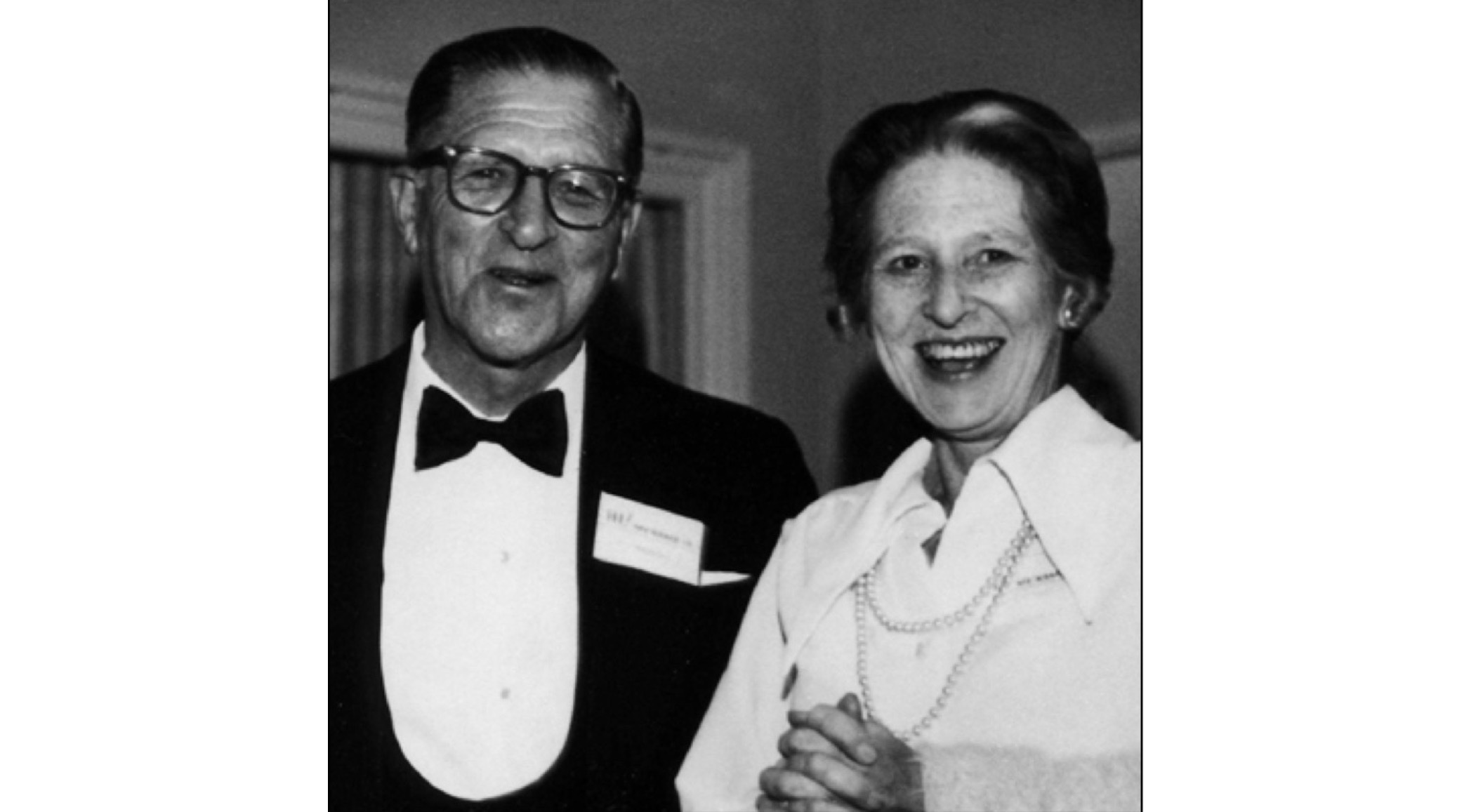
So it wasn’t the oil company’s refineries that were the main problem. It was the burning of their product by their customers. Given that the solutions everyone reached for at the time were point-source end-of-pipe technological ones, they wouldn’t be the main targets.
Why didn’t they see the common ground they had with Haagen-Smit? He was a very reasonable guy and a member of the Chamber of Commerce who palled around with the retired chemical director from Uniroyal. He had done research for various agricultural interests. In later years he would have good relations with his research counterparts in the automobile industry, even as he fought with them to make changes in his capacity as member and then Chair of the state’s Motor Vehicle Pollution Control Board.29
The Oil Industry and SRI could have used Haagen-Smit’s findings to bolster their own position. But they reached for The Denier’s Playbook instead. It seems that the only thing they needed to know about him was he appeared to be in their way. And yet he really wasn’t.
The industry was right in its concern that initially there was a rush to judgment that cost them money, and could cost them more. When there is a serious problem like smog, people want answers quickly, they want to find solutions and solve the problem. This was not only the general public, or the media. It was Dr. McCabe, the first head of the LA Air Pollution Control District, and other experts of east coast and midwest smog.
But Dr. Haagen-Smit wasn’t a part of that. He was simply doing science, following the facts, and reaching conclusions based on those facts. They attacked him anyway.
And that’s exactly what the corporate fossils and many of their hired scientists have done to legitimate climate scientists simply for telling the truth. Shoot first and keep shooting. Don’t ask questions later.
Climate Movement: Time to Employ Our Power In Service of the Truth

When the corporate fossils feel they must pick between truth and profit, they’ll pick profit every time. For them they are simply following the logic of the system they are in. They’re in the business to make money. Everything else is secondary. As Milton Friedman famously argued, the only ethical obligation for corporate leadership is to increase stockholder value. Thus, we must change the “logic” of this system.

That’s a key reason why growing and improving The Climate Movement is the most important thing we can be doing right now. We must be able to exercise our three forms of power — moral power, people power, and staying power — to push our societies to not simply reign in the corporate fossils, Big Producers of Polluting Products.
No, we must replace them. And not just them. We must replace the government-run and government-owned Big Producers of Polluting Products as well with a clean energy transformation at the speed and scale necessary to overcome climate change by creating a just and prosperous sustainability that enhances wellbeing for everyone and everything. Join us!
If you are new here, check out our Intro Series, and other posts in the Our Story Together Series. And thanks for all you’re doing.
“Zus (Maria) Haagen-Smit,” interview by Cohen, p. 35; Jacobs and Kelly, Smogtown, p. 84.
Dewey, Don’t Breathe the Air, p. 48.
A. J. Haagen-Smit, “The Air Pollution Problem in Los Angeles,” Engineering and Science (Dec 1950): pp. 7-13.
Elkind, How Local Politics Shape Federal Policy, pp. 74, 203.
Vance Jenkins, “The Petroleum Industry Sponsors Air Pollution Research,” Air Repair, Vol.3:3 (Feb. 1954): p. 147. See also Vance N. Jenkins, “The Policeman is Coming!” Proceedings, Seventeenth Mid-Year Meeting, Division of Refining, American Petroleum Institute, San Francisco, May 12 to 15, 1952, pp. 294-298. In front of his Oil Industry peers, Jenkins described Haagen-Smit’s work as “an unproved speculation at this time – an interesting guess which apparently has been seized upon by the Los Angeles County Air Pollution Control District as a means of gaining favorable publicity for its efforts at the expense of bad publicity for the petroleum industry” (p. 295). To his credit, Jenkins describes Haagen-Smit as “a first-class scientist, and one of my most highly valued acquaintances” (p. 295).
James E. Krier and Edmund Ursin, Pollution and Policy: A Case Essay on California and Federal Experience with Motor Vehicle Air Pollution, 1945-1975 (University of California Press, 1977): p. 80.
See “The Southland’s War on Smog: Fifty Years of Progress Toward Clean Air”; and Jacobs and Kelly, Smogtown, pp. 75-76.
Krier and Ursin, Pollution and Policy, p. 83.
N. Robert Heyer, “Smog Sleuths,” Popular Mechanics (April 1949): 177-181, 252, 254.
Krier and Ursin, Pollution and Policy, p. 81.
Nielson, Heritage of Innovation, p. 9-20; Jacobs and Kelly, Smogtown, pp. 79-80.
A. J. Haagen-Smit, et al., “Investigation on Injury of Plants from Air Pollution in the Los Angeles Area,” Plant Physiology (Jan. 1952): vol. 27, pp. 18-34.
Haagen-Smit, “Smog Research Pays Off,” Engineering and Science (May 1952): pp. 11-16.
Krier and Ursin, Pollution and Policy, p. 80.
Krier and Ursin, Pollution and Policy, p. 81, quoting the Riverside Daily Press, Dec. 8, 1953.
Krier and Ursin, Pollution and Policy, p. 81, quoting the Riverside Daily Press, Dec. 8, 1953.
SRI, Forward to The Smog Problem in Los Angeles County: A Report by Stanford Research Institute on Studies to Determine the Nature and Causes of Smog (Jan. 1954).
Douglas Smith, “Fifty Years of Clearing the Skies,” Cal Tech website (April 25, 2013). For Haagen-Smit’s refutation see Smog Research Pays Off: “It is unlikely that additional ozone could be drawn from the higher atmosphere when the presence of inversion conditions characteristic of smog conditions prevents this free exchange. Further evidence against such a possibility is presented by the nearly complete absence of rubber cracking at night. This observation points to photochemical processes …” (pp. 13-14).
Krier and Ursin, Pollution and Policy, p. 83, from the Riverside Daily Press.
Krier and Ursin, Pollution and Policy, pp. 84-86.
Arie J. Haagen-Smit, “A Lesson from the Smog Capital of the World,” Proceedings of the National Academy of Sciences, Vol. 67, No. 2 (Oct. 1970): p. 890.
Krier and Ursin, Pollution and Policy, pp. 82, 354. Most, but not all, of that $1.25 million, spread out over about six years, went to SRI. See Jenkins, “The Petroleum Industry Sponsors Air Pollution Research,” p. 147.
Harold S. Johnston, “Atmospheric Chemistry Research at Berkeley” an oral history conducted in 1999 by Sally Smith Hughes, Ph.D., Regional Oral History Office, The Bancroft Library, University of California, Berkeley, (2005) p. 63.
Johnston, “Atmospheric Chemistry Research at Berkeley,” p. 63.
Johnston, “Atmospheric Chemistry Research at Berkeley,” pp. 63-64.
Krier and Ursin, Pollution and Policy, p. 80.
As Zus, his wife, explained: “He was good friends with all the research directors of General Motors, Ford, and Chrysler. They were his good friends and they were all totally convinced that he was right. But they still had to consider the bottom line, so they still had to argue. The industry did end up making all these improvements.” They also gave him neck ties. “He had a tie from Ford and he had a tie from GM … I just had to throw out all those ties.” See“Zus (Maria) Haagen-Smit,” interview by Cohen, pp. 33, 39.