

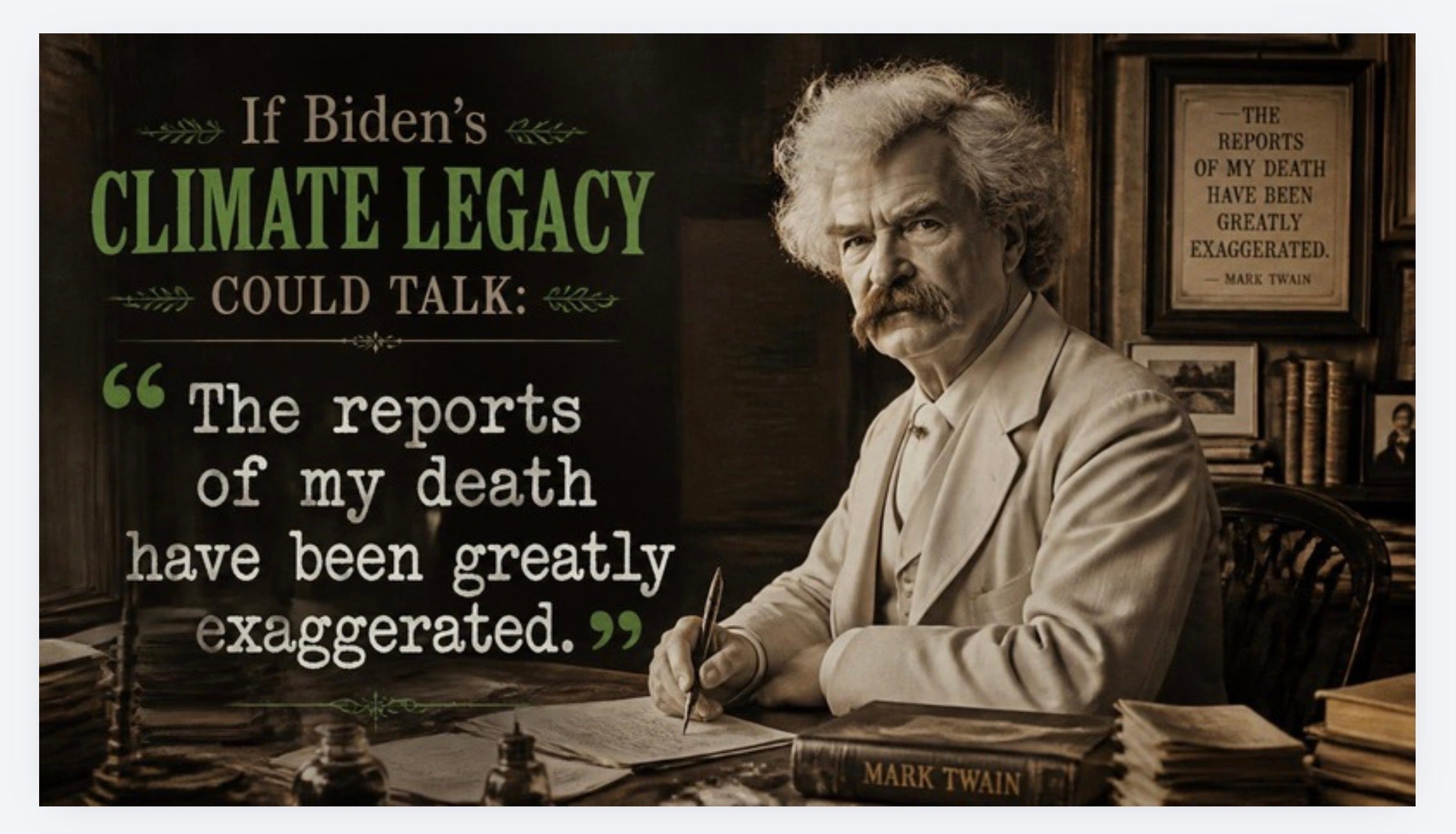
Today’s post is on Biden’s climate legacy focused primarily on the Inflation Reduction Act (IRA), but also briefly on the Bipartisan Infrastructure Law (BIL). To paraphrase Mark Twain, “The reports of the death of Biden’s climate legacy have been greatly exaggerated!”
In my previous post I reviewed how I went along with most of the inside-the-beltway climate policy intelligentsia that championed pricing carbon as the foundational solution to climate change, and how this failed the second of pragmatism's two goals: what can pass.
So how do you get major climate pollution reduction legislation passed? The IRA, still the most consequential piece of climate legislation ever signed into law by far, shows us how.
Instead of making the bad stuff cost more via pricing carbon with a tax or a cap-and-trade system — the intelligentsia’s approach — we make the good stuff cost less.
The IRA Formula That Keeps Winning
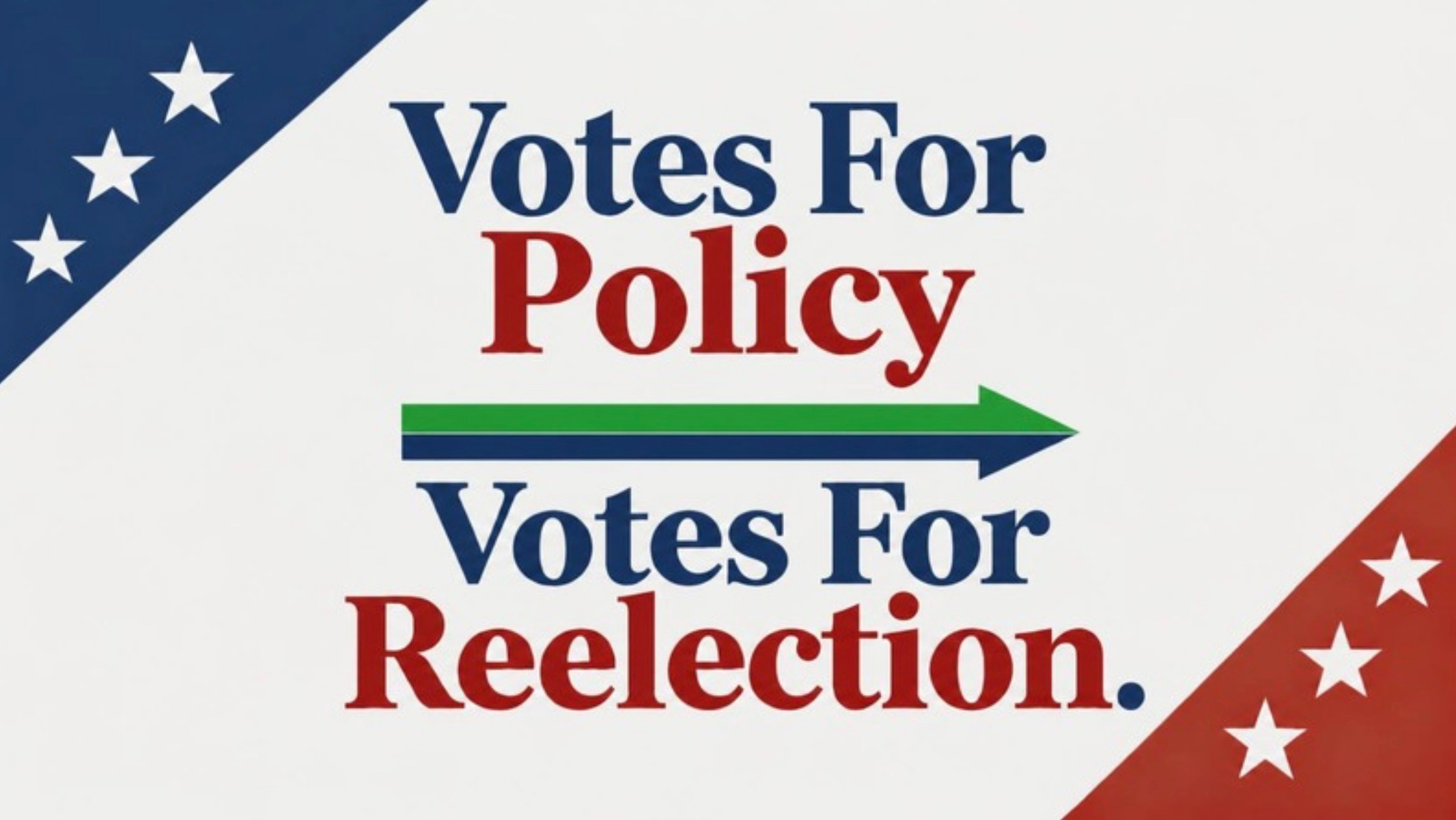
The make-good-stuff-cost-less approach, combined with a common-sense strategy to have results generate political support, was the winning combo to get the IRA to become law. You want to have what you’re trying to pass attract the needed votes, and you want those who voted for it to reap political rewards in the form of voter support in their next election. So, votes for policy create votes for reelection — that’s the formula.
Most folks see both electoral campaigns and public policy efforts as politics. From this perspective we have two kinds of politics: electoral-politics and policy-politics.
But it’s important to recognize key differences. Electoral-politics are about getting people elected. Policy-politics are about creating and modifying laws and regulations. Many who are involved in policy-politics don’t get involved in electoral-politics. They are two different skill-sets, and there are laws that differentiate between spending on “express advocacy” (electoral-politics) and “issue advocacy” (policy-politics) and how you can’t mix the two come election time.
Of course, if you don’t win elections, you don’t get to implement your policies. And if you don’t design policies to help you win elections, you may not win the next one. So there can be a delicate dance between these two forms of politics requiring participants to be crafty for good.
So the IRA, Biden’s premier climate law, was designed both to make the good stuff cheap and to generate political support for those responsible for its enactment.
The climate legislation battle between Biden/Harris/Democrats and Trump/MAGA is about as pure a political case study as there ever has been. On one side, it’s Biden’s signature achievement.
On the other side, Trump ran in 2024 vowing to destroy Biden’s “green energy scam.” Once elected, Trump & Co and his MAGA Congress unleashed the fiercest anti-climate effort in the history of humanity against the greatest climate law in US history.

(Go here for a chart of what was kept or modified from the IRA and what was repealed.)
As described below, there are clear lessons learned from what was lost and what survived the Trump/MAGA-Congress onslaught.
To help us see this, Prof. Leah Stokes, one of the key designers of the IRA approach, has done some great analysis in a piece for The Atlantic, on her Substack, and in a working paper with a colleague, Denis Lomov.
Here are my takeaways:
Biden’s IRA climate law earned votes at the ballot box for those who voted for it, especially in cases where voters could connect it to manufacturing plants and jobs in their communities.
This is in contrast to pricing-carbon-make-the-bad-stuff-cost-more approaches; those have resulted in political backlash and repeal.
The stuff in the IRA that created tangible benefits people could see — jobs, manufacturing facilities — has survived the subsequent vicious, stupid attack by Trump/MAGA-Congress. Indeed, Republicans who benefitted helped to protect them.
The funding that hadn’t yet been spent was really easy to ax because its political benefits hadn’t been realized. Benefits on paper got torched — primarily those for consumers.
Benefits for clean energy companies were less threatened than the consumer stuff because they were on Capitol Hill fighting for them. Stokes: “The investment tax credit for solar and wind survived, albeit wounded. Battery storage made it out relatively unscathed. And so did the manufacturing tax credits.”
The benefits for the consumer tax credits (for cars, heat pumps, etc) “were much more diffuse, going to a wide range of households across the country, making it harder to organize and ensure the credits survived.”
Lessons learned:
Tax credits like those for manufacturing resulting in clear benefits voters could connect to a politician’s vote, i.e., benefits that happened quickly before the next election, will generate electoral support and will be protected from the fiercest opposition.
In warfare speed kills. For policy implementation, speed saves. Stokes and Lomov: “The clear lesson for future climate policy is that tax credits move dollars and projects faster than grants, and getting dollars out the door is essential” for politicians to reap electoral rewards.
Stokes provides some numbers through an election lens (emphasis in original):
The law [IRA] helped drive $185 billion in private investment into building factories that make solar panels, batteries, and electric vehicles. And here’s the amazing thing most people don’t know: nine in ten of those facilities are still getting built, under a president who promised to kill them.
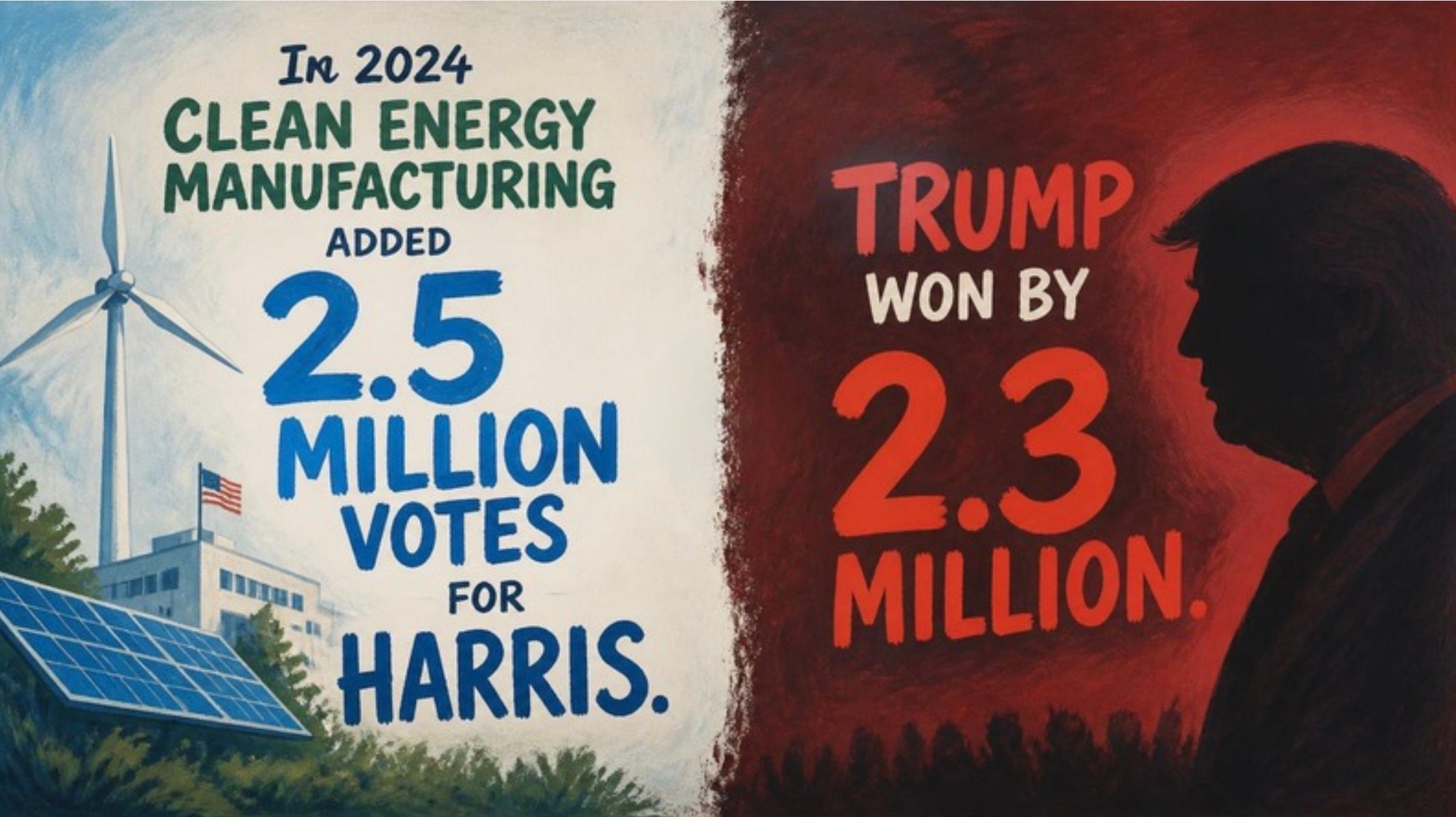
Those factories moved votes. We find they lifted Democratic vote share by roughly 1.5 percentage points in 2024 — a swing of 2.5 million votes, in an election where Trump won the popular vote by just 2.3 million.
So the IRA did its job politically, and in keeping with “speed saves” would have done even more if more of its funding was made tangible to voters. As it was, the IRA’s 2.5 million vote swing kept Trump under 50%, and thus from achieving a simple majority of the popular vote, a modest moral victory for our democracy.
Finally, in a quote that warms my ARTC heart, Prof. Stokes provides some wise words:
Perhaps the IRA’s deepest legacy is one Trump cannot easily reverse: it helped make clean energy cheaper. Cost declines work like a ratchet — every factory built and every panel installed pushes prices down the learning curve, and once they fall, they do not climb back up. Since the IRA passed, battery prices have dropped by a third, hitting another record low last year. A tax credit can be repealed. A price decline cannot — the learning is permanent.
What’s Missing From This IRA Analysis?
We should really take to heart all of these valuable lessons Dr. Stokes is helping us see.
But what’s missing? What aren’t we seeing?

Well, how about the elephant in the living room.
We’re missing! The Climate Movement and Climate Action Supporters are what’s missing.
The Climate Movement, together with Climate Action Supporters, were essential to the production of then-candidate Biden’s climate plan in 2020, and for pushing Democrats to create and pass the IRA once they were in power.
Unfortunately climate all but disappeared from the 2024 election, “climate hushing” and climate cowardice have become a thing for fair-weather Democrats, and The Climate Movement was dispirited and in disarray when Trump and the MAGA Congress launched their rollback efforts in 2025.
We are the solution and we have the potential. But we are not yet what our first characteristic/imperative/goal is calling us to be: big and broad and active enough so that our three forms of power — moral power, people power, and staying power — can help us play our part.

For example, we needed to be there with enough tangible political support to protect those benefits that were too diffuse like the consumer tax credits, or the grants that hadn’t gotten out the door and then were frozen by Trump & Co like the “Green Bank” grants for loan programs to help poorer neighborhoods with renewable energy, electric vehicles and net-zero buildings. (The latter may still survive if the “Supreme” Court doesn’t screw our country once again.)
As I’ve said before, it’s time to get our climate action Mojo back — and we can!
Biden’s Climate Legacy More Broadly: IRA + BIL
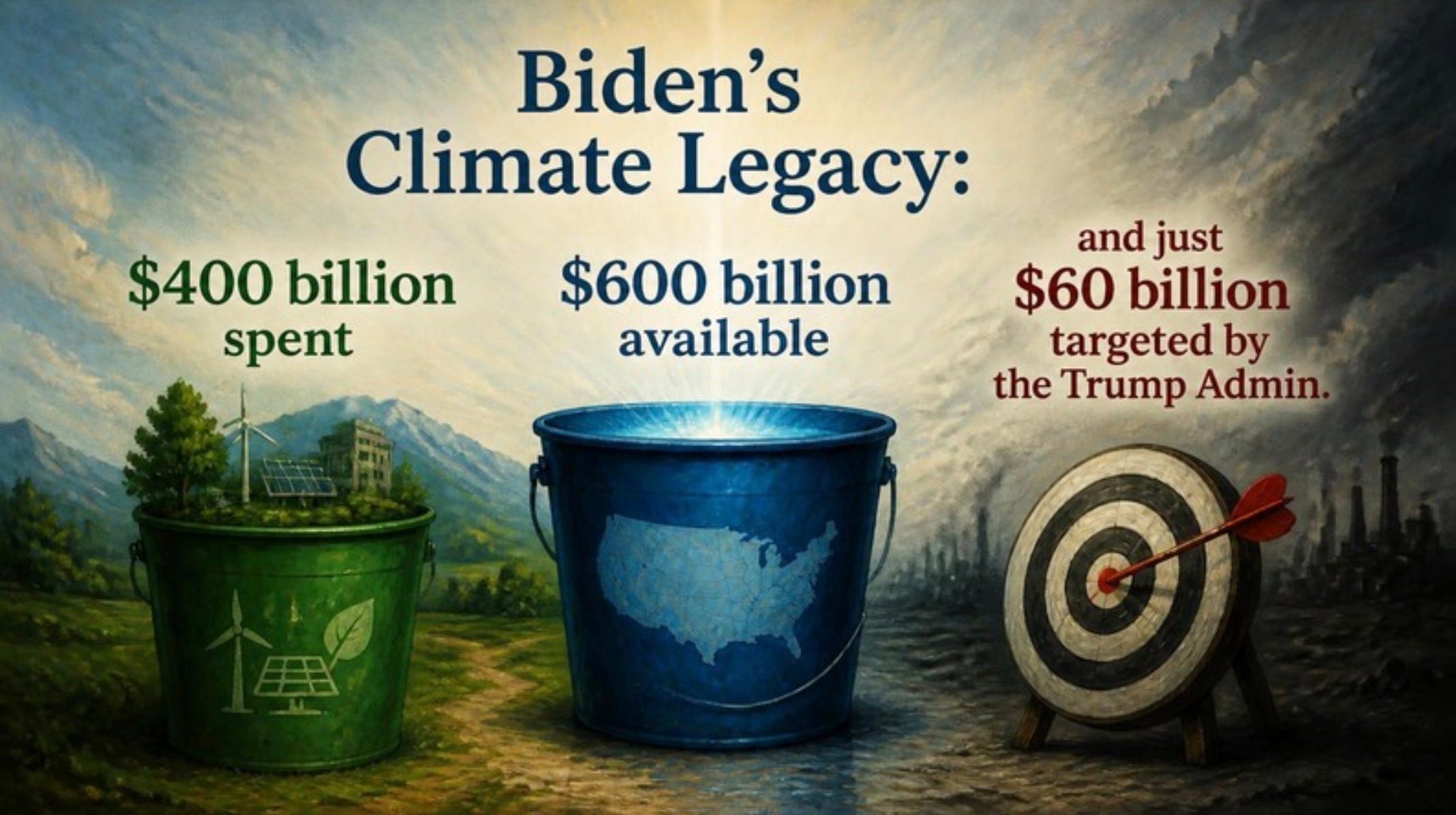
Finally, a recent Politico analysis also shows that if you look at the two major laws making up Biden’s climate legacy, the IRA and the Bipartisan Infrastructure Law (BIL), a huge chunk of funding — $600 billion — hasn’t been torched and is still available.
Out of nearly $1 trillion in grants, contracts and other direct federal outlays provided by Biden’s climate and infrastructure laws, POLITICO found approximately $600 billion dollars remains available for recipients to spend or for federal agencies to award. Trump has attempted to cut at least 6 percent of that total $1 trillion — about $60 billion — though many of those cuts are still wrapped up in court challenges.
So $400 billion spent, $600 billion available, and just $60 billion targeted by Trump & Co.
Politico’s graph below breaks down what has been spent and canceled and what remains available. As you can see, 37% has been canceled.
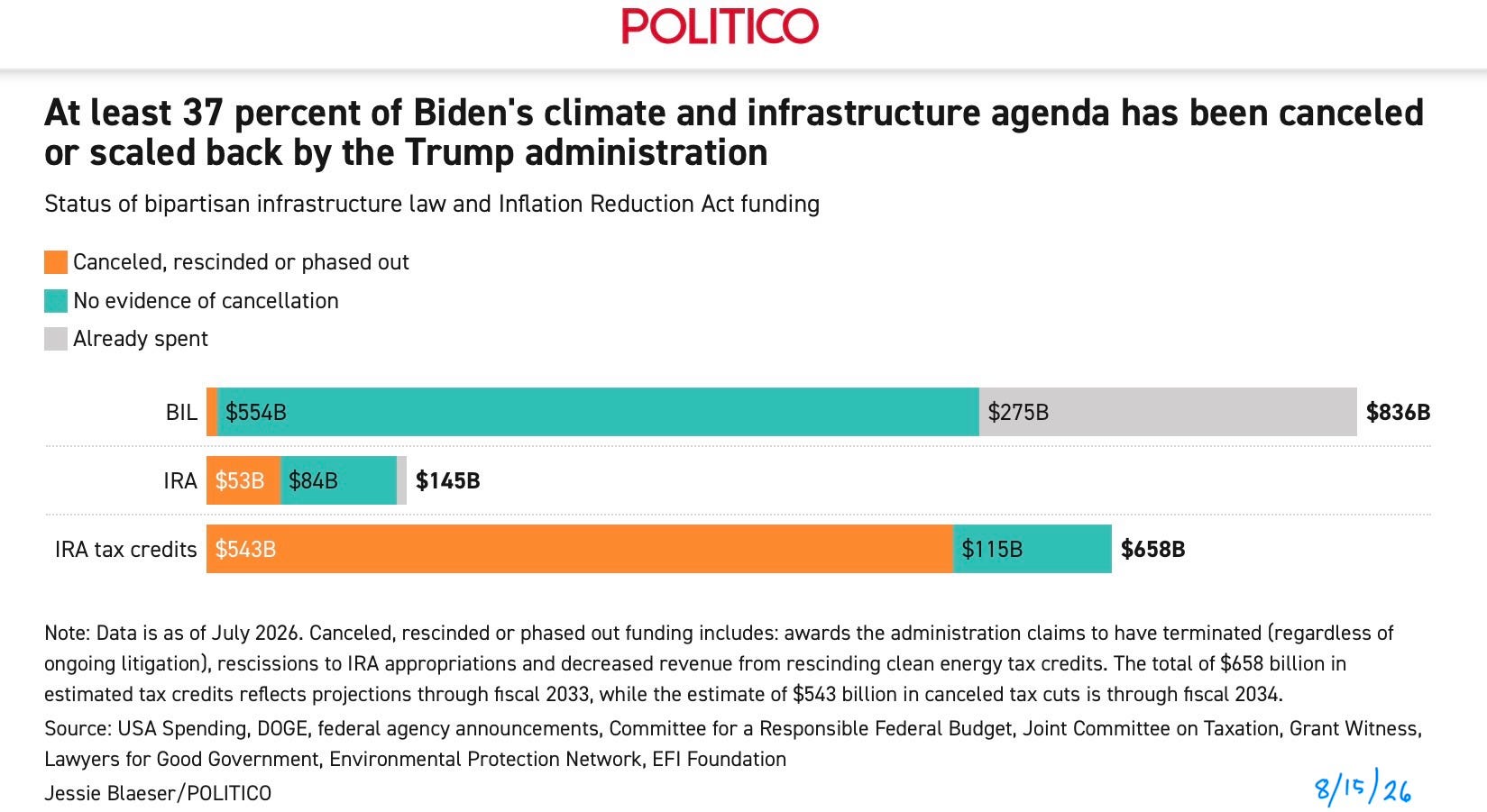
But a hefty majority — 63% — remains. In other words, the reports of the death of Biden’s climate legacy are greatly exaggerated!
The Catalytic-4 Is The Key
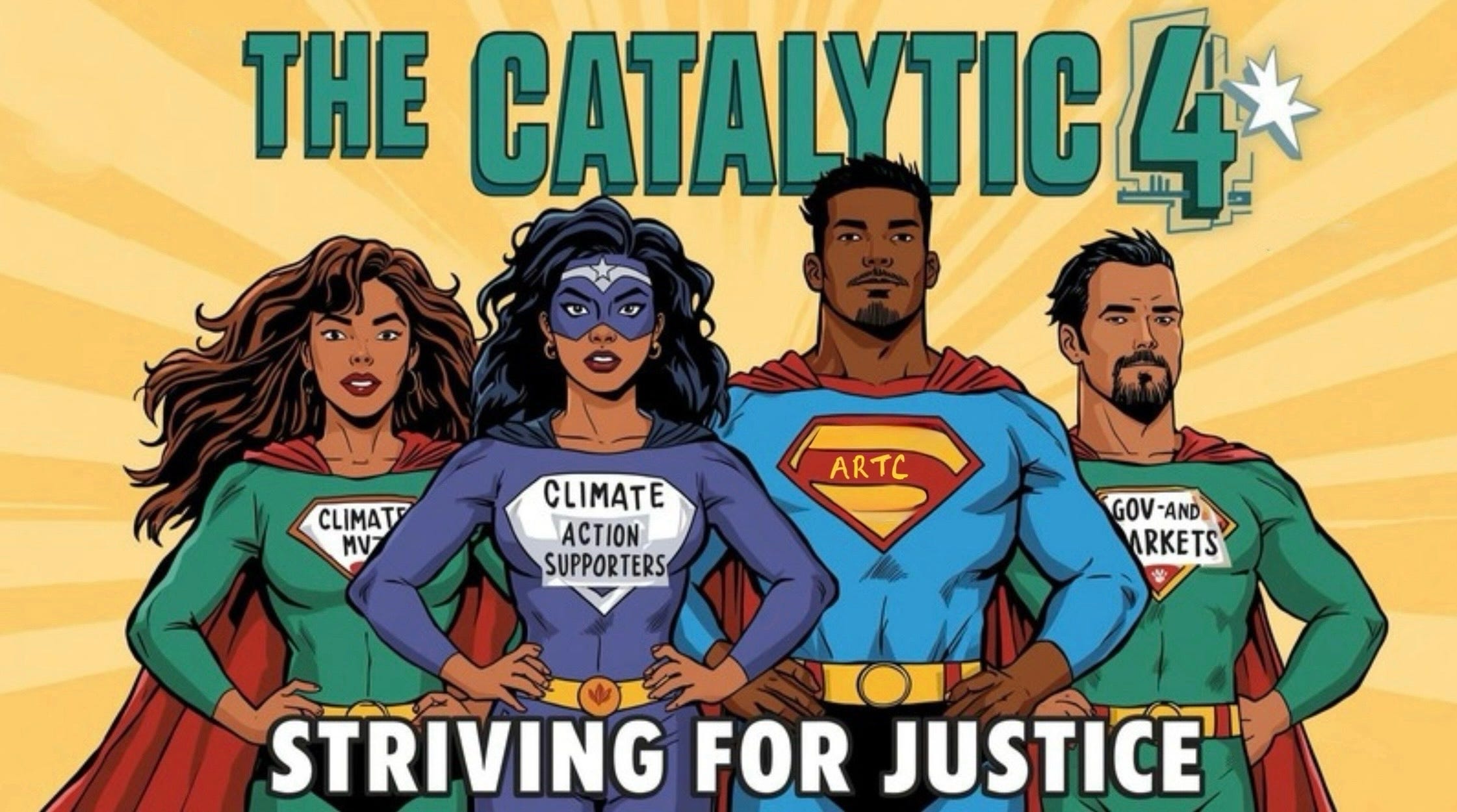
The IRA is an example of how each of The Catalytic-4 must work together: (1) The Climate Movement; (2) Climate Action Supporters; (3) ARTC or the accelerating rate of tech change, and; (4) Governments-And-Markets. Each are indispensable. But without a Climate Movement that is big and broad and active enough the other Catalytic Sources of Transformation simply will not get the job done, a job that requires speed and scale and a quest for justice.
We must push for victories, defend them, and push for even more. Speed and scale with justice. No rest for the victorious.
But before the victories comes the building of our cause. That’s why the most strategic thing all of us can be doing right now is growing and improving The Climate Movement.
If you are new here, check out our Intro Series. If you like this post, please “like,” comment and share. And thanks for all you’re doing.
Great post - thanks for pointing out that Trump hasn't been touch the vast majority of clean energy funding. That's good news.