

Readers: This post is a personal preamble to my forthcoming coverage of the work of Leah Stokes and her colleagues looking at the current success of the Inflation Reduction Act, the most important federal legislation on climate change ever signed into law.
The Fine Art of Not Listening
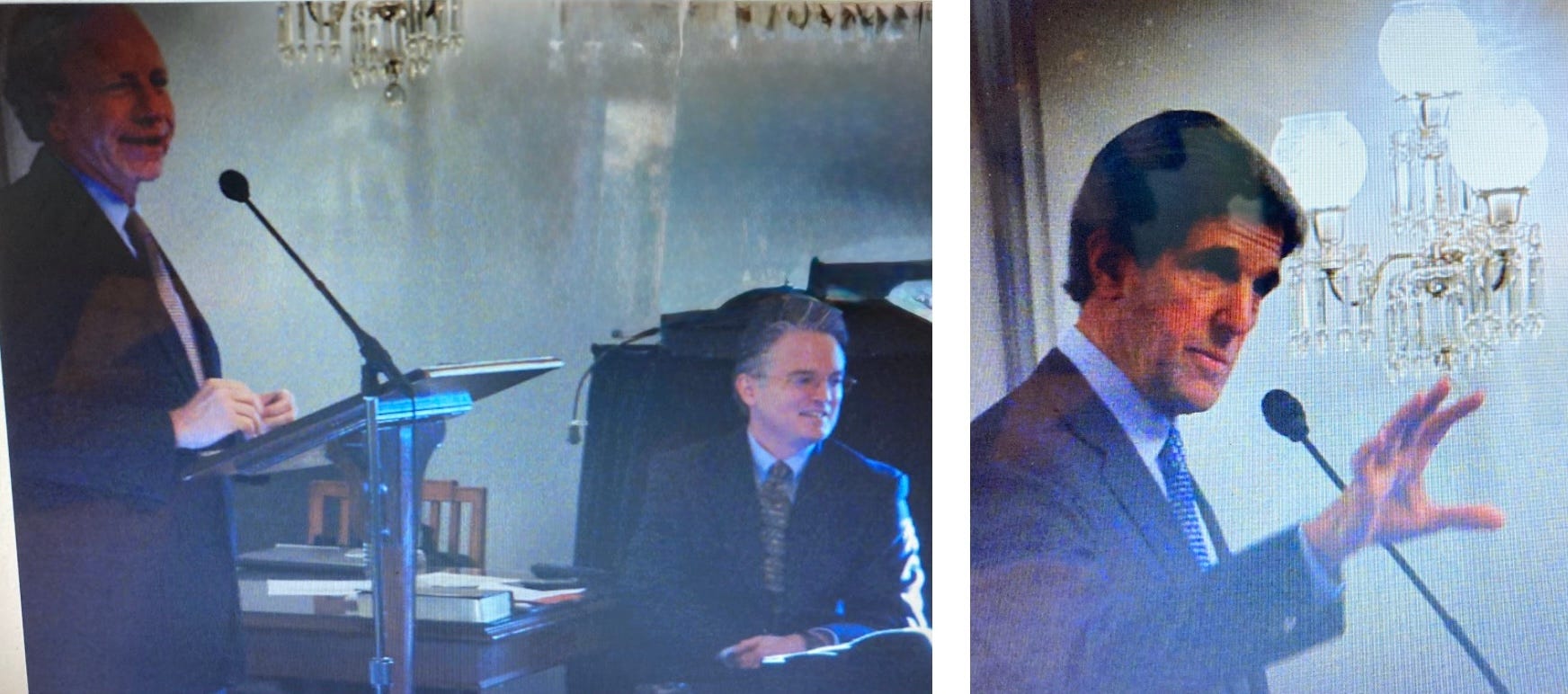
Beginning in 1997, I spent over two decades in the DC climate/environment/clean energy scene. Over those years I attended many briefings at think tanks and on Capitol Hill (and organized a few myself).
There’s only one of the briefings I attended whose message stood out, that I remember to this day. That’s because it made sense, and no one else was talking abou it.
This briefing wasn’t at one of the marquee think tanks whose events drew hundreds. Nor was it a star studded briefing on Capitol Hill. It was a small little affair for an informal network of those trying to entice Republicans on climate and clean energy. As I recall, there were only about six of us in attendance.
Back in the olden days during my 20+ years in the beltway orbit, all the serious people were in agreement when it came to climate pollution. The most important policy approach was to put an economy-wide price on carbon, whether through cap-and-trade or a carbon tax. This was argued by serious economists, and, well, lots of very serious people.
Did I mention how very serious they were?
So, to be taken seriously, you went along with this group-think. And the most serious, the serious-ist of the serious, the High Priests of Serious, were the neoclassical economists. They strode forth as if they had the secrets of the universe at their beck and call, especially through the black boxes of their computer models, whose pronouncements no fool dare question.
Naturally their favorite approach was, of course, the best — a carbon tax, the most efficient and simplest of policy instruments.
But in a teeny tiny bow to political expedience we could do cap-and-trade if we really had to, another way to price carbon (though theoretically less efficient). The expedience part, a mirage, really, was that we might be able to hide that this was going to cost people money, because it didn’t literally have the odious word “tax” in it, a political poison pill if there ever was one.
We described these two pricing carbon approaches as “market-based mechanisms” to hopefully appeal to Republicans and misdirect them away from that poison pill word, tax.

And so we all confessed what the High Priests of Serious intoned: the best approach is to make bad stuff cost more. Never mind that at the time there was hardly any way the average person was going to be able to extricate themselves from the systemic ways fossil fuels made their lives possible.
The bad stuff is, well, bad. So people should feel bad about their pollution. “Are you sure you feel bad enough? Maybe you should feel more bad.” And after feeling bad they should pay for it with our you’ve-been-bad tax. Time to take your punishment for your evil behavior destroying the planet and your children’s future.
Talk about a winning message!
I confess I was swept up in it, because, well, I’m a serious person, very serious.
A price on carbon. That’s the way to go.
Well, I was wrong.
But there were a few folks who got it right back then who were part of a small, new DC think tank that wasn’t completely caught up in groupthink: ITIF, the Information Technology and Innovation Foundation.
They were focused on the price part, but they flipped the script. Instead of making the bad stuff cost more, let’s make the good stuff cost less.
That was the pitch one of their young staffers, Matthew Stepp, made at a briefing I attended for a small number of center-right groups at the newly formed R Street Institute in 2012.
In January of that year Steep wrote:
We have to invest every public dollar wisely and use our limited public tolerance for subsidy or higher energy prices to maximum effect. The best way to do that is to invest in ways that drive down the real, unsubsidized cost of clean energy as rapidly as possible. In other words, we need to leverage each public dollar we spend to make clean energy cheap.
Two years later, in an oped in The Christian Science Monitor, Steep and Megan Nicholson continued their little drumbeat on the insufficiency of pricing carbon.
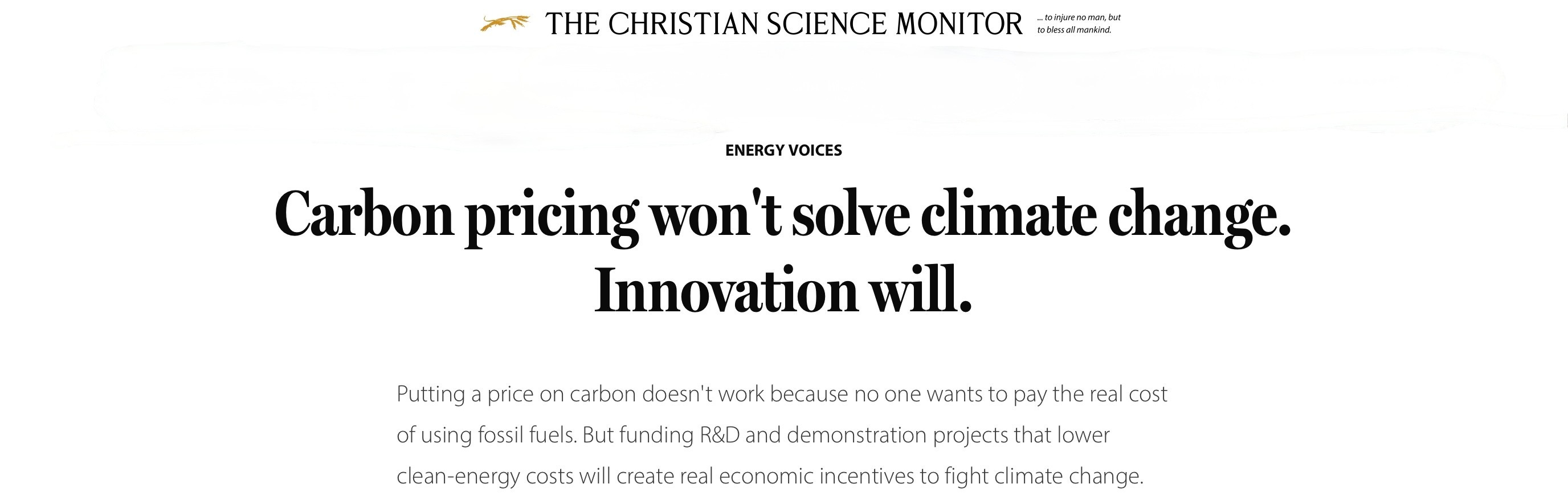
They wrote words that today sound prophetic:
The fixation on carbon pricing within the climate debate has distracted the world from adopting a more effective and comprehensive set of climate policies that make economic sense. The debate needs to change for more viable, pragmatic, and high-impact solutions to emerge (emphasis added).
The debate did need to change, but the rest of us beltway types were captured by groupthink’s fine art of not listening.
Pragmatism’s Two Goals
Steep and Nicholson had said the magic word: pragmatism.
I told Steep at the end of the briefing that, while we wouldn’t give up on pricing carbon because it had beltway momentum, we were certainly open to their approach if it gained traction. So I did listen a little bit. I listened enough to remember, but not enough to act.
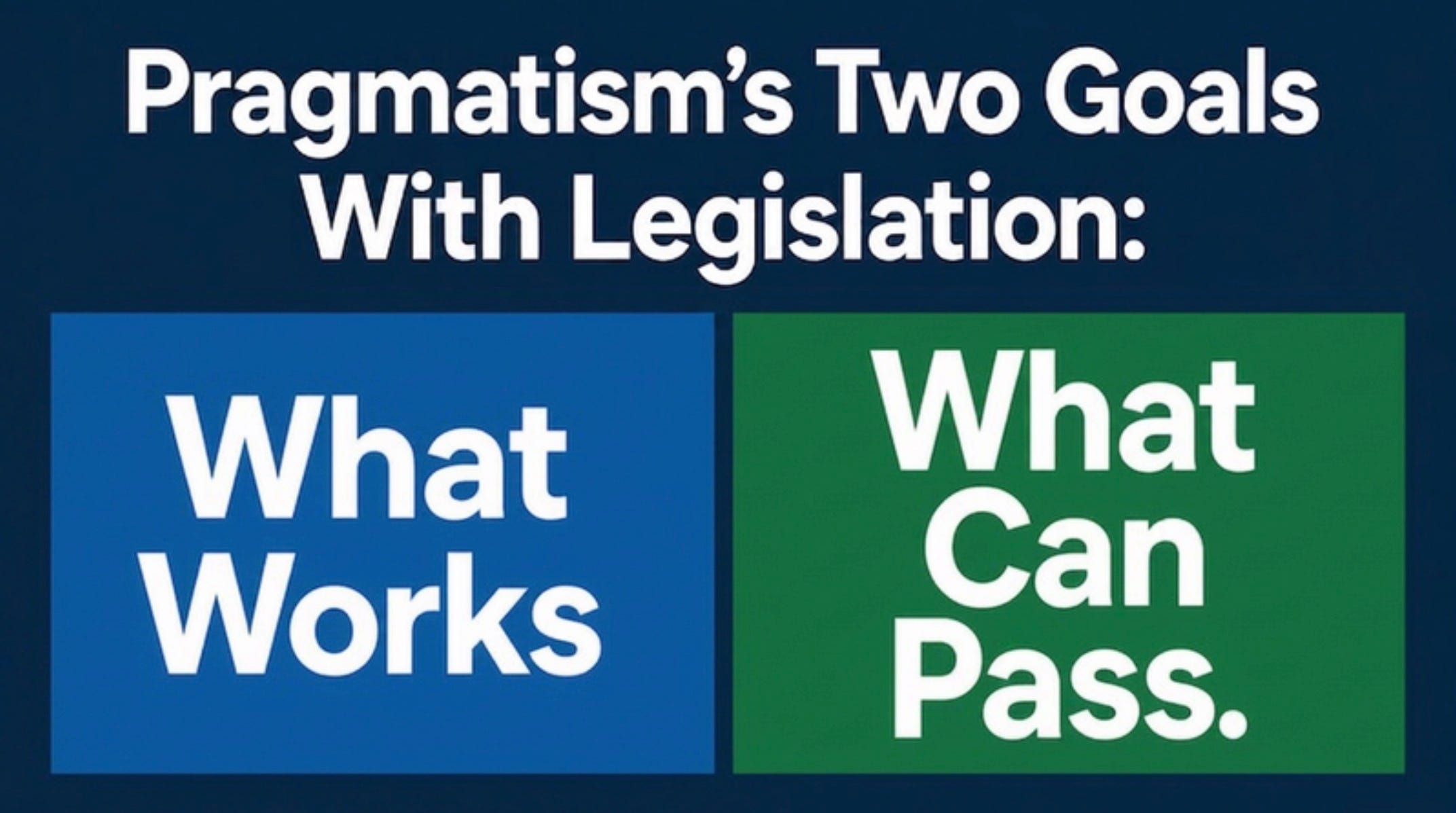
Truth is, I was never inextricably wed to a carbon tax or even cap-and-trade. I’m too pragmatic for that. And when it comes to legislation, our value of pragmatism has two goals: what works, and what can pass.
Unfortunately, at the time, all of us serious beltway types didn’t listen fully to pragmatism’s wisdom. We heard the first goal, but, amazingly for serious smart beltway people, not the second: what can pass. Given all the complex neoclassical mathematical formulas run by the computerized black boxes, given the math fetish of policy types, you think we could do the simplest of equations: 50 + 1.
I mean, isn’t that our frikkin’ job, what can pass?
I even had the wisdom of regular folk outside the beltway trying to get me to listen. A few years earlier we had conducted focus groups asking evangelicals what would it take for them to purchase clean energy. Their response: make it cheaper than the polluting stuff.
At the time I was disappointed. Why wasn’t their children’s health, why wasn’t the climate threat, enough of a reason to pay more? Well, they wanted those benefits, too. But they still wanted clean energy to cost less. They wanted both. And why not?
Unfortunately, my pragmatism didn’t push me to see that pricing carbon only achieved the first goal, what works (and, as we all knew but chose to ignore, not that well).
But that goal is worse than worthless if you can’t achieve the second goal — what can pass. Why worse? Because we wasted over a decade’s worth of time, effort, and money to push the unpassable.
Just because it works doesn’t mean it will pass. Politically we built our own Potemkin Village, and only fooled ourselves.
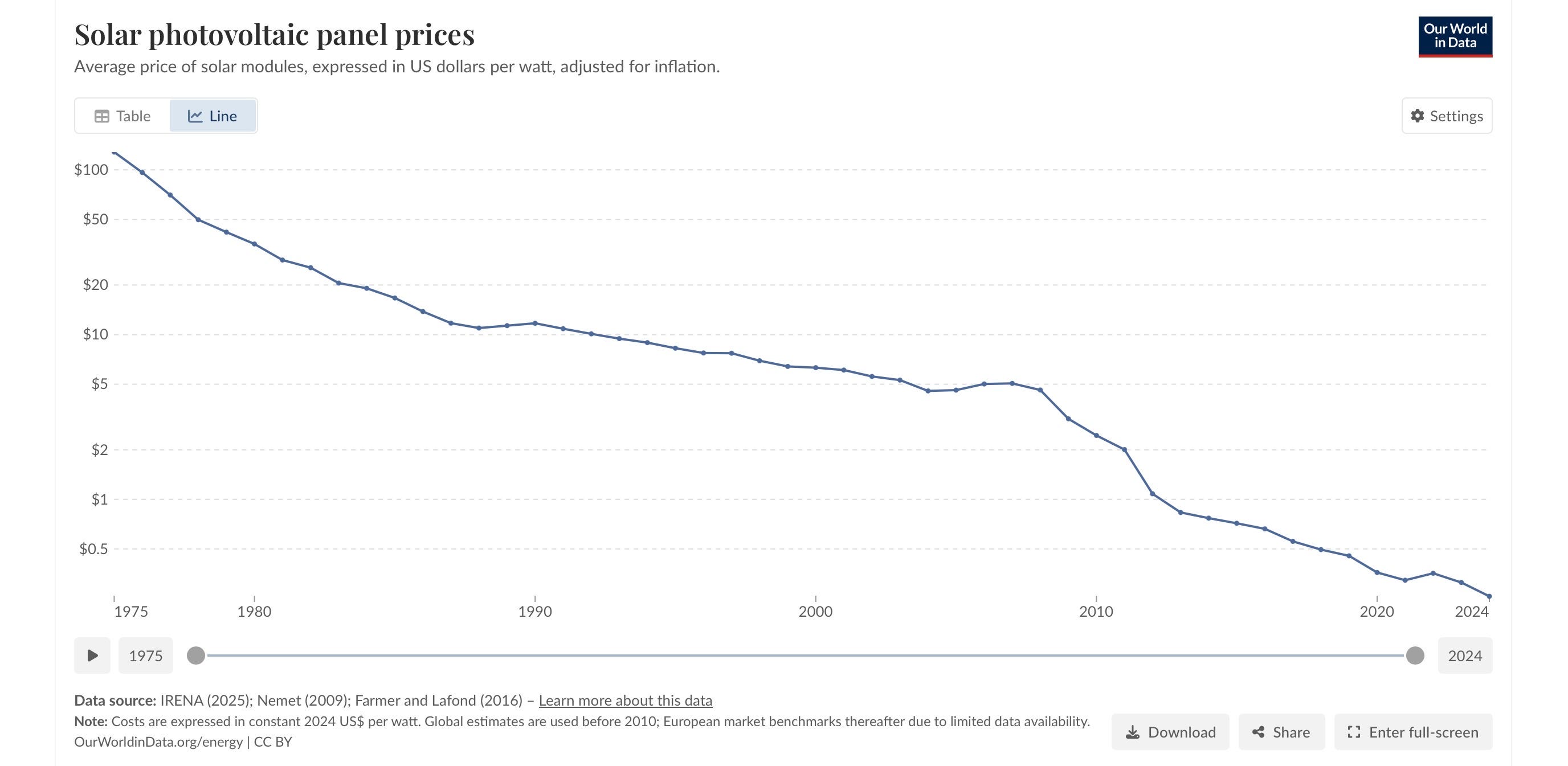
Here’s the irony to the story. Renewables, especially solar, did get much cheaper, as seen above.
But it wasn’t the US that made renewables cheaper. It was China. And they did it not only through innovation. They did it with massive government investment in production because it was in their national interest to manufacture their way out of fossil dependence and the pollution causing societal unrest. They did it through cut-throat domestic competition between Chinese solar companies and supplying the world with the results. But that’s a story for another day.

As for those of us in The Climate Movement, we are not simply guided by what can be achieved, what can pass today. In the policy-political sausage-making process we must push for more and then take what we can get (what can pass), even as we simultaneously use our moral power to build the people power and the staying power (P3) to demand what our other values of justice and love and sustainability require of us. Our pragmatism must always be combined with our other values.
With our P3 we must work to change the art of what’s possible so it becomes bold enough to achieve our vision, purpose, and Major Goal: to overcome climate change by creating a just and prosperous sustainability that enhances wellbeing for everyone and everything. We must make the impossible possible and the possible actual and the actual beautiful and our just future come faster. Join us!
If you are new here, check out our Intro Series. If you like this post, please “like,” comment, and share. And thanks for all you’re doing.
Excellent 20 year retrospective (with some great pics from the early days!) on what’s needed to implement a pragmatic climate policy solution-what works in terms of reducing emissions, and what will pass politically. The conclusion: making the good stuff (clean energy) cheaper is better than making the bad stuff (dirty energy) more costly.