

The Midterms? It’s a Start. But We’ve Got a Big Trumpian MAGA Mess to Clean Up
We’re fresh off the midterms 2026 Blue Tsunami. Wow! It could help restore some of what I’ll describe below.
But it will take a new Democratic Administration and Democratic Congress to begin to fully heal what Trump and his inane wrecking crew have done. It’s easy to quickly and mindlessly tear things down. Much harder and longer to build programs of quality back up again.
Today’s post is just one of the many things we need to do to clean up the mess and create a better future.

Scientists Coming Together
Due to their vindictiveness, arrogance, stupidity, and greed, Trump and his Administration have frozen and cut climate science funding across the country, and fired or pushed out climate scientists and eliminated positions.
That’s why efforts by climate/earth scientists that began in 2025 to create good out of bad are very much needed — even after the 2026 Blue Tsunami that included a group of scientists elected and ready to repair the damage.
Responding constructively to times of stress, upheaval, and even persecution is a choice. Thankfully a collaboration has arisen to show the way forward with an approach centered in what they call “movement generosity.”
What’s Been Lost
But first we must begin to get a sense of the magnitude of what’s been lost to help us more fully comprehend why there is a profound need for such leadership. As of January, over 10,000 folks with PhDs have departed from 14 federal agencies according to an analysis by the journal Science. With them about 107,000 work years were lost in 2025. Poof. Gone.
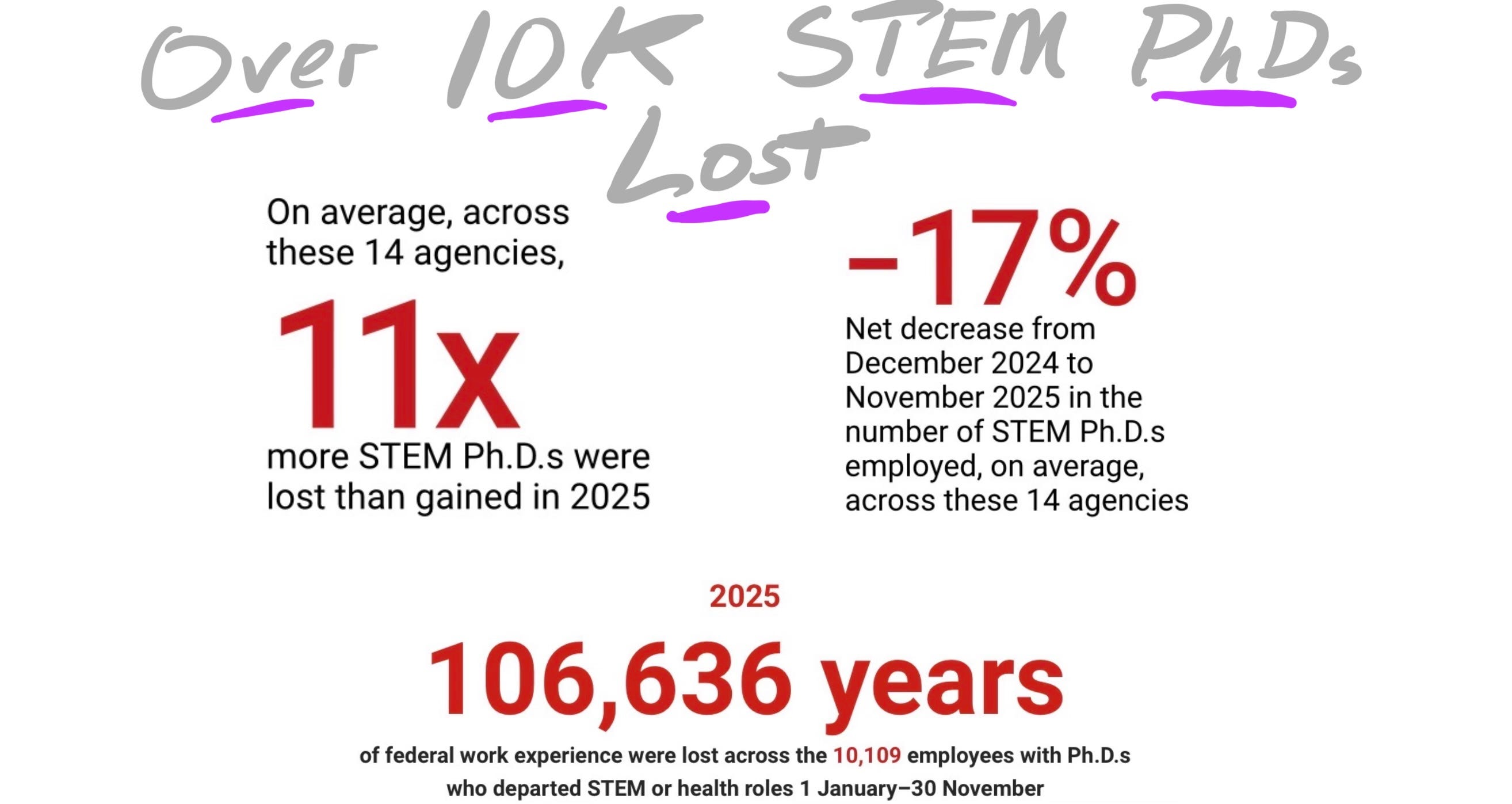
The top three agencies in terms of these 2025 losses are climate/environment related: the Environmental Protection Agency (EPA), the National Oceanic and Atmospheric Administration (NOAA), and the US Forest Service.
“Climate Reserve”
An effort to salvage climate science and scientists from the Trumpian onslaught began to take shape at a meeting in July 2025 organized by the Aspen Global Change Institute (AGCI). Out of these conversations grew what is now called “Climate Reserve.”
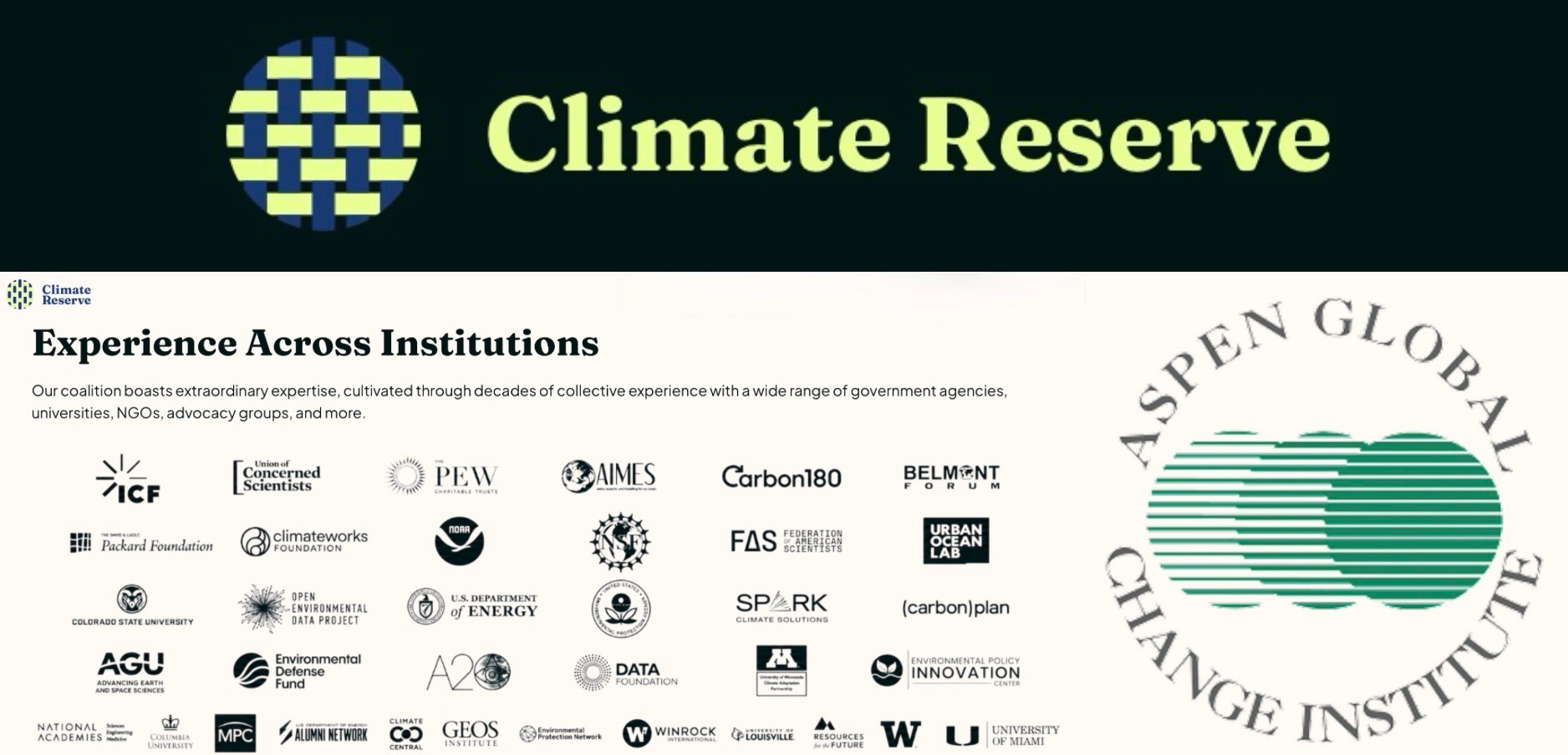
This is an initiative/coalition housed institutionally at the AGCI. As you can see above, the coalition includes such entities as the American Geophysical Union (the premier professional association of earth and space scientists), the National Academies of Science, Engineering, and Medicine, Climateworks, and the Union of Concerned Scientists.
Climate Reserve exists to do two basic things:
Find New Homes for People and Projects
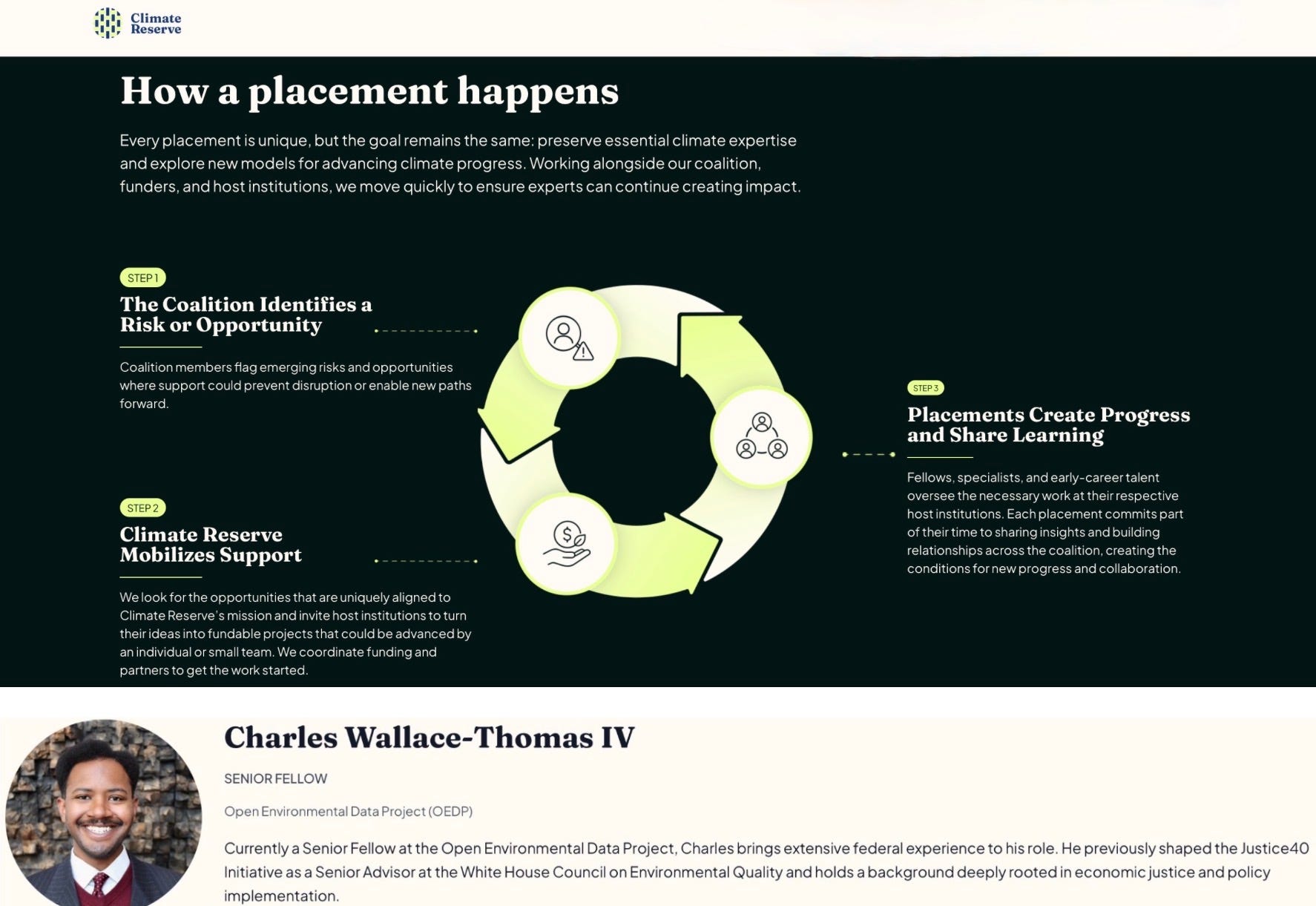
“We are providing the resources to create new homes in stable institutions for personnel and projects jettisoned by the federal government. These placements prevent irreversible loss of critical talent and technical systems.”
The graphic below illustrates the placement process, and below that I have included an example of one of the scientists, Charles Wallace-Thomas IV, who has been placed.
Create Collaborations
“We are proactively connecting field-leading experts in science, policy and frontline coordination to create new connective tissue across the climate ecosystem. Together, our coalition is finding new ways of working that will deepen the ecosystem’s collective durability in the face of volatility.”
“Movement Generosity” and “Radical Collaboration”
For many, these efforts are guided by what Dr. Amanda Staudt, the newly appointed Executive Director of the American Meteorological Society, and others call “movement generosity,” which leads to “radical collaboration.”
Ah, warms my Climate Movement heart! Let’s all get generously radical together!
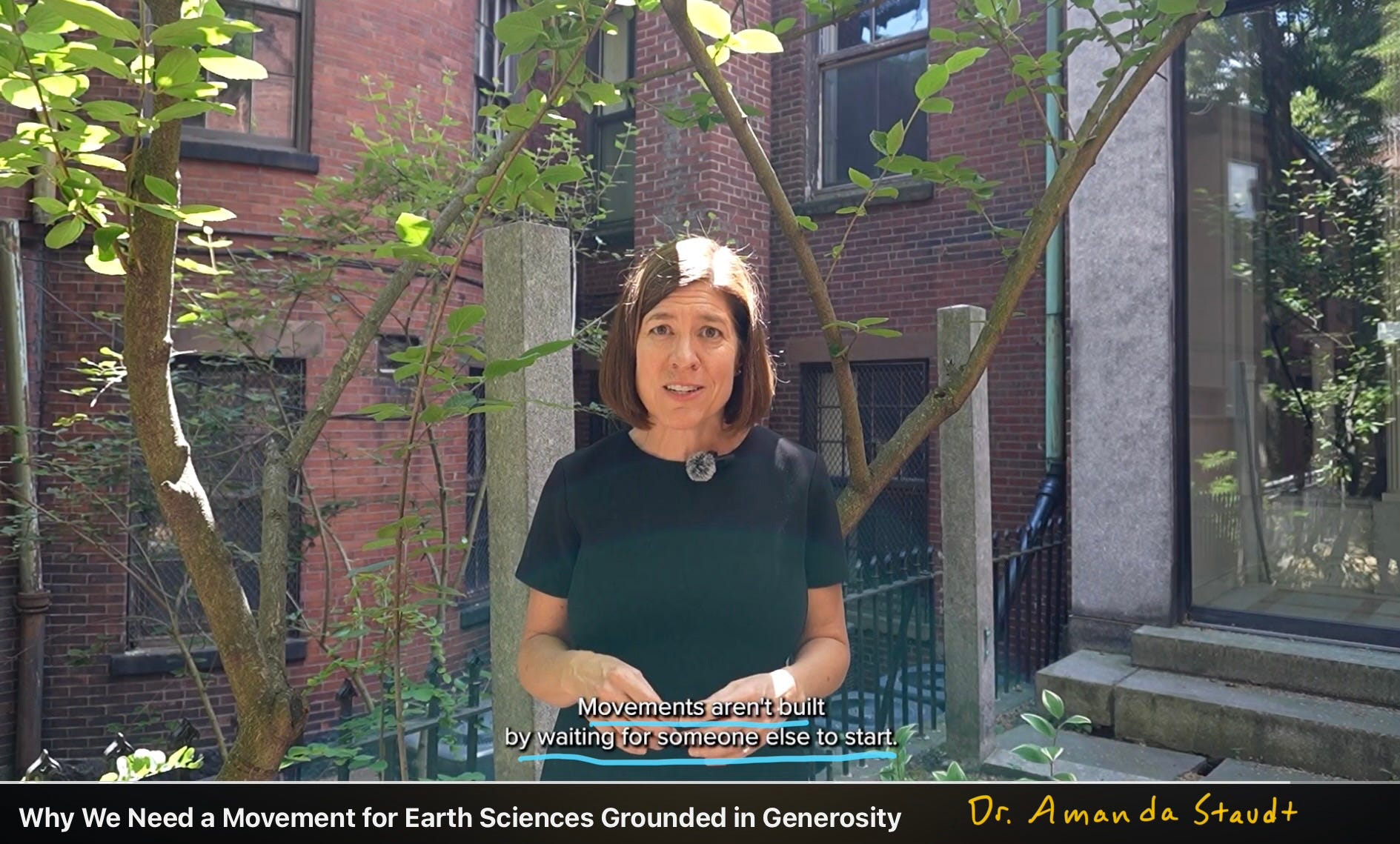
She and four other colleagues, in a piece entitled “A Movement for Earth Sciences Grounded in Generosity,” are calling their fellow scientists to join them and describing what such a movement should look like.
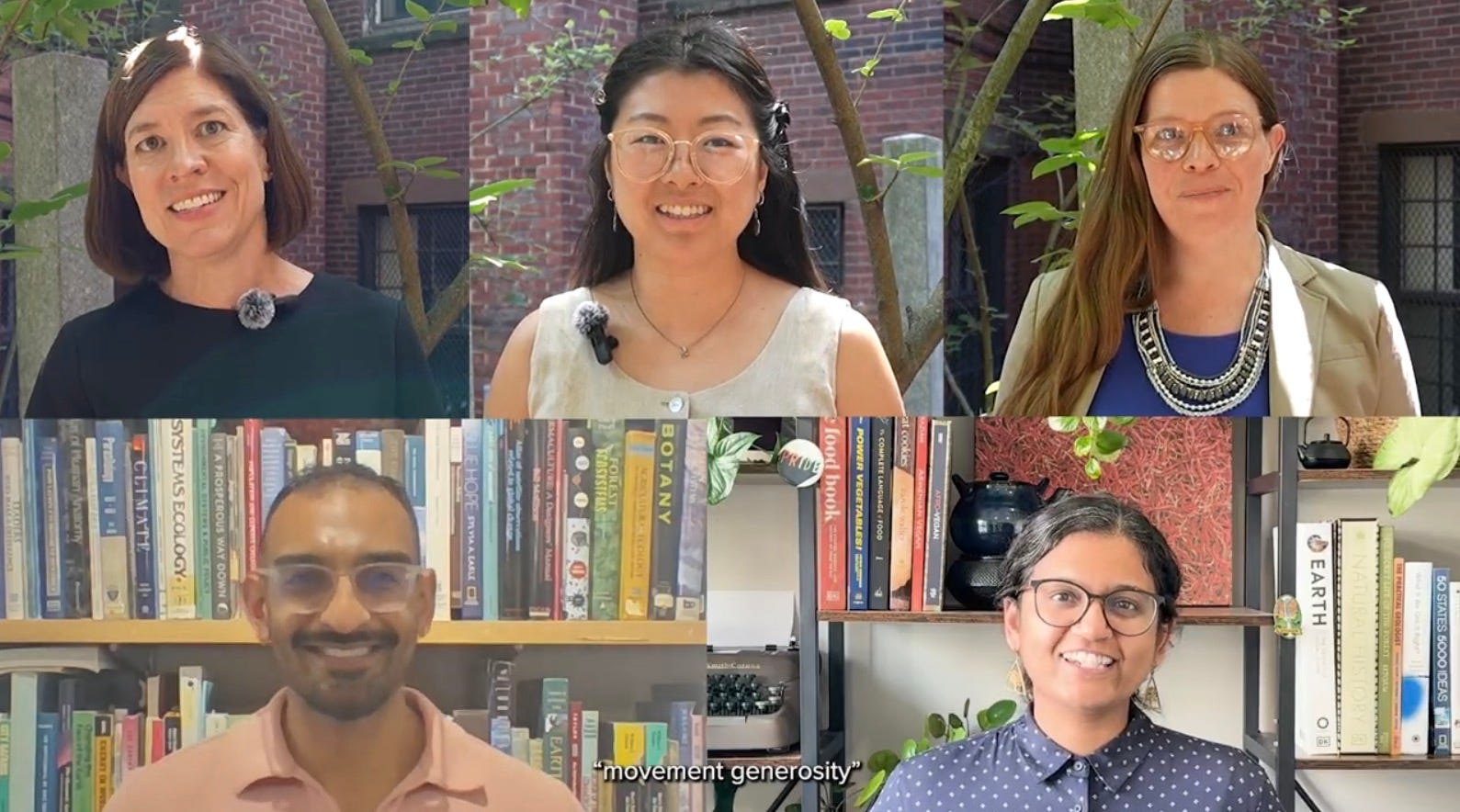
In a brief video entitled “Why We Need A Movement For Earth Sciences Grounded in Generosity,” Staudt explained that before Aspen “the five of us didn’t know each other.”
Before then she and her colleagues were in their own siloes worried about how scientists were losing their jobs, programs decimated, and vital data was being lost or not collected. But in coming together they discovered their common concerns and generated insights that “none of us would have reached alone.”
“If that can happen for a group of strangers who found each other in a moment of crisis, imagine what can happen across an entire field. The future of earth sciences will be secured by all of us choosing to act with the urgency, imagination, and generosity this moment demands. Movements aren’t built by waiting for someone else to start. They’re built by everyone who decides to show up (emphasis added).”
Movements aren’t built by waiting for someone else to start. They’re built by everyone who decides to show up. — Dr. Amanda Staudt
Exactly right.
This Substack isn’t called Climate Hope Together for nothing. When we come together we become the hope we’ve been waiting for. We make hope happen. Just like Dr Staudt and her colleagues, each of us must find our Fields of Action upon which to exercise our gifts. We are all Olympian Artist-Athletes creating beauty and victories together.
One of our characteristics/imperatives/goals is to be together enough, and I’ve written a whole series of posts on what that can look like — organizations, coalitions, associations, campaigns, etc. A vital way to be together enough are Climate Action Teams or CATS. These are small groups that anyone can form. We need CATS because the other ways of being together enough just won’t generate the numbers and staying power we need.
As Dr. Staudt and her colleagues said: “Together we can build something more durable, more coordinated, more resilient, and more bold than what existed before.”
Movement Generosity
Generosity should be a hallmark of the entire Climate Movement. But Dr. Staudt and her colleagues have a particular understanding of what “movement generosity” means:
Movement generosity is the practice of working together with a range of partners toward shared goals, in a manner that pools access to and use of financial resources, insights, contacts, and convening power. Partners who practice movement generosity share intelligence, are proactive in connecting people, and are thoughtful in how they convene to support each other. In other words, the concept means using what you already have—networks, know-how, legitimacy, access—to support a broader movement. We believe that movement generosity should underpin a movement to reinvent how institutions sustain Earth sciences and put information to work in service of society.
The key word? Share.

Now we could make some sappy snappy comment about learning about sharing in kindergarten. Or we could recognize, as they have, that for organizations where people are responsible for budgets and raising and generating funds and achieving goals, this no simplistic or easy matter.
They go on to explain that this way of thinking and behaving:
encourages shifting focus from the resources and capacities available to a single organization, working with its typical funders and audiences, to the resources and capacities accessed by many across the coalition, setting sights on larger goals that can be accomplished through collective action (emphasis added).
But collective action without power won’t achieve our tenth Movement Value: success. As The Climate Movement, our three forms of power are (1) moral power; (2) people power, and; (3) staying power. The moral power is a given: it’s simply the right thing to do. The people power? That we have to grow. We need many kinds of efforts like what Dr. Staudt and her colleagues are creating.
Ok, but what about staying power, where does that come from? It comes from our shared values and the relationships we build that themselves are guided and sustained by our values.
Those advocating for movement generosity have a good understanding of what it takes to build relationships for the long haul.
Partners must invest significant time in developing and deepening their understanding of each other to enable shared strategic planning about how best to leverage the capacities across partners. Furthermore, regular and transparent communication is essential to building trust among partners, which in turn creates conditions that enable greater transparency. Relationships must be nurtured in an ongoing manner, recognizing the activities within each partner organization are constantly evolving in response to new needs and opportunities (emphasis added).
Trust, meaningful communication, generosity. Besides longevity and relational durability, these are what can lead to what they call “radical collaboration.”
Radical Collaboration
Ok, so what do they mean by “radical collaboration”? Here’s what they mean.
Practicing movement generosity is a commitment to radical collaboration. … Each partner bears a responsibility to marshal their own activities so as not to encroach on areas where other organizations are already poised to lead. At the same time, partners should contribute actively to shared infrastructure, providing data, labor, funding, or convening power as they are able, even when those contributions don’t return obvious credit to their own organization.The trust engendered between groups by being more transparent about their goals and capacities needs to be honored by not using shared insights or good ideas for one’s own benefit at the expense of others.
Ok, so that’s radical collaboration. Sounds hard.
That’s what makes it glorious.
When we look back, will we say we met this kairos moment? We answered the call to do what’s right?
Post-Tsunami: Go Home, Or Get In The Game?
Phew! The Dems are back in the picture. Great! Now we can let them do the heavy lifting and we can go back into our silos. I mean, movement generosity and radical collaboration — that’s a lot of work. Let’s just go back to the way things were. So much easier. So comfortable.
Well, I certainly hope not! Just like a healthy democracy, The Climate Movement takes a lot of work. We’re not where we need to be — yet. But given our need for speed and scale of transformation, there’s really no way we’ll achieve that absent a Movement that is big and broad and active enough, our first characteristic/imperative/goal — 16 million in the US by 2030. And not just numbers, but a Movement that looks like America.
Dr. Staudt and her colleagues are adding to the breadth we must have.
But our need to be big and broad and active enough means we need you too! We need you to not just observe from the stands, but get in the game — even form your own Climate Action Team or CAT. Only you can play your role. Only you can be the Artist-Athlete we need you to be on your particular Fields of Action.
So join us!
If you are new here, check out our Intro Series. If you like this post, please “like,” comment, and share. And thanks for all you’re doing.