



The ARTC AI Series
1. AI: Friend or Foe of Climate Action
I began my ARTC AI series with this subheading for my first post:
We Can’t Ignore the Potential of AI to Help Because We See How It Can Hurt
Help and Hurt — that pretty much sums up the current AI-Climate Action conundrum. AI has the capacity to do both, but today folks are rightly up in arms about the Tech Bros running roughshod over communities and the climate.
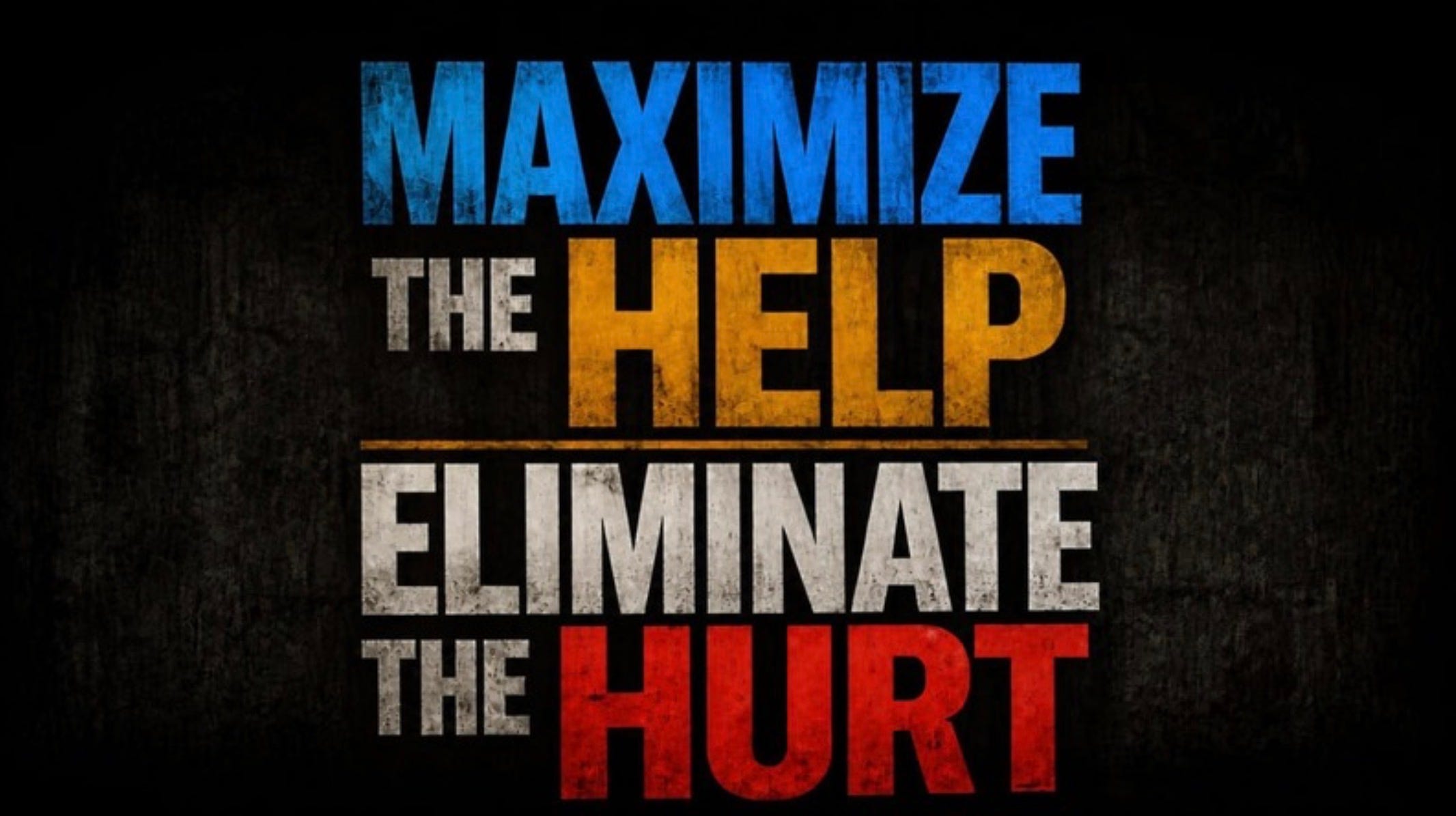
It’s our job as The Climate Movement to maximize the help and eliminate the hurt.
In this first post I asked several questions.
Can we stop AI? No.
Should we support or oppose AI? Yes.
Is AI friend or foe? Yes.
Should we believe the Tech Bro AI-climate hype? No.
A “Just Say No” response to AI simply won’t work. It’s moving forward whether we like it or not. So let’s make it work for us, not against us.
We need to oppose the stupid and hurtful way AI data centers are happening. They should be off-grid and completely self-sufficient, powered 100% by renewables + storage. They should be kept cool without impacting local water supplies and should create local good-paying permanent jobs.
Right now AI is both friend and foe, something I discuss more fully in the fourth post of this Series. As I said, our job is to maximize the help and eliminate the hurt.
From the beginning we must be clear-eyed and realistic about AI’s ability to help with climate action. Even as we maximize the help, we must not allow AI Tech Bro fantasies to bamboozle anyone, especially those in power.
2. AI & Climate Action: Get Serious
In the second post I review the AI-Climate Action nexus — or how AI can help climate action with the needed speed and scale — and find the current situation woefully inadequate. We can’t look to the private sector for leadership. It must come through the public sector — and that means The Climate Movement and Climate Action Supporters pushing governments to make this a reality. The Catalytic-4 must work together to get this done.
3. AI & Climate Action: The Future Is Now
While not yet living up to its potential for helping with speed and scale of transformation, in this post I try to whet all of our appetites with what’s happening now. I began with this opportunity: “According to one recent study, current, proven, off-the-shelf AI can reduce climate pollution by 5-10% by 2030.”
Here are examples:
The Google company Tapestry is helping PJM, the largest grid operator in North America with 67 million customers, speed up the application and interconnection process for renewables.
Husk Power Systems in India and Africa provides “‘pay-as-you-go’ 100% renewable power to off-grid and weak-grid communities that is 30% cheaper than the alternative: diesel generation. Husk estimates that its AI model enables it to predict user demand with 80% accuracy across its microgrids, thereby improving capacity utilization, reducing costs, delivering lower prices, and guiding capital investment in additional capacity.”
Seattle and other major cities around the world are partnering with Google’s Green Light program to use AI to optimize traffic lights, reducing climate pollution by 10% and stops by 30%.
A recent study from a partnership between American Airlines and Google AI found that having jets fly in less humid air resulted in 69% less global warming from these flights. How? By reducing contrails.
AI helped a global health care company find 50 times more climate pollution reduction potential from its supply chains than its original 20% goal.
Mineral, an Alphabet company, has designed an AI-powered system, recently purchased by Driscoll’s, the world’s leading berry company, that includes a solar-powered “rover” equipped with sophisticated cameras and AI perception tools to help deliver info on yield predictions, plant ripeness, disease risk, and weed presence.
4. Big Tech AI & Big Oil Fueling Climate Impacts
So What’s Worse than AI Data Centers for Climate Change? Something called AI Enabled Emissions.
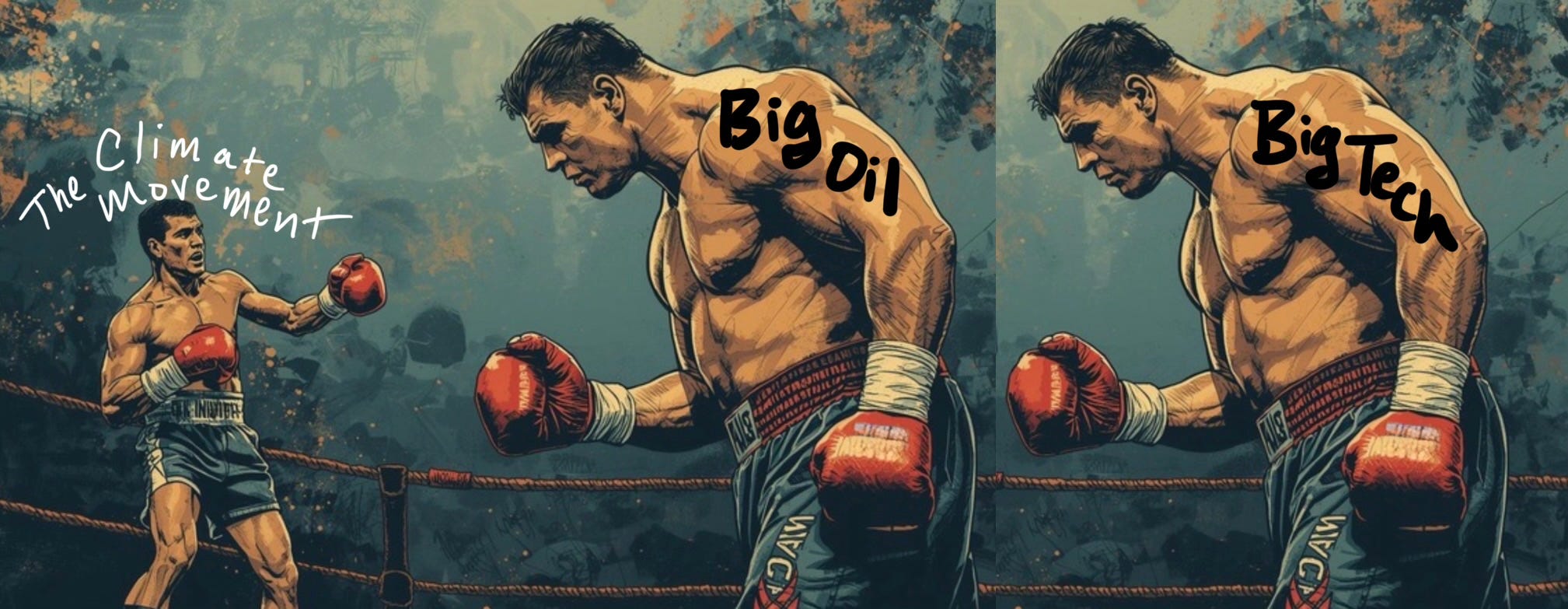
AI is helping Big Oil find more fossil fuels, like a demented fossil dating site whose offspring are misery and death, thanatos on steriods. They are enabling emissions that might not have occurred otherwise. One company touted that its AI could help Big Oil yield an additional trillion barrels from existing fields, securing “every last drop.”
When we compare Big Oil and renewables, the latter is far behind in utilizing AI. Our folks must be 4-5 times better just to break even, but many are not even out of the starting blocks while the AI-fossils are half way around the track already.
The Climate Movement cannot let AI-fossils prevail.

5. Must Go Faster: Self-Driving Labs & Climate Action
To get going in a big way on reducing climate pollution we don’t need to wait for some future tech-savior solution to magically appear. We’ve got the tech right now to do so. But for the full scope of speed and scale to become a reality we can be helped immensely by continual tech invention and innovation and strategic-ARTC. One way to speed things up significantly is through a combination of AI and robotics in systems called self-driving labs that do autonomous experimentation.
Self-driving labs form hypotheses, run the experiments, analyze the results, and run it over again until obtaining the desired outcome. They can run millions of simulated experiments in cyberspace before doing so in the real world, and then run them more precisely and without stopping until the task is done. What would have taken years now takes weeks. And it’s only going to get faster.
Problem: there aren’t enough self-driving labs, especially ones focused on stuff that can help with climate action. We must push governments to fund them.
6. The Climate Movement’s AI-Climate Action Team
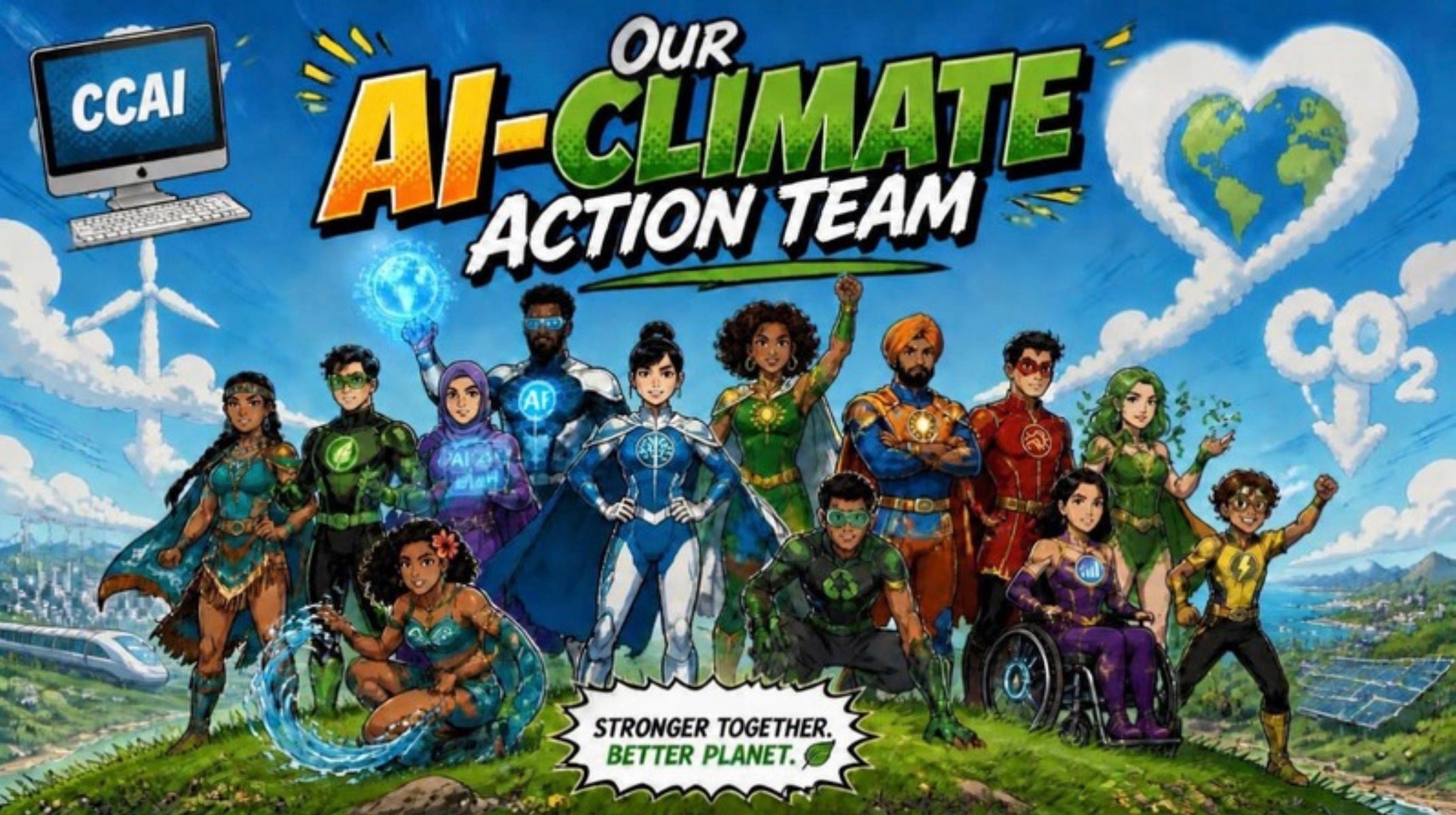
In my sixth post in this initial AI-Climate Action Series I put a well-deserved spotlight on a group of volunteers who have created a non-profit organization called Climate Change AI (CCAI). They exist to catalyze AI-climate action. CCAI does so through networking, published research, training, and, when funding is available, grants. They are a diverse group, including “researchers, engineers, entrepreneurs, investors, policymakers, companies, and NGOs.”
CCAI is a terrific example of individuals coming together as a team of Artist-Athletes upon their particular Olympian Field of Action to exercise their gifts, knowledge, passion, wisdom, and values.
However, as I say in the post, “the CCAIers are under no illusions, and neither should we be. These valiant AI-Climate Action Heroes and others on this particular Field of Action need our help.” CCAI cannot match the deadly AI duo of Big Tech and Big Oil. As I discussed in post #2, time to get serious about having AI work for us and not against us.
As CCAIers push forward, we must have their backs.
This means that the rest of us in The Climate Movement must play our parts on both our own particular Fields of Action as well as the two larger Fields of Action all of us are participants on: (1) growing and improving The Climate Movement, and (2) engaging on policy action. Combined with Climate Action Supporters, we must push policy makers to continue all efforts towards speed and scale. In other words, The Catalytic-4 must do their job.
Conclusion
My fellow Artist-Athletes in The Climate Movement and all of you who are Climate Action Supporters, we’ve got our work cut out for us when it comes to AI and climate action. “Just say No” to AI isn’t an option. It’s exactly what the Big Tech/Big Oil deadly duo wants. But neither can we accept all the bad crap associated with AI data centers. So we must push for them to be off-grid and self-sufficient via renewable energy with zero impact on local water, while also creating good permanent full-time jobs. And we must support scrappy groups like CCAI while simultaneously pushing for public R&D funding focused on AI-climate action, made faster by additional support for self-driving labs.
We must maximize the help and eliminate the hurt.
And you know what? We can do it all. Join us!
If you are new here, check out our Intro Series and our other ARTC posts. If you like this post, please “like,” comment, and share/restack. And thanks for all you’re doing.