

In earlier posts I’ve discussed how AI can be a problem, what types of AI could help society with the speed and scale needed to overcome climate change, and how AI’s potential to help is not being matched with the needed investments and strategic direction by society through our governments.
In this post I want to give a taste of how AI is already helping to overcome climate change, but not yet at speed and scale.
Let me say this right up top: for those of you working at this intersection between AI and climate action, THANK YOU! If you don’t already consider yourself a part of The Climate Movement, please join us! We need you.
The Future Is Already Here
AI is already being deployed in useful ways. We don’t have to wait to get started in a big way with AI. According to one recent study, current, proven, off-the-shelf AI can reduce climate pollution by 5-10% by 2030.
Here’s a sampling of illustrative examples of how AI can help now.
» Electricity
Improve electrical grids, integrate renewables into smart grids, and better predict user demand.
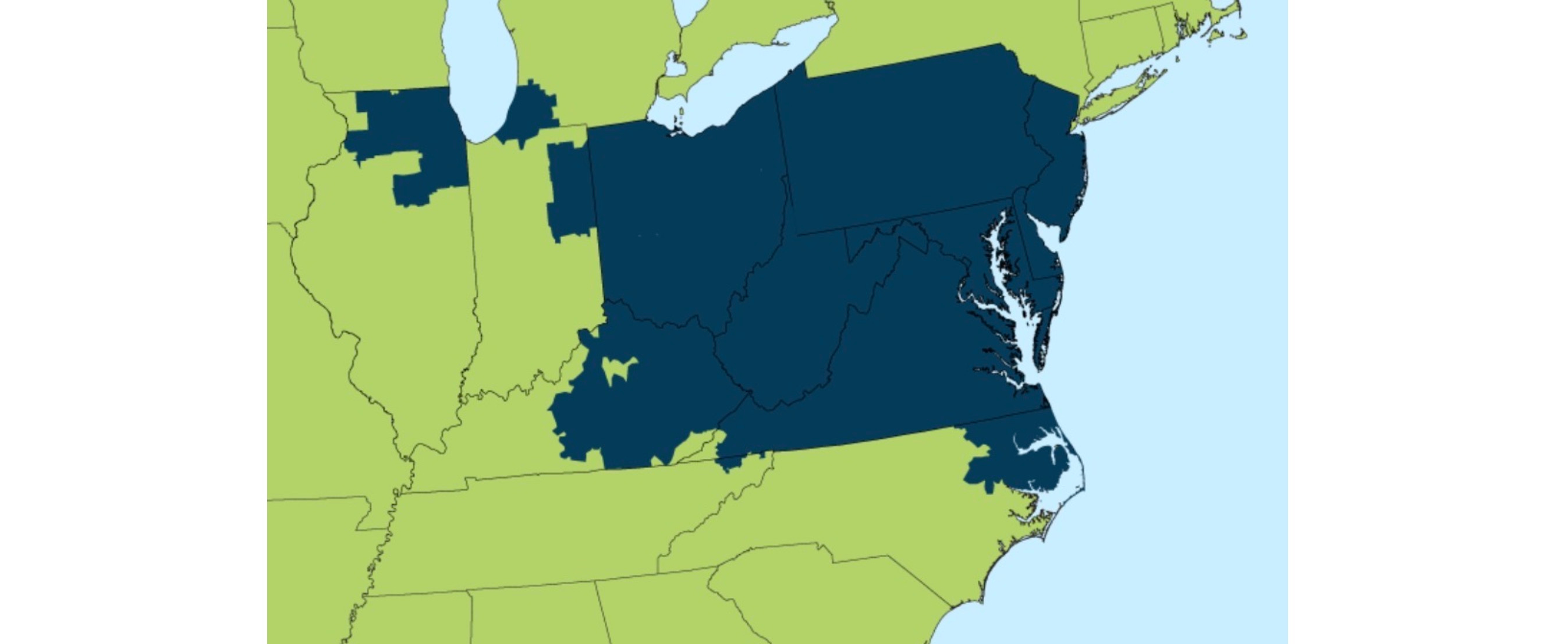
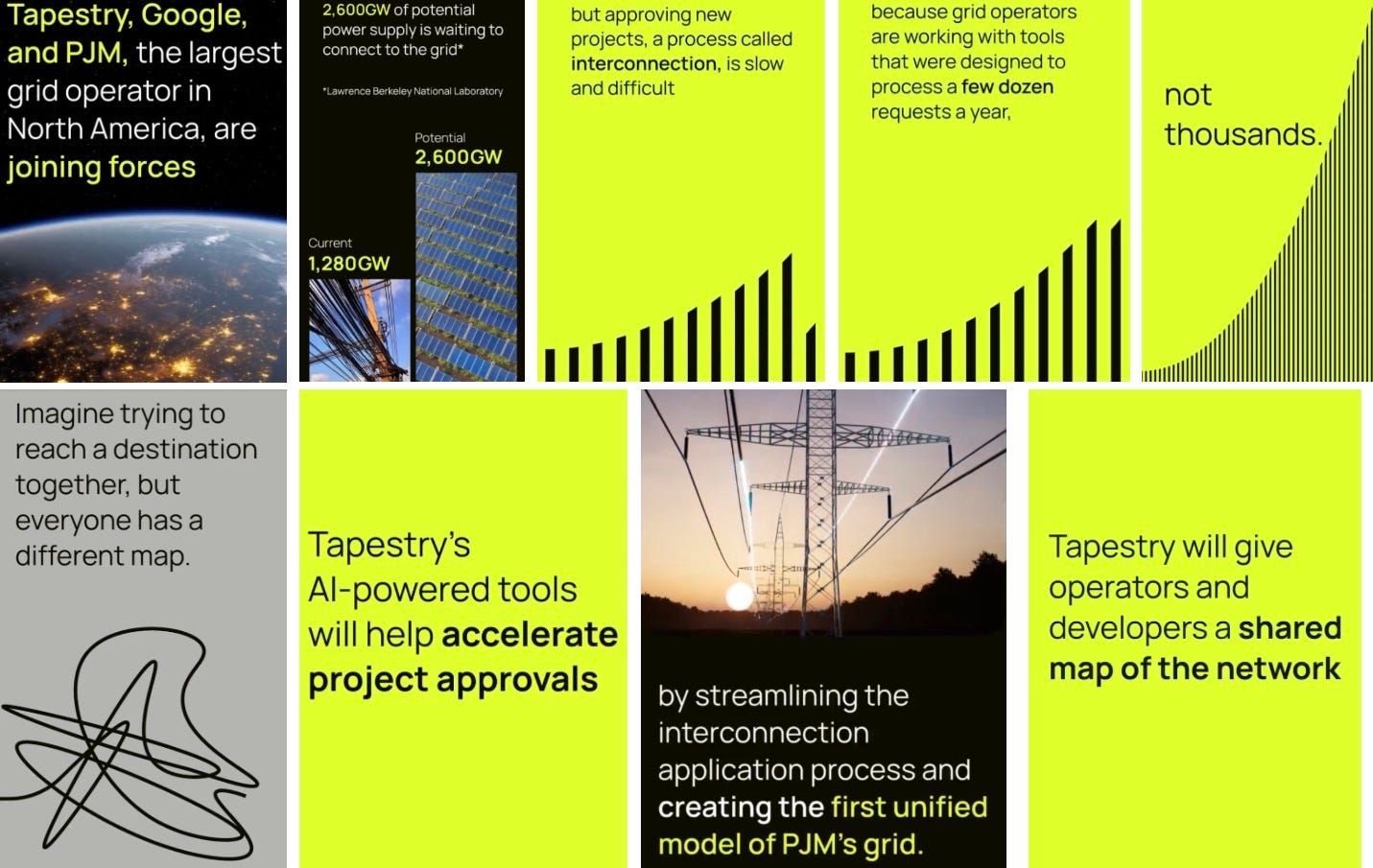
One example is how AI via the Google company Tapestry is helping PJM, the largest grid operator in North America with 67 million customers, speed up the application and interconnection process for renewables:
By automating and improving the data verification process for things like land rights, equipment, and grid impacts, we aim to reduce the burden on energy developers and PJM planners, and significantly reduce the time it takes to process new project applications.
With the application of Tapestry’s tools and insights, the time it takes to process new project applications will significantly reduce, allowing new capacity to come online far faster. And with solar, wind, and storage project capacity making up ~ 97% of the PJM interconnection queue, we will also support the rapid and reliable integration of more carbon-free energy sources onto the grid.
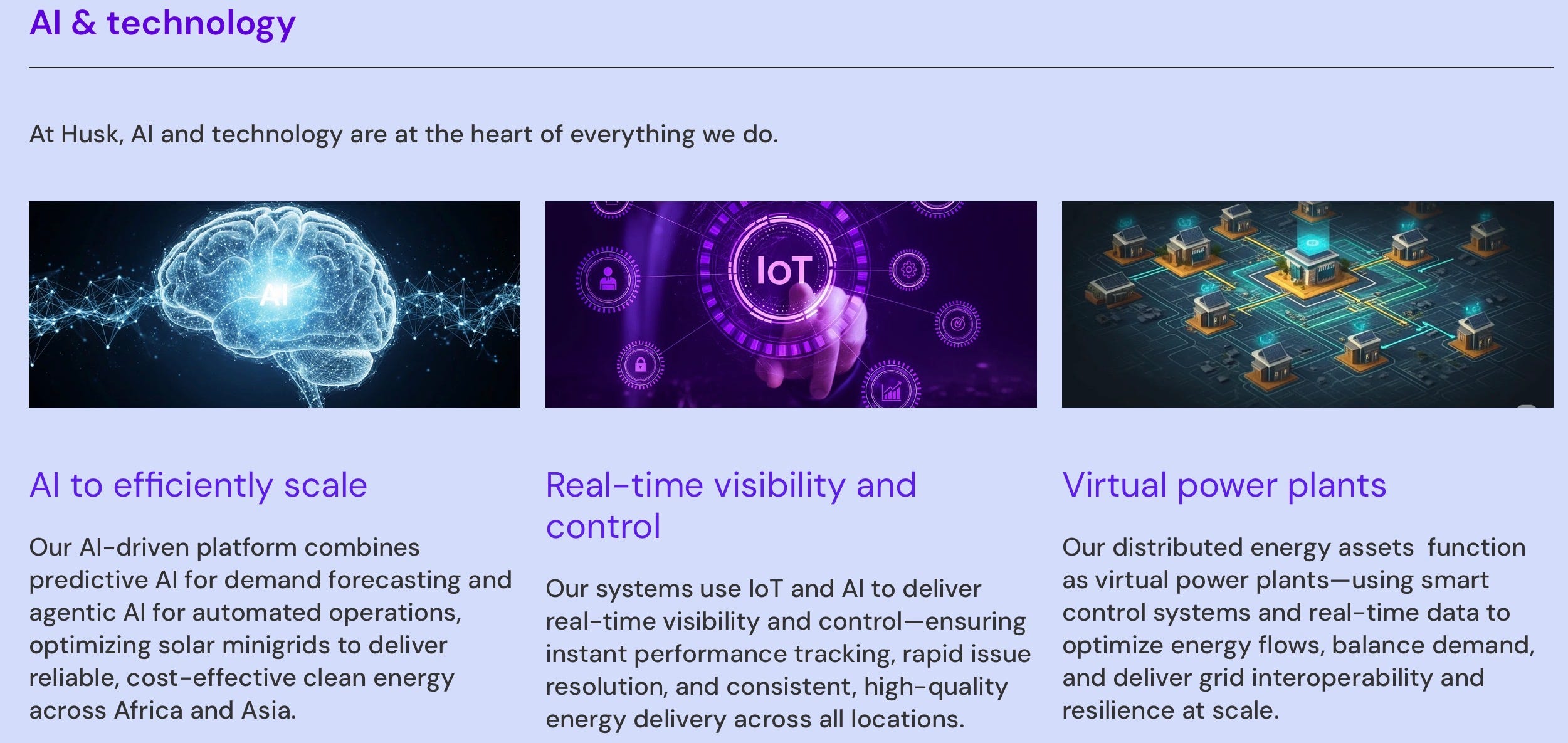
Husk Power Systems offers a non-US example of how AI helps microgrids:
In Africa and India, Husk Power Systems provides “pay-as-you-go” 100% renewable power to off-grid and weak-grid communities that is 30% cheaper than the alternative: diesel generation. Husk estimates that its AI model enables it to predict user demand with 80% accuracy across its microgrids, thereby improving capacity utilization, reducing costs, delivering lower prices, and guiding capital investment in additional capacity (emphasis added).
» Transportation
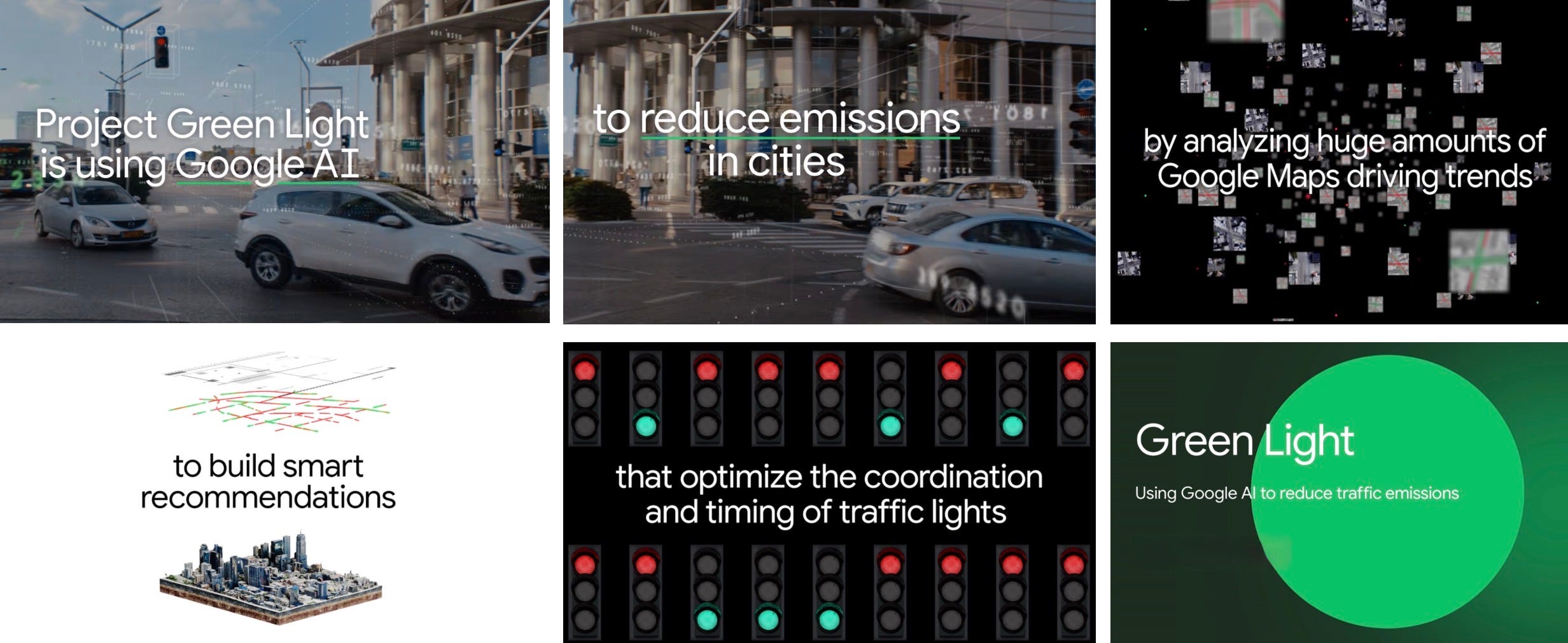
AI optimization of traffic light timing to reduce pollution from idling.
Seattle and other major cities around the world are partnering with Google’s Green Light program to use AI to optimize traffic lights, reducing climate pollution by 10% and stops by 30%.
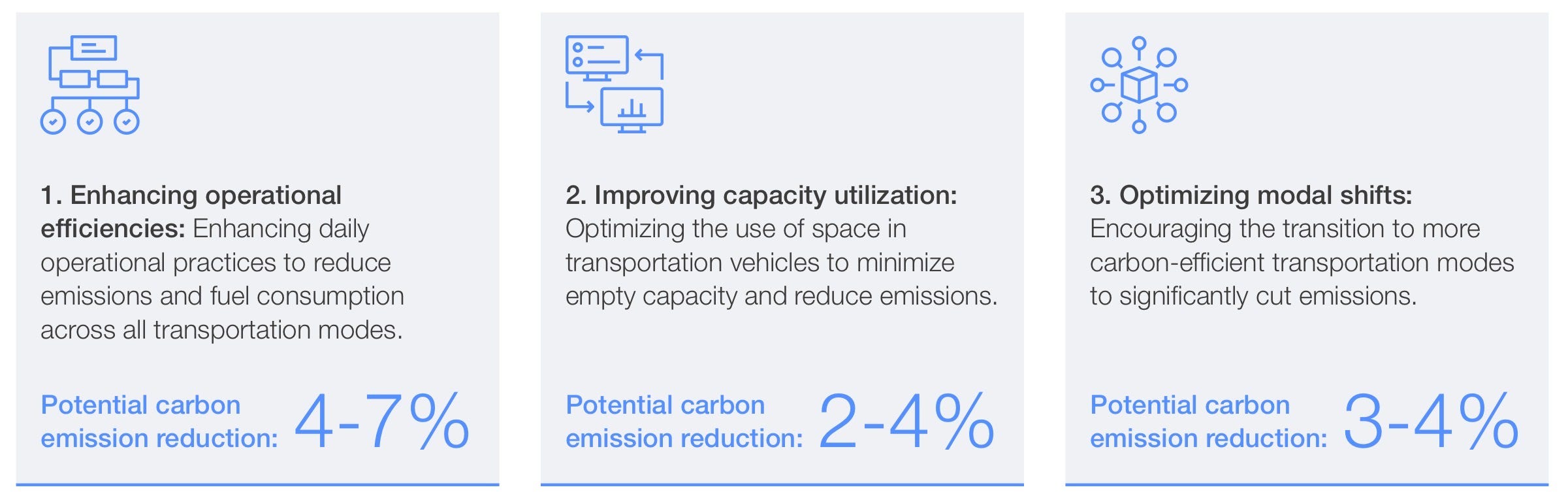
AI optimization of the transportation of goods via improved freight shipping.
A recent study found climate pollution from freight shipping could be cut 10-15% from the three changes pictured below:
AI helping to reduce global warming from air flights.
Condensation trails from jets or “contrails” form when water crystallizes around soot from jet exhaust. Such contrails produce 35% of global warming from air flights. But a recent study from a partnership between American Airlines and Google AI found that having jets fly in less humid air resulted in 62% fewer contrails and 69% less global warming from these flights.
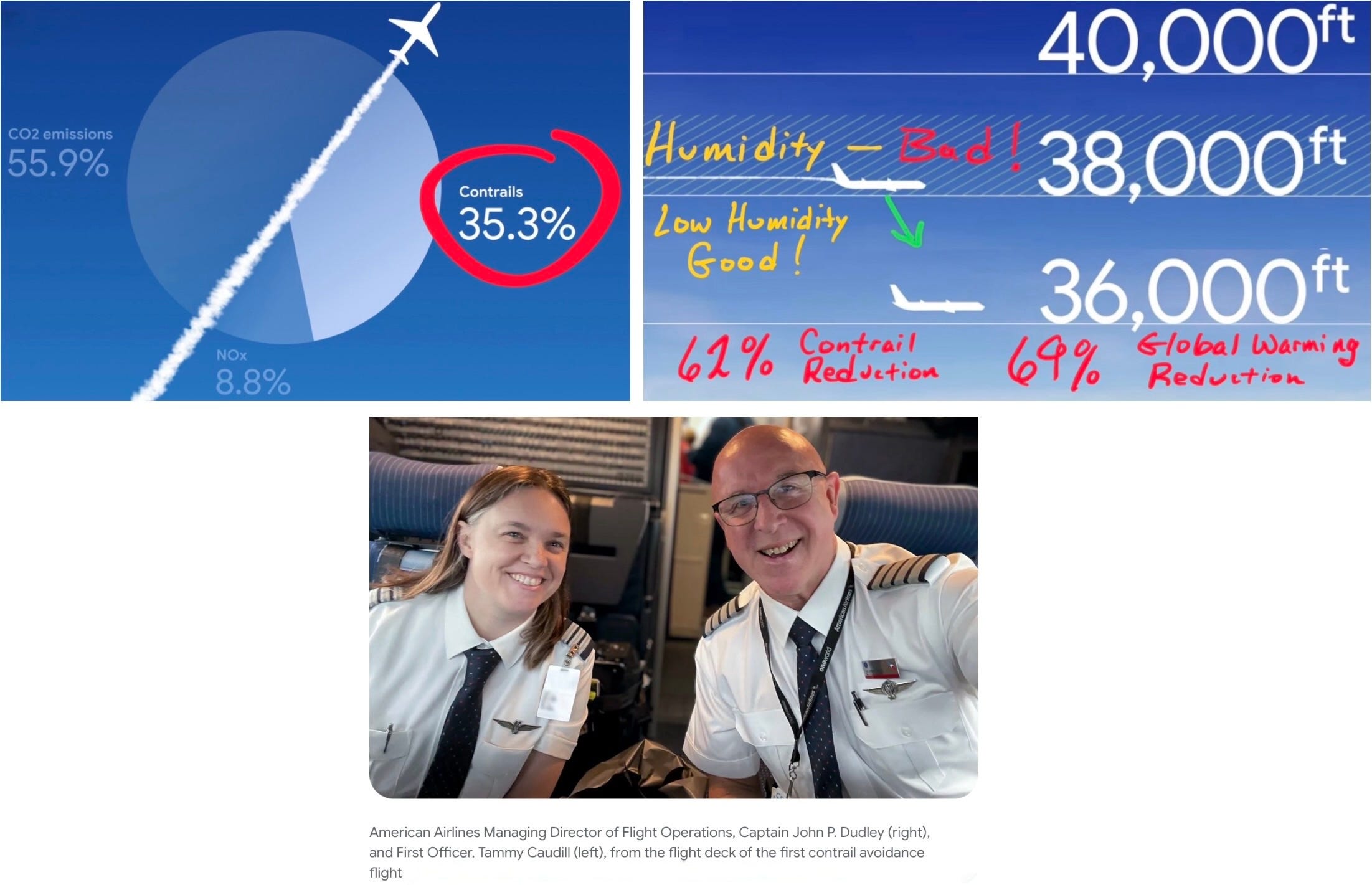
While this solution to contrails sounds simple, implementation is incredibly complex involving AI sifting huge datasets utilizing sophisticated customized algorithms.
» Business and Manufacturing
Helping businesses map and reduce their pollution, including in their supply chains and providing better demand forecasting so retailers can optimize inventory levels and manufacturers can avoid overproduction.
One company assisting businesses is CO2 AI. According to a recent report by the Boston Consulting Group, a global health care company seeking to reduce climate pollution in its supply chain by 20% began working with CO2 AI, which identified “50 times more factors” that would help it significantly exceed its goal.
Concerning inventory and production, a recent paper highlights the benefits of AI in the retail, manufacturing, and healthcare sectors:
In the retail sector, AI-driven demand forecasting helps businesses optimize inventory levels, prevent stockouts, and reduce excess inventory costs (Sánchez-Partida et al., 2018). For example, major retailers leverage AI algorithms to predict demand fluctuations during seasonal sales, adjusting procurement and distribution strategies accordingly. Similarly, in manufacturing, AI assists in production planning by forecasting raw material requirements and reducing lead times, ultimately improving operational efficiency and cost-effectiveness (Sboui et al., 2002; Khan et al., 2024). In the healthcare industry, AI-driven forecasting has proven instrumental in managing pharmaceutical supply chains, predicting demand for critical medications, and optimizing hospital inventory (Sharifmousavi et al., 2024).
» Agriculture
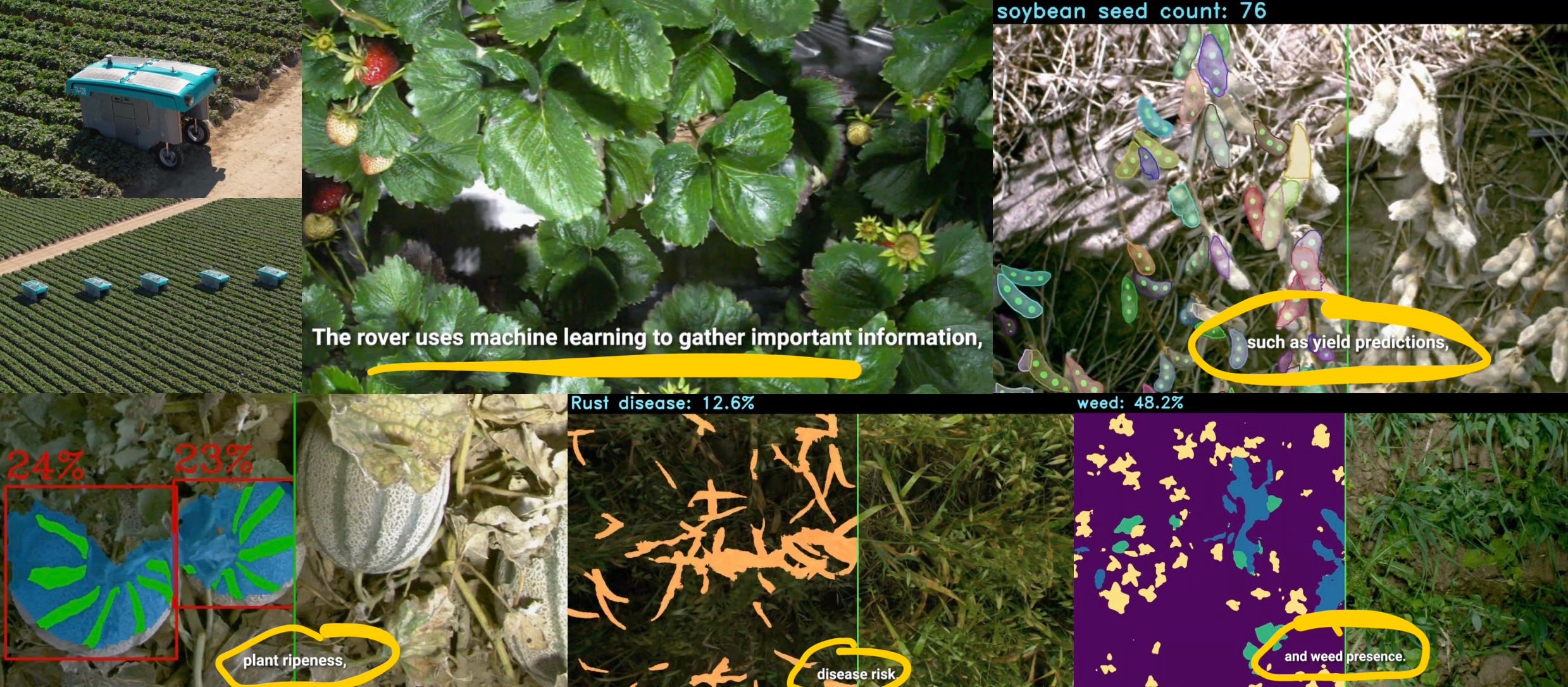
Improve agriculture production and efficiency, such as combining AI with robotics, drones, cameras, satellites, and weather data to inform yield forecasting, disease risk, quality inspections, and food waste reduction.
Mineral, an Alphabet company, has designed an AI-powered system, recently purchased by Driscoll’s, the world’s leading berry company, that includes a solar-powered “rover” equipped with sophisticated cameras and AI perception tools to help deliver info on yield predictions, plant ripeness, disease risk, and weed presence.
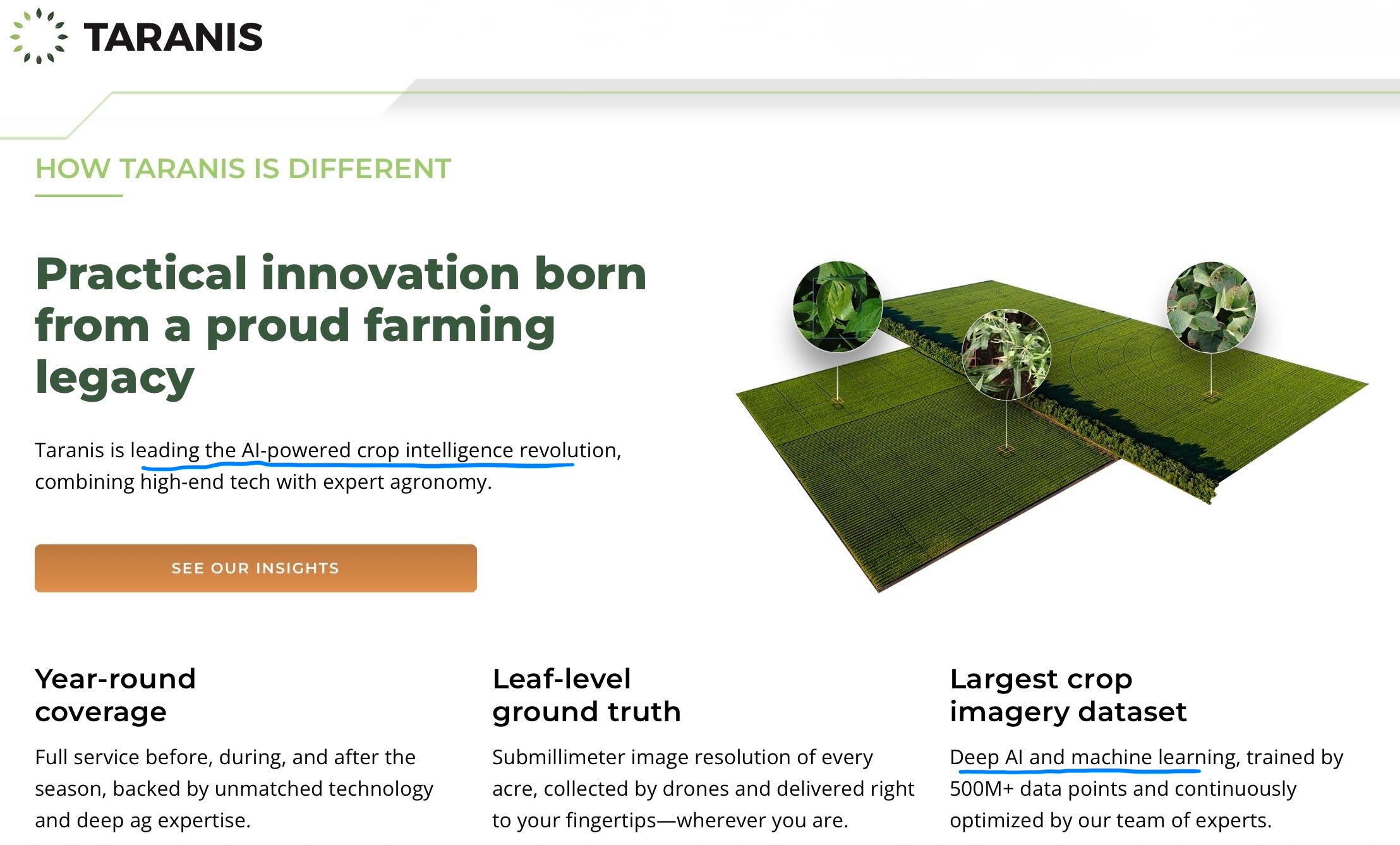
Another company, Taranis, offers similar capabilities. They have recently partnered with Syngenta, a global leader in agricultural innovation, to “equip agricultural retailers with AI-powered crop management solutions.” As Syngenta’s head of Digital Agriculture and Sustainable Solutions, Paul Blackman, put it:
“Instead of going out and scouting every field, you can sit behind your computer and, within 24 hours, see the report from what that drone captured.”
With ultra-high-resolution capabilities,
the platform’s generative AI agronomy agent, AgAssistant, translates imagery into prioritized recommendations, including severity scoring, economic impact, and suggested interventions.
We Must Make This Future Come Faster
The business case for these examples of AI-Climate Action can sell themselves. But on its own the market won’t take up this tech fast enough or at the level needed. Speed and scale requires The Catalytic-4 working together — The Climate Movement, Climate Action Supporters, ARTC, and Government-&-Markets.

The Climate Movement in particular must push the other three, especially governments, to create policies and incentives for adoption of promising AI-Climate Action tech at scale as fast as humanly possible.
But to have our people power be strong enough we must continue to grow our movement to 400 million worldwide and 16 million in the US. Join us!
If you are new here, check out our Intro Series. If you like this post, please “like,” comment and share. And thanks for all you’re doing.
Thanks for this note. It is important to understand how we can use advancing tools to reduce emissions instead of just push against these new tools.
In the discussion of AI and climate, it’s important to include how AI is already helping reduce climate emissions, and what more can be done to accelerate this contribution while deploying AI responsibly. “ AI is already being deployed in useful ways. We don’t have to wait to get started in a big way with AI. According to one recent study, current, proven, off-the-shelf AI can reduce climate pollution by 5-10% by 2030.
Here’s a sampling of illustrative examples of how AI can help now.”