


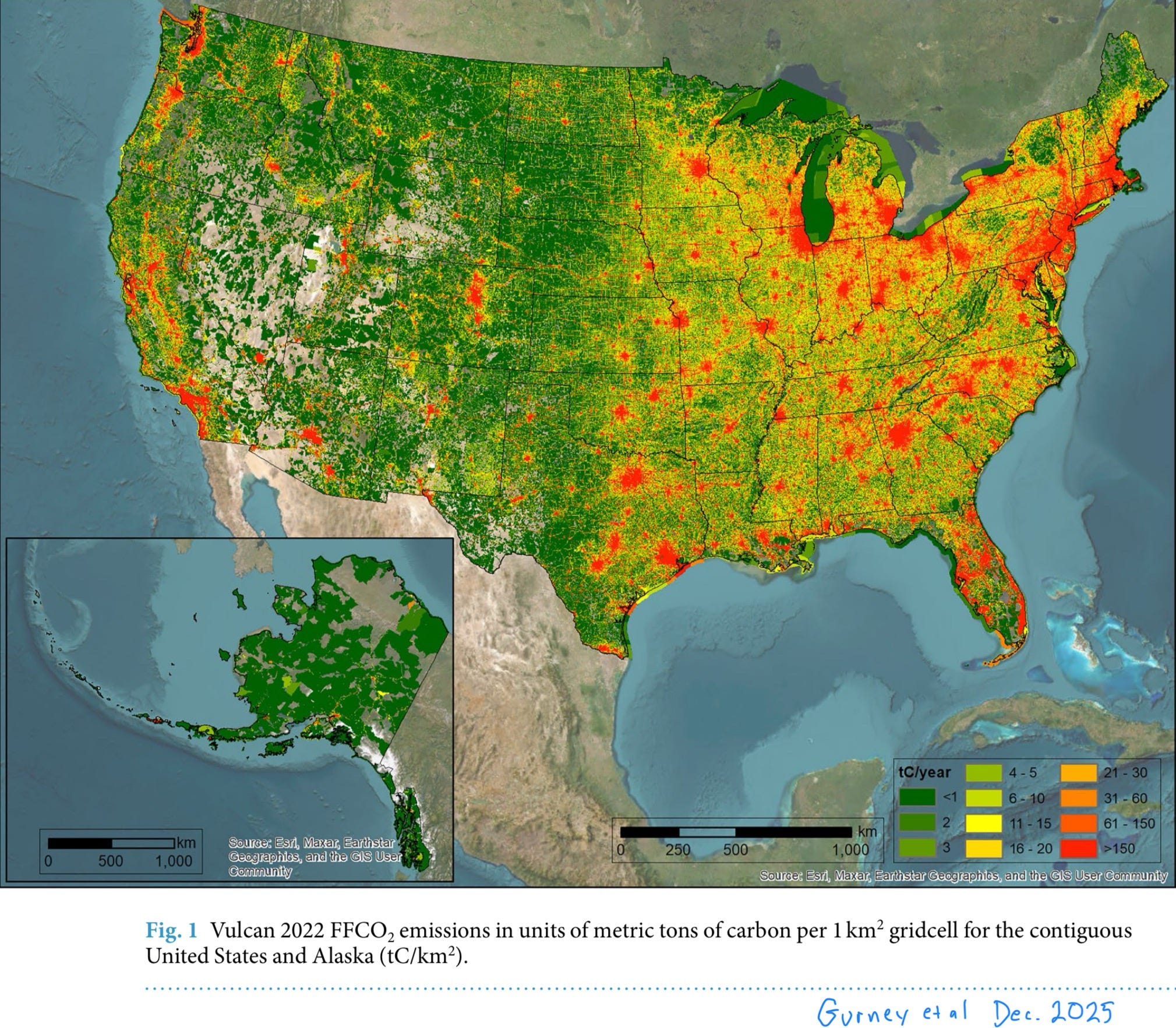
*** Updated 12-31-25 with hotspots map.
The first characteristic/imperative/goal of the Climate Movement is to be big and broad and active enough.
But how broad can the Climate Movement be? Who is in and who is out? Can these two coalitions considered in this post both be a part of the Climate Movement? How broad is too broad?
The Climate Justice Alliance
The Climate Justice Alliance (CJA) is made up of “95 urban and rural frontline communities, organizations, and supporting networks in the climate justice movement,” located primarily in the US. As they state:
We are locally, tribally, and regionally-based racial and economic justice organizations of Indigenous Peoples, Black, Latinx, Asian Pacific Islander, and poor white communities who share legacies of racial and economic oppression and social justice organizing.
Formed in 2013, just a year later CJA spearheaded the People’s Climate March in New York City, a seminal event. With over 400,000 marchers, it demonstrated that there was indeed a Climate Movement in the United States, and that this movement wanted justice for frontline communities as an irreducible part of addressing atmospheric carbon pollution.
Shaped by the Environmental Justice movement (EJ) and grounded in grassroots organizing, CJA is fighting for “a Just Transition away from extractive systems of production, consumption and political oppression, and towards resilient, regenerative, and equitable economies.”
And how will a Just Transition happen? Only by placing “race, gender, and class at the center of the solutions equation …”
Because CJA wants to stop all forms of pollution related to fossil fuels, with a special concern for the impacts to frontline and fence-line communities, they have championed a “keep it in the ground” approach and have opposed all market-based mechanisms and pricing carbon approaches such as carbon taxes, carbon trading, carbon dividends, and carbon offsets. These create local pollution hotspots, or “sacrifice zones.” (See a similar report blasting net-zero and offsets by a “sister alliance,” the Grassroots Global Justice Alliance.)

This approach includes opposing technologies that could allow polluters to continue to pollute, which CJA considers to be “false promises posed as ‘solutions’ to the climate crisis …”. For CJA, one such false promise is direct air capture of carbon dioxide. Responding on August 11, 2023 to a Department of Energy announcement concerning investment in the development of this technology, a spokesperson for CJA said: “The Biden administration should stop their cynical political game of squandering public funds on unproven, expensive, and potentially dangerous schemes such as direct air capture ...”
CJA’s opposition to local pollution that hurts frontline and vulnerable communities also leads them to oppose “nature-based solutions,” including offset programs involving forests such as REDD+, which they describe as a “controversial and particularly colonialist and climate-damaging type of carbon offset scheme” (CJA, Carbon Pricing, 2017, p. 28, emphasis added).

CJA views all of these types of policies that don’t stop local pollution as being driven by powerful polluters:
At the center of these neoliberal mainstream policies is an effort by the wealthy elite — especially those involved in extractive industries and agroindustrial processes — to continue business as usual. In other words, to keep the wheels of an extractive economy turning while building a green image that distracts the public from uprising and enacting effective, community-based, just solutions.
CJA, and others involved in the climate justice (CJ) and environmental justice movements, have a vital role to play in lifting up the injustice of pollution that disproportionately impacts frontline communities, and the roles that race, class, and gender play in this injustice.
If we are to achieve our vision, purpose, and Major Goal, that we overcome climate change by creating a just and prosperous sustainability that enhances wellbeing for everyone, those who have borne the brunt of past pollution must be at the front of the line, along with those more vulnerable to climate impacts because of past injustices. In many cases these are one and the same folks.
We have a lot of work to do to begin to make this a reality. Our work will not be done until it is.
The Climate Leadership Council
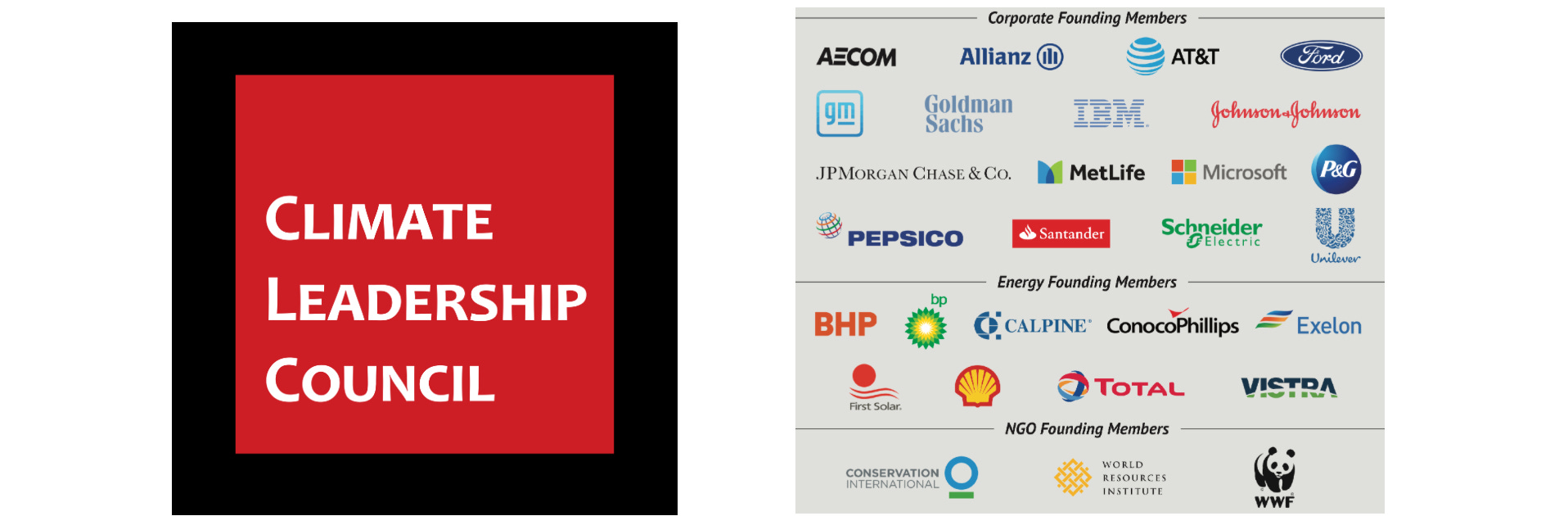
The Climate Leadership Council began as “a coalition of major companies, top environmental organizations, and opinion leaders from both the right and the left.” Its mission “is to promote effective, fair, and lasting climate solutions based on the carbon dividends plan.” This plan involves a carbon tax or fee, 100% of which is returned to taxpayers, making it, in wonk-speak, “revenue-neutral.” It will be “equitable,” in that “All Americans will receive an equal dividend,” which means that low-income folks will come out ahead.
Part of its coalition are major fossil corporations like ConocoPhillips, BP, Shell, and TotalEnergies (which is pushing the pipeline that #StopEACOP is trying to thwart). Clearly these Big Oil companies are not a part of the Climate Movement.
So should this coalition be considered a part of our Movement? Given that the Climate Leadership Council has made a sustained commitment to collective action over time to achieve our Major Goal I would say Yes, even as a few of its members are some of our strongest opponents. In its policy statement (2020), they acknowledge that it “represents the views of the Climate Leadership Council and not necessarily those of its Founding Members” (p. 1)
In other words, they haven’t allowed individual members to make their proposal a bait-and-switch. However, such qualifications weaken their effectiveness, given it is hard to know who this statement represents.
I wouldn’t have Big Oil a part of any coalition I helped to create, because by their actions they have demonstrated time and again that they are not trustworthy.
But I’m not the boss of the Climate Movement.
We should be willing to work with any person or collective entity that has made a genuine, sustained commitment to collective action over time to achieve our vision, purpose and Major Goal: to overcome climate change by creating a just and prosperous sustainability that enhances wellbeing for everyone and everything. The Climate Leadership Council passes that test.
Is there room in the Climate Movement for both the Climate Justice Alliance and the Climate Leadership Council? As I have said, no one has the authority to say Yes or No.
But if we are to be big and broad and active enough, we cannot focus our energies on trying to exclude others with which we have major disagreements. So I say we must make room for both the CJA and the CLC.

If you are new here, check out our Intro Series, as well as other posts in this Olympian Fields of Action Series. If you like this post, please “like,” comment, and share. And thanks for all you’re doing.