

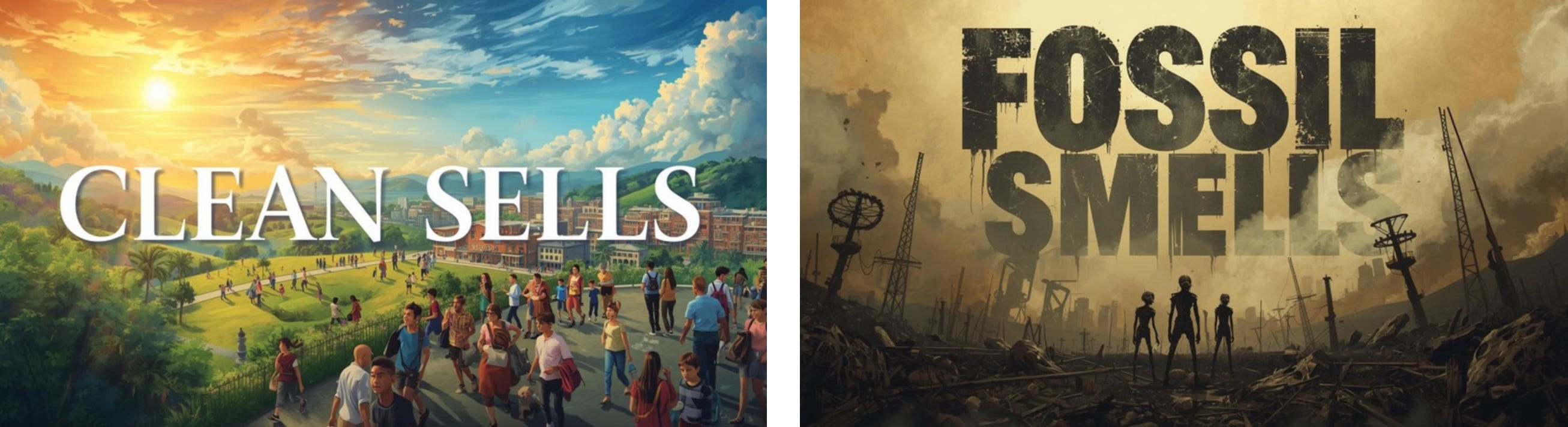
Climate change will be overcome by the Four Catalytic Sources of Transformation, or The Catalytic-4, working together to create Catalytic-4 Synergies. They are (1) the Climate Movement; (2) Climate Action Supporters; (3) ARTC or the accelerating rate of tech change, and; (4) Governments-&-Markets.
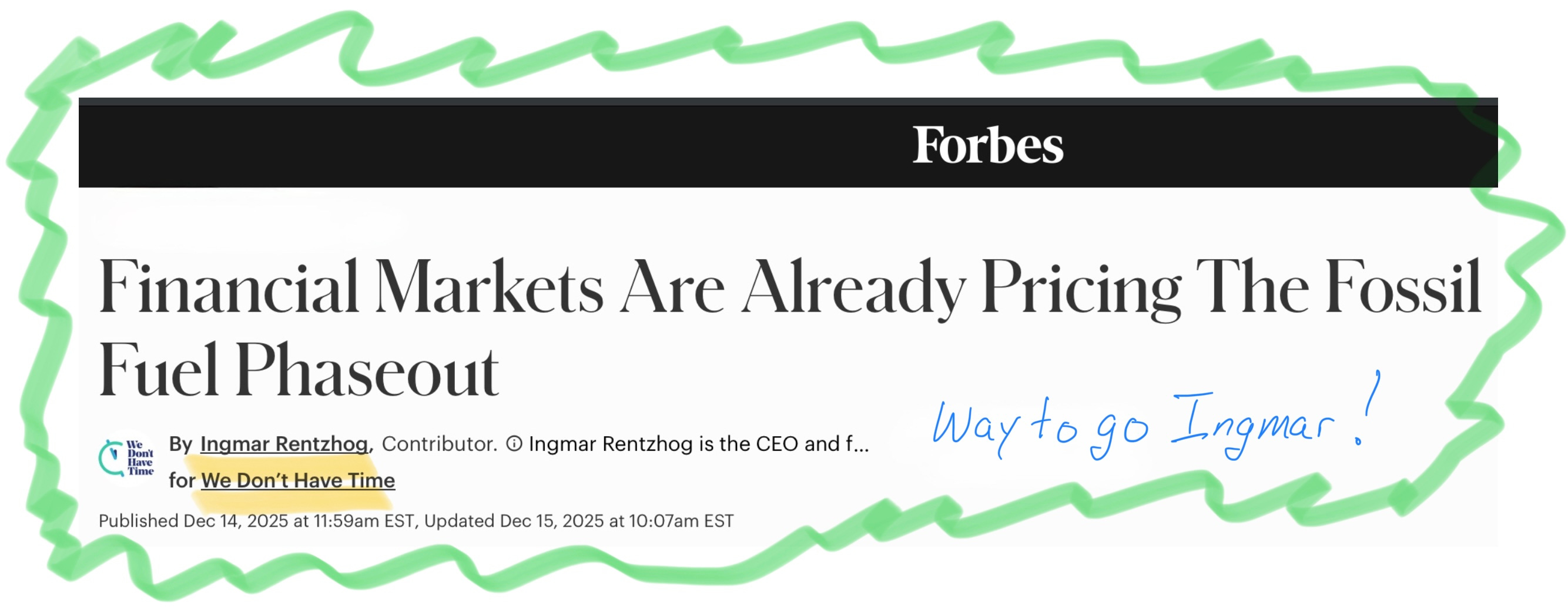
Ingmar Rentzhog, CEO of We Don’t Have Time, recently had a terrific piece on the Forbes website that brought together analyses of reports and data demonstrating how markets are beginning to play their part in a major way.
In a nutshell here’s the message: clean sells, fossil smells.
But today’s markets didn’t get there by themselves. As I have argued, markets on their own haven’t created this current beneficial moment because they can’t. That’s because of what I call The Five-Ps: (1) their overriding concern is Profits; (2) profits in a competitive market system are driven largely by Price; (3) markets are focused primarily on the Present; (4) Polluters don’t (5) Pay for their pollution, we do.
This current market situation — where many markets are working with us because Profits and Price in the Present are on our side of the scale — has been created by the other 3.5 Catalytic Sources of Transformation working together for decades to foster sustainable economies. Even without the 4th and 5th Ps — Polluters not Paying — in today’s markets Profits and Price are tipping the scales in our favor.
Climate action and clean energy advocates and supporters of both, ARTC, and governments have worked for decades to create these market conditions in the Present. It certainly has been a patchwork and a somewhat irregular affair. But they’ve gotten us here. Kudos to all those who have worked long and hard to have markets working for us instead of against us.
All of the evidence for this from the reports discussed by Ingmar Rentzhog is quite substantial and voluminous. Below are some highlights.
Markets Working For Us
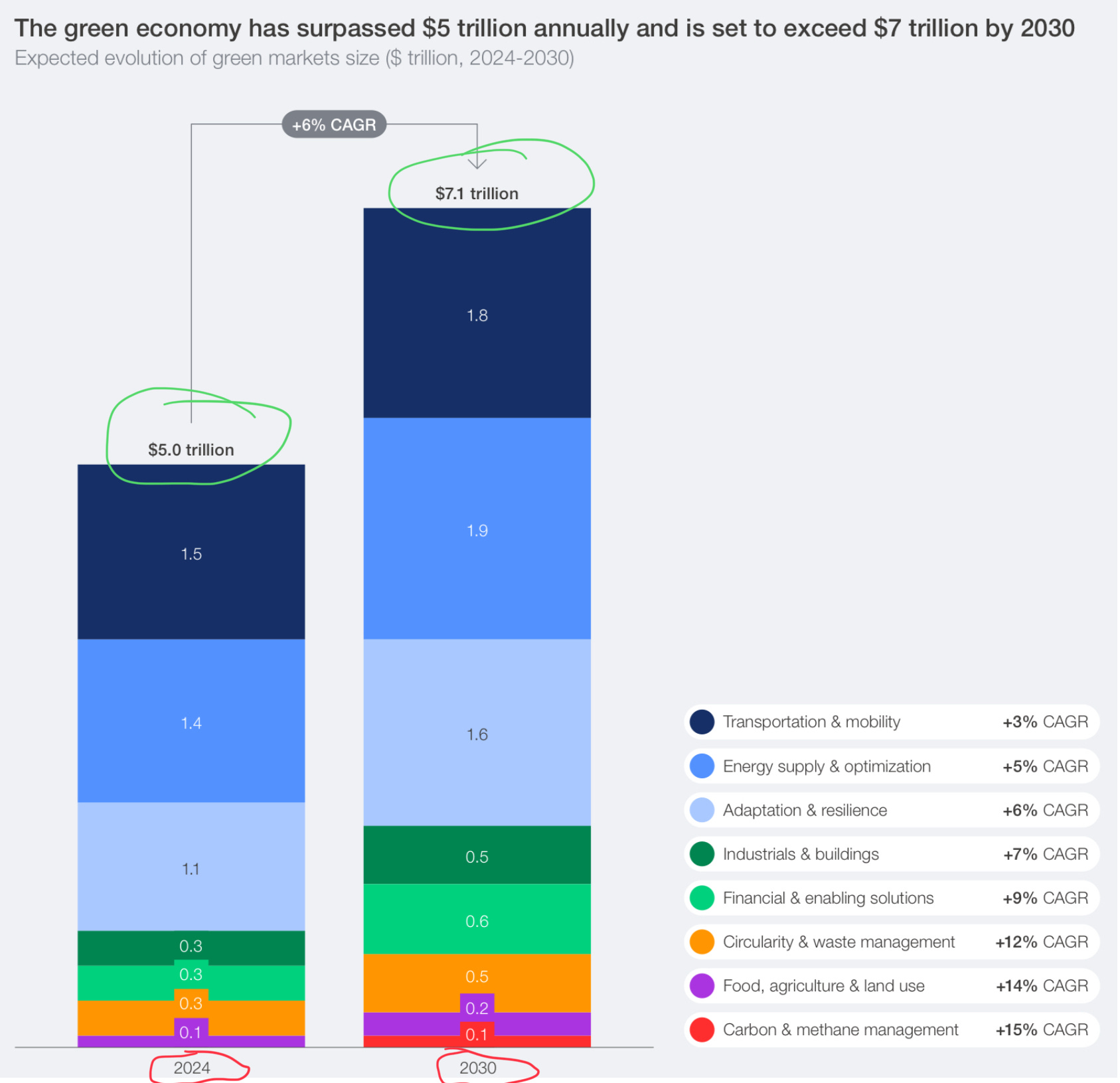
First, as you can see from the two charts below from a report by the Boston Consulting Group for the World Economic Forum:
The green/climate economy has surpassed $5 trillion annually and will exceed $7 trillion by 2030.
To achieve 1.5C by 2050 — our temperature reduction goal — about 75% of needed mitigation efforts are cost competitive today (55%) or nearly so (20%).
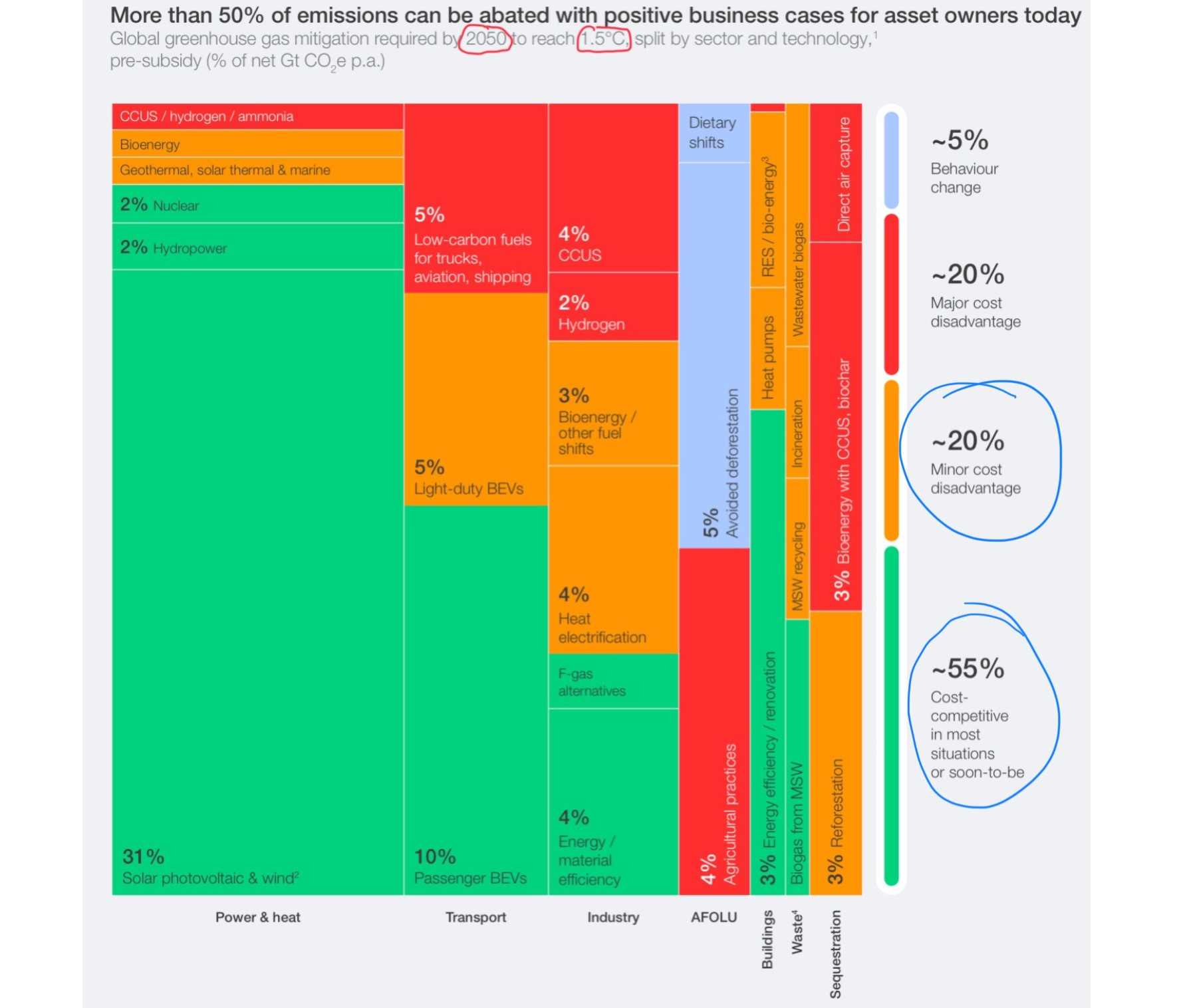
In other words, thanks to The Catalytic-4 working together, we already have the market conditions we need to overcome climate change. But we must continue to work to ensure that in doing so we create a just and prosperous sustainability that enhances wellbeing for everyone and everything.

Second, a November 2025 report from Morgan Stanley analyzing the views of asset owners and asset managers overseeing tens of trillions of dollars continues to show how bullish they are about climate/sustainability investments.
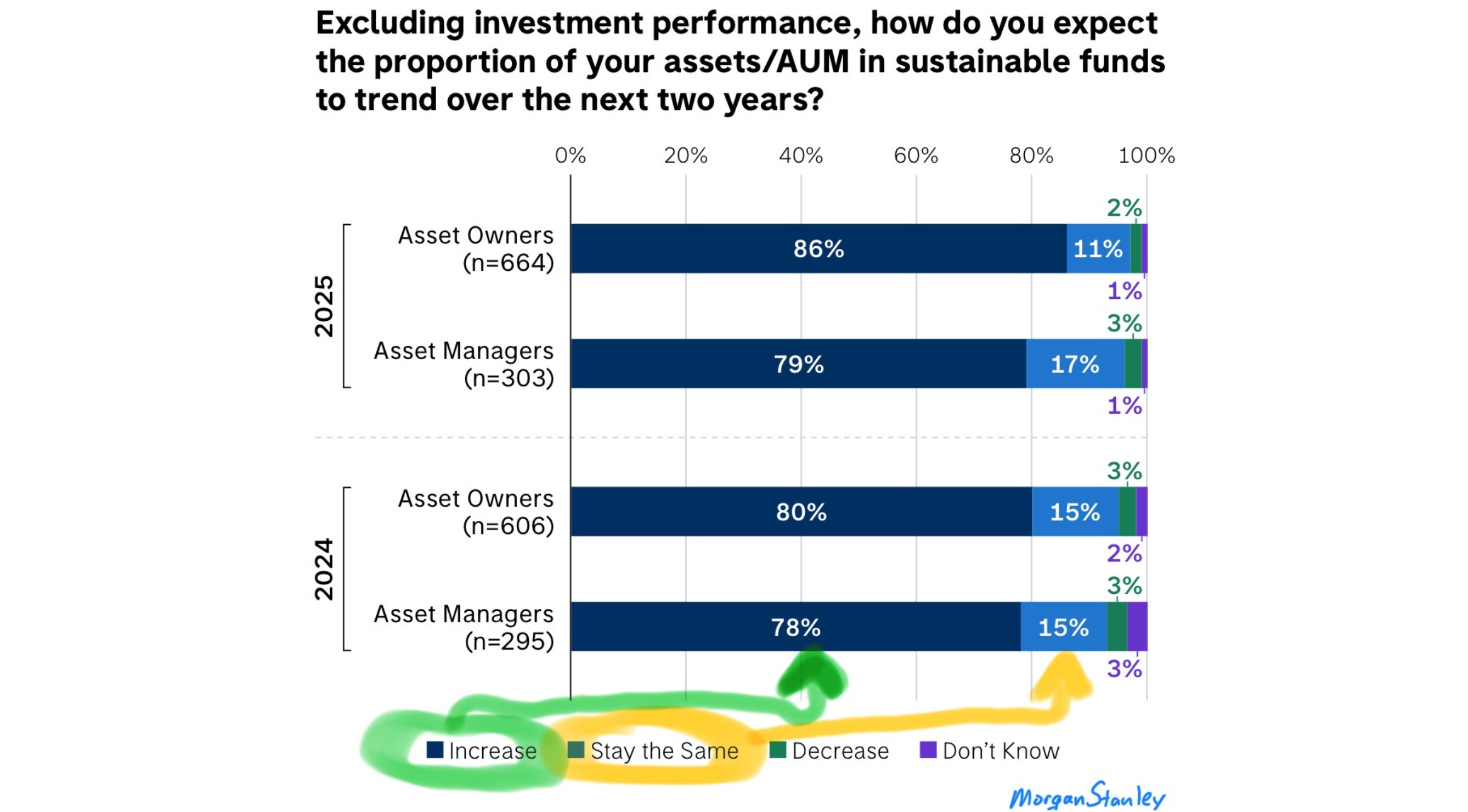
86% of asset owners and 79% of asset managers surveyed in September 2025 expected they would continue to grow their climate/sustainability investments, up from 80% of owners and 78% of managers in 2024 (see graph, above).
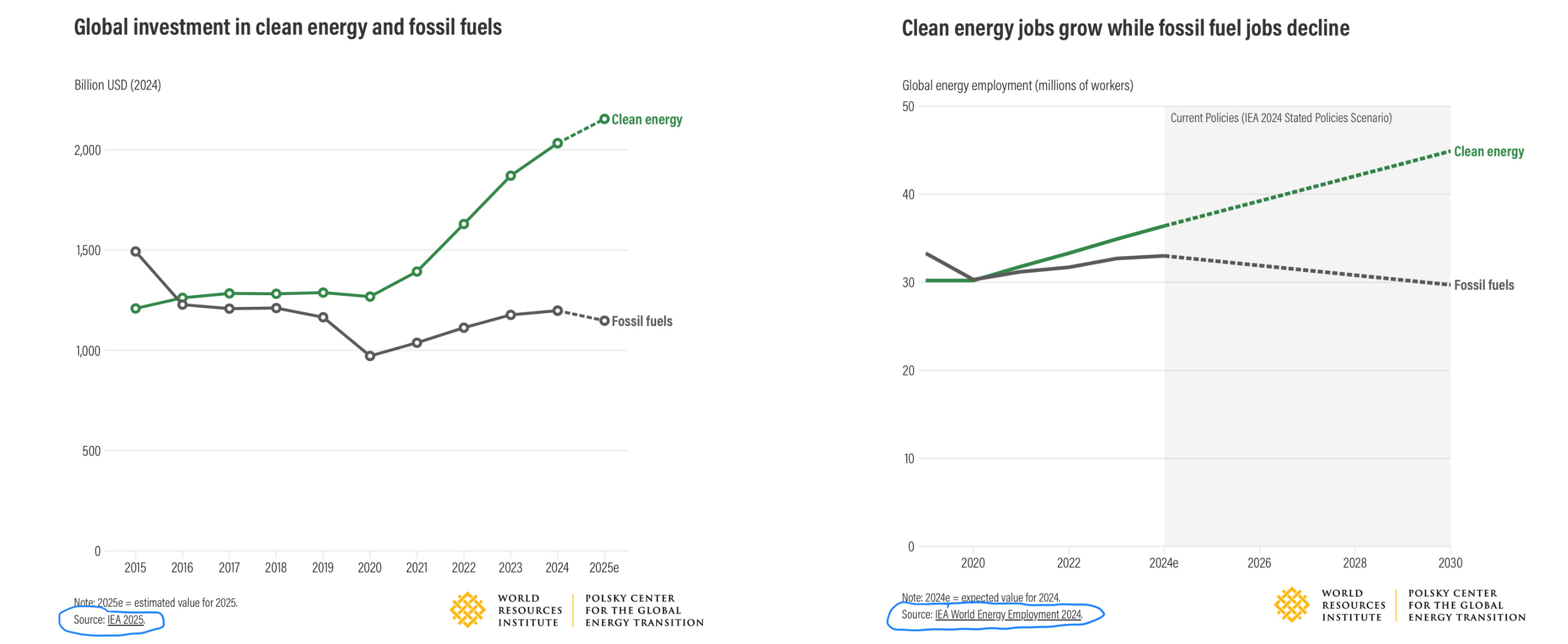
Third, two charts (below) from the World Resources Institute (WRI) utilizing data from the International Energy Agency (IEA) clearly shows our clean sells, fossil smells situation. Clean energy investments and jobs are going up, up, up, while the fossils are going down, down, down.
For the Climate Movement the clean energy jobs numbers and upward trend are particularly helpful. In the political and policy arenas, those with such jobs will want to keep conditions improving and will fight efforts by the fossils and their political lackeys to continue the corporate welfare and favoritism they have enjoyed for over 100 years.
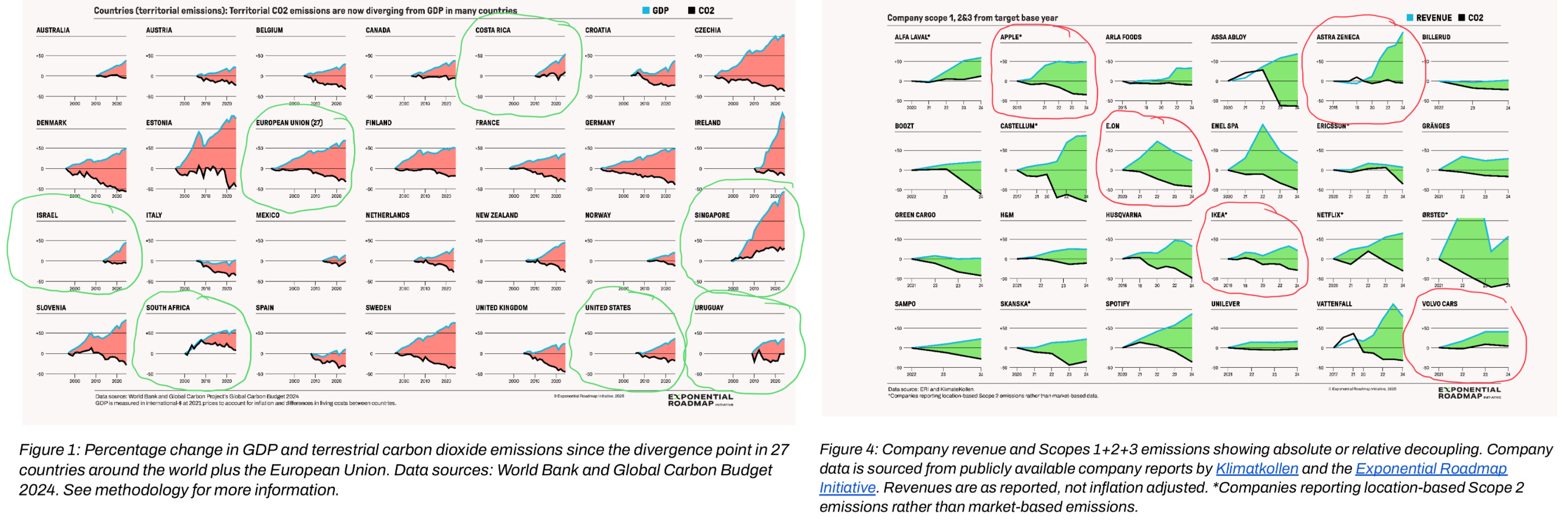
Finally, Ingmar Rentzhog highlights a report from the Exponential Road Map Initiative showing that national and regional economies (e.g., the US, EU, South Africa) and major companies around the world (e.g. Apple, IKEA, Volvo) have decoupled economic growth from climate pollution. As their graphs below prove, no longer does growth have to mean more pollution. In fact, the opposite is the case.
In other words, clean sells; fossil smells. Pollution signals waste and fossils signal the past because that’s what they are. Clean signals a richer, brighter, sustainable future because that’s what it means. Perception is now lining up with reality. The truth is setting us free.
What we have now around the world are what I call Climate Victory economies because (1) we are winning and (2) on graphs the widening gap between growth and emissions looks like a V on its side. (Their report calls this “Crocodile economics” because graphically it looks like the jaws of a crocodile. I’ll stick with Victory.)

Time for the Climate Movement to Step Up
All this tells us we already have the market conditions needed to overcome climate change by creating a just and prosperous sustainability that enhances the wellbeing of everyone and everything. For The Catalytic-4 this is a tremendous victory.
But favorable market conditions alone aren’t enough for the speed and scale of change needed. Nor on their own will they ensure that these changes also help with justice: not only stopping bad stuff (climate pollution), but also setting wrong right and making things better in all five dimensions of justice.
Only the Climate Movement can push the other three Catalytic Sources of Transformation, especially the government side of Governments-&-Markets, to make this a reality, to pull our destiny into the present and make our future come faster, to make hope happen.
We can, we must, we will become the greatest and most long-lasting social change movement in the history of the world. Join us!
If you are new here, check out our Intro Series and other posts in the Catalytic-4 Series. If you like this post, please “like,” comment, and share. And thanks for all you’re doing.
Markets are working for us: “The green/climate economy has surpassed $5 trillion annually and will exceed $7 trillion by 2030.
To achieve 1.5C by 2050 — our temperature reduction goal — about 75% of needed mitigation efforts are cost competitive today (55%) or nearly so (20%).”