


As you will find out at the end, distributed energy can save families and society lots of money — and, of course, help us overcome climate change and reduce deadly pollution. But let’s not get ahead of ourselves.
Confession — Good for the Soul
I kinda have confession, sort of.
In the summer of 1997 I was a canvasser for what was then called New Jersey PIRG (now Environment New Jersey), where we were trying to get then-Gov. Christie Todd Whitman to reduce pollution from the final four coal-burning power plants in the state. I even bird-dogged Gov. Whitman in New York City dressed up as a smokestack. Her limo drove by and she laughed at me.
These “Dirty Four” as we labeled them, were owned by two investor-owned utilities, so-called IOUs. That’s when I started not liking IOUs; they are better described as a YOM, or You Owe Me. Over the next 30 years I’ve come to like them even less.
So there you have it. I confess. I don’t like IOUs/YOMs.
They are literally state-sanctioned monopolies whose ultimate purpose is not to seek the common good, but to generate profits for its shareholders. In theory Public Utility Commissions (PUCs) are supposed to be the watchdogs of these profit-seeking utilities, making sure they serve society and don’t gouge their customers. But IOUs/YOMs do everything they can politically to corrupt this process and make PUCs into IOU/YOM lapdogs. Not only that, they have tremendous sway over Members of Congress.
IOUs Suck? Two Reasons
Why don’t I like IOUs/YOMs? Two reasons.
First, many IOUs in the US have stood in the way of progress on clean air and climate action, wanting to wring out every last drop of profit from their coal-burning power plants — the health of children and climate consequences be damned.
Second, as monopolies, they do what monopolies do, protect their monopoly — everything else be damned.
So, you know, we’re double-damned here.
IOUs are creatures of the 20th Century model of electricity: centralized power stations and transmission lines traveling great distances to distribute electricity to customers. Collectively, this is known as “the grid.”
But we’re a quarter of the way through the 21st Century and this old, tired, creaky centralized, monopolistic 20th Century grid model needs to release its grip on how we get our electricity. Time for these entrenched, moneyed interests to stop trying to choke off the 21st Century. Time for these state-sanctioned monopolies not to hold sway over our brighter, cleaner, climate-friendly future.
Distributed Energy As Freedom Energy: Clean Climate-Friendly Power Owned By Families, Communities, & Local Businesses
So what does this centralized state-sanctioned monopolistic system need to make room for, even give way for? Distributed energy from renewables.
Solar technologies are mini power plants that can be put up just about anywhere. Why do we call them “distributed”? Because, unlike the old way, they don’t have to be centralized. As usual with something new, it gets described by how it’s not like the old. It’s not centralized. It’s distributed, with no need for long-distance transmission lines and their financial costs and destruction of nature and the beauty of the landscape.
But what distributed energy really is, is freedom. Freedom from a state-sanctioned profit-seeking monopoly. Freedom from that monopoly sucking money out of your pocket. Freedom from big producers of polluting products. Freedom to create local, cheap, clean energy. Freedom from blackouts due to transmission lines going down.
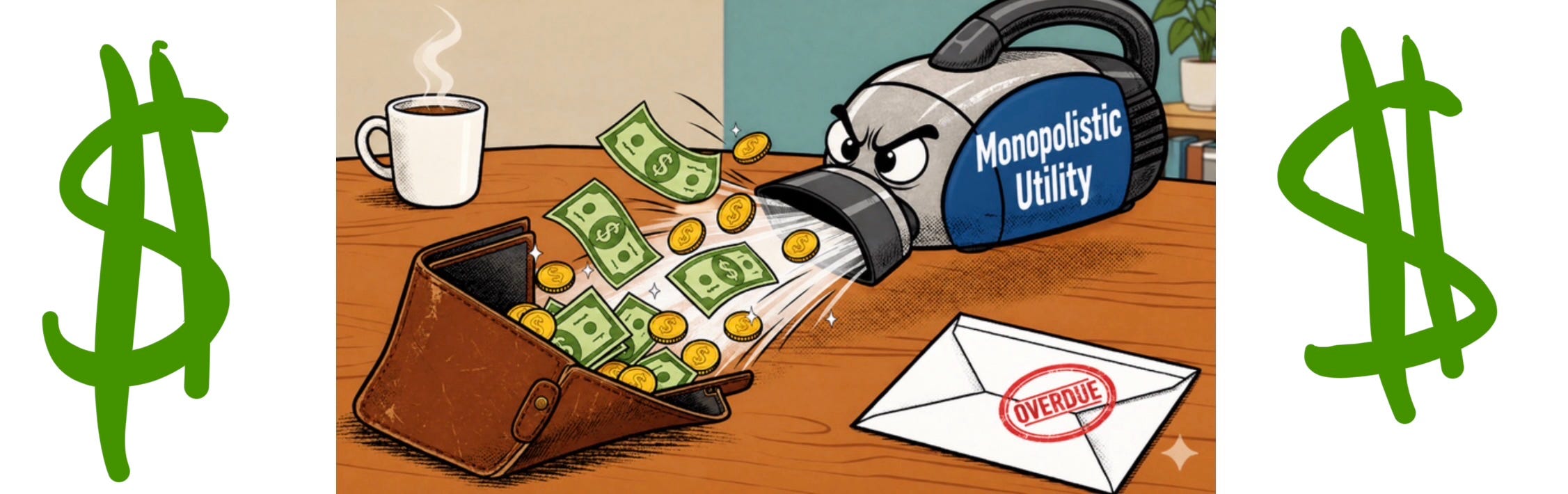
Whether you liberate yourself entirely from their grid grip, going “off-grid” with your own self-contained solar+storage system, or you want to stay grid-tethered as you generate clean electricity for your family, putting the excess back on the grid at market rates, IOUs/YOMs don’t want you to be able to own and generate your own electricity because that means less $$ for them.
Clean distributed energy generation is free of climate pollution and air pollution, with many other benefits to our society. Thus, it is in the national interest to make sure everyone who wants to enjoy the freedoms that come from distributed energy, whether a household, a community solar co-op, or a local business, is able to do so — part of our Affordability+ agenda.
A Hybrid System That Plays Fair
Now after all this seeming grid-bashing, you would be forgiven for thinking that I want to junk the grid.
Nope.
Not everyone wants to own their own. Others like the simplicity of just paying their electric bill every month. The grid is a huge investment that will still have value well into this century.
What we need is a hybrid system that doesn’t favor centralized over distributed, or IOUs/YOMs over families, communities, and local businesses.
Thankfully there are some organized efforts working to begin to make this happen. One of them is Freeing The Grid, a joint initiative by Vote Solar and the Interstate Renewable Energy Coalition, that I mentioned in my last post on our Affordability+ agenda. They grade states on where they stand on beginning to level the playing field between centralized and distributed, with fact sheets on each state.
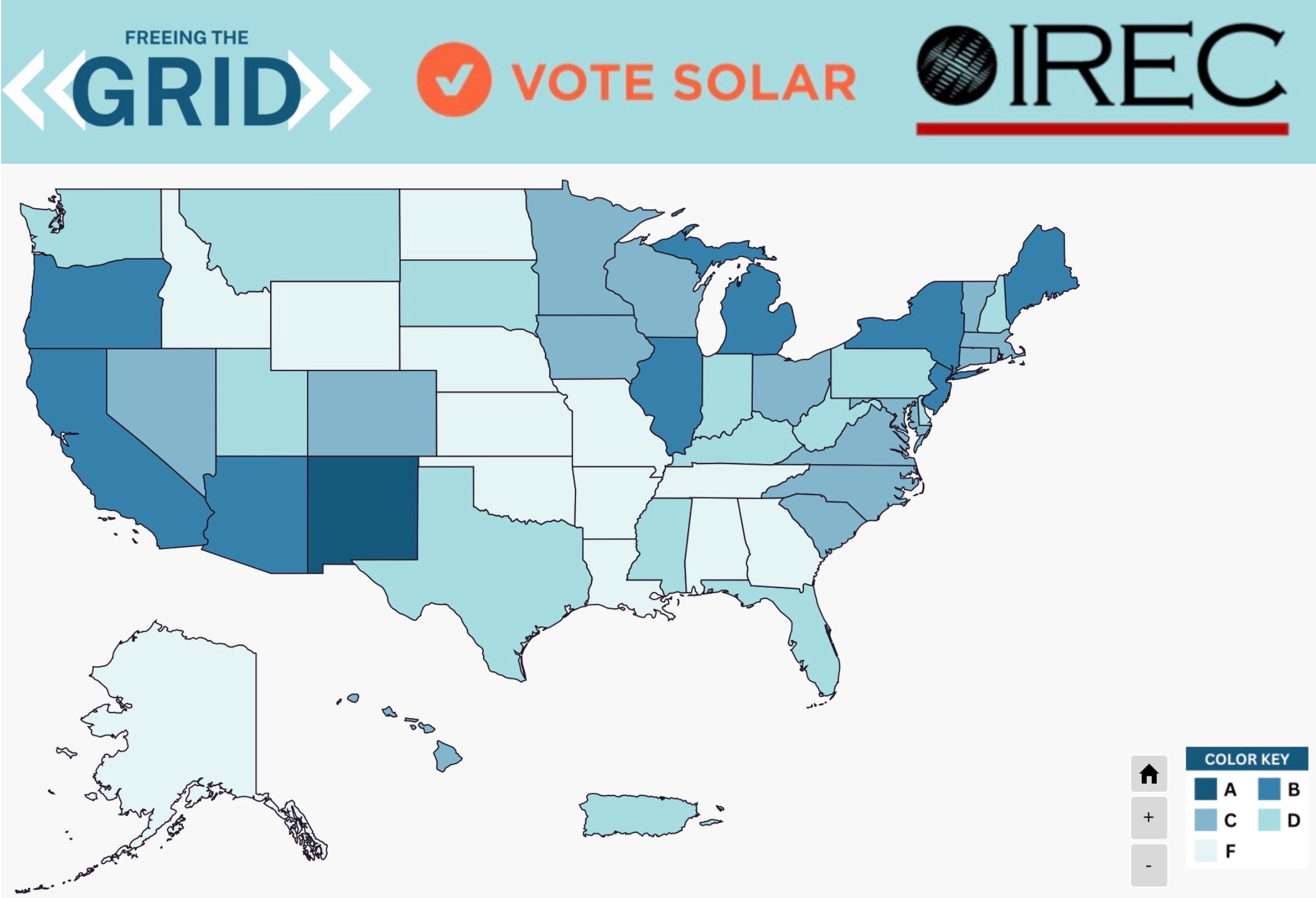
As you can see, only one state, New Mexico, gets the top grade of A. So there’s plenty of room for The Climate Movement to help distributed energy in all the other states.
For the grid to accommodate this hybrid system it will need lots of updating, which customers and taxpayers are going to have to pay for.
But one thing about the distributed revolution is that it can save us a lot of money. A recent report for Pew by the Brattle Group estimates that it can save $614 billion through 2050, including $122 billion in savings for families.
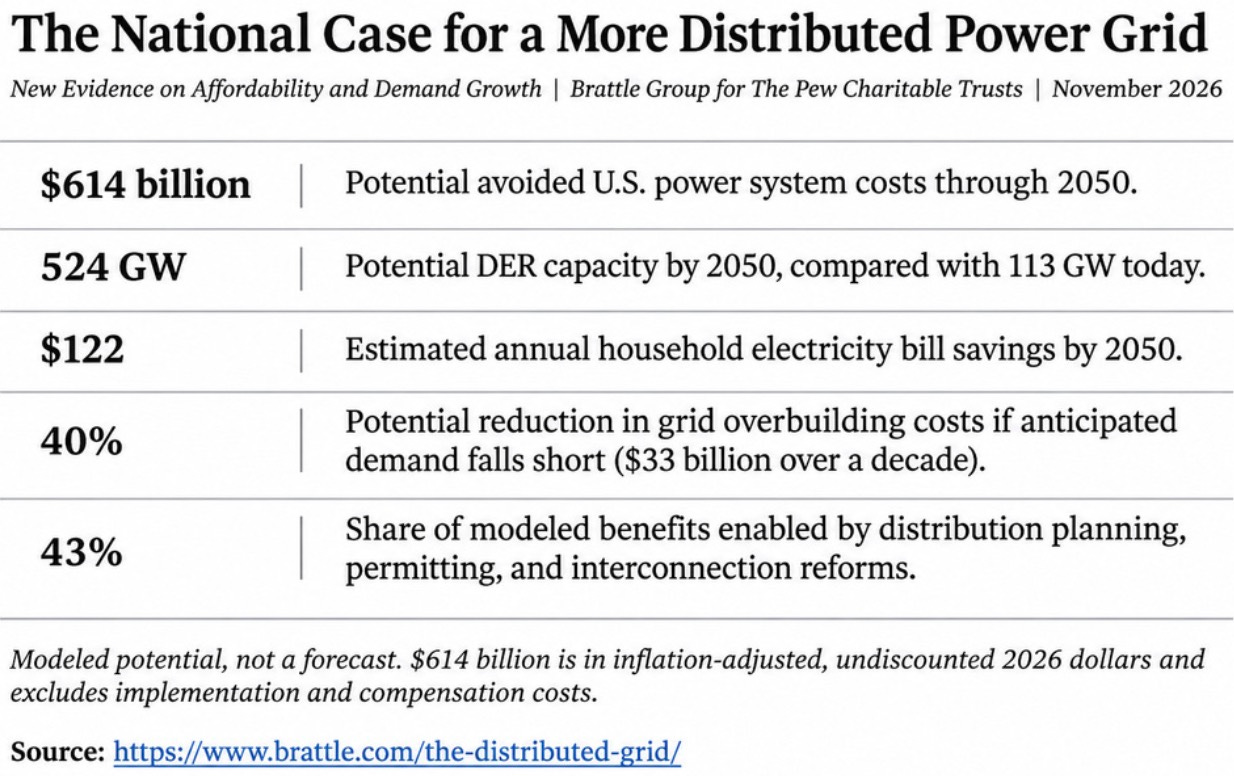
Furthermore, it will decrease the costs of decarbonizing the grid by 20%, as you can see in their graph below.
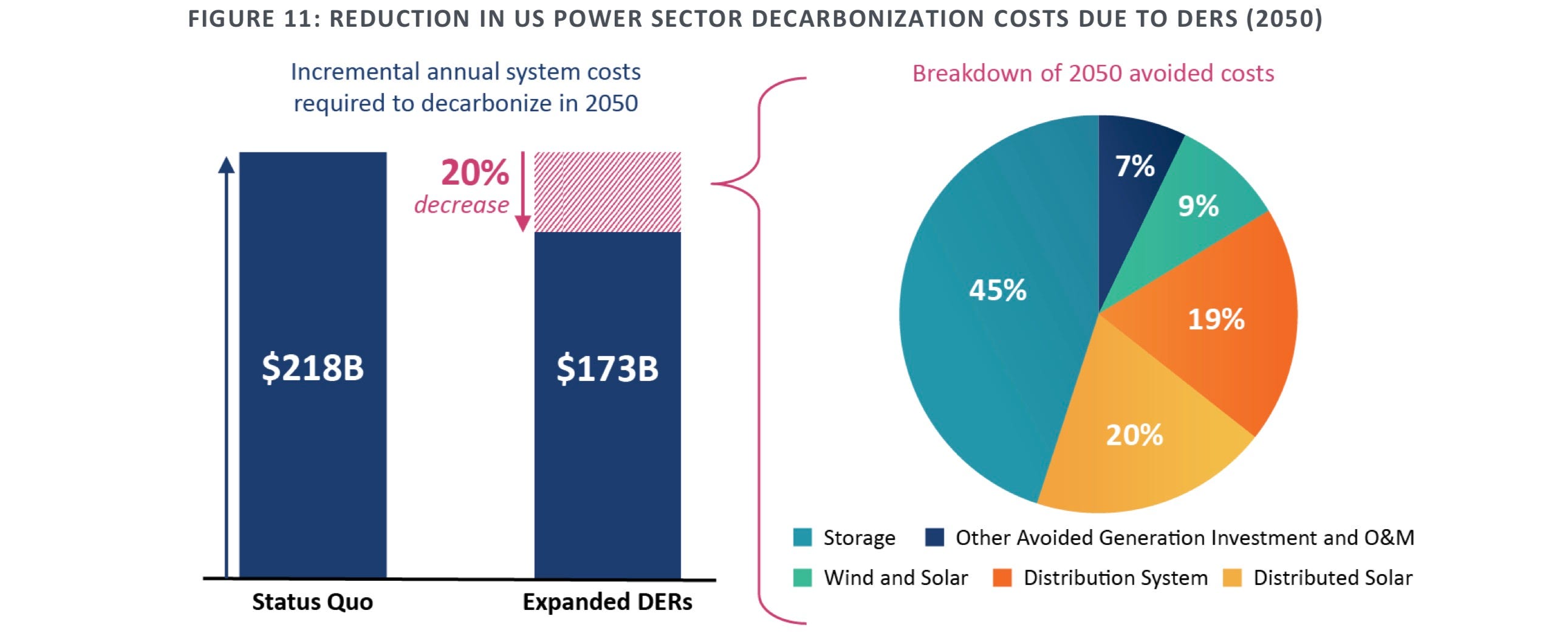
Due simply to our Third Catalytic Source of Transformation, ARTC, or the accelerating rate of tech change, any computer modeled scenario projections five years out are going to be off, and out to 2050 like these, way off. The benefits they project will be better all around. So I consider these projections very conservative.
But our need for speed and scale says we can’t wait for a normal rate of change. We can’t just wait for ARTC and governments and markets to do their normal thing when it comes to distributed energy and decarbonizing the power sector more broadly. The Climate Movement and Climate Action Supporters, our First and Second Catalytic Sources of Transformation, must push the other two, ARTC and Governments-&-Markets, to make speed and scale happen. In other words, the Catalytic-4 must work together.
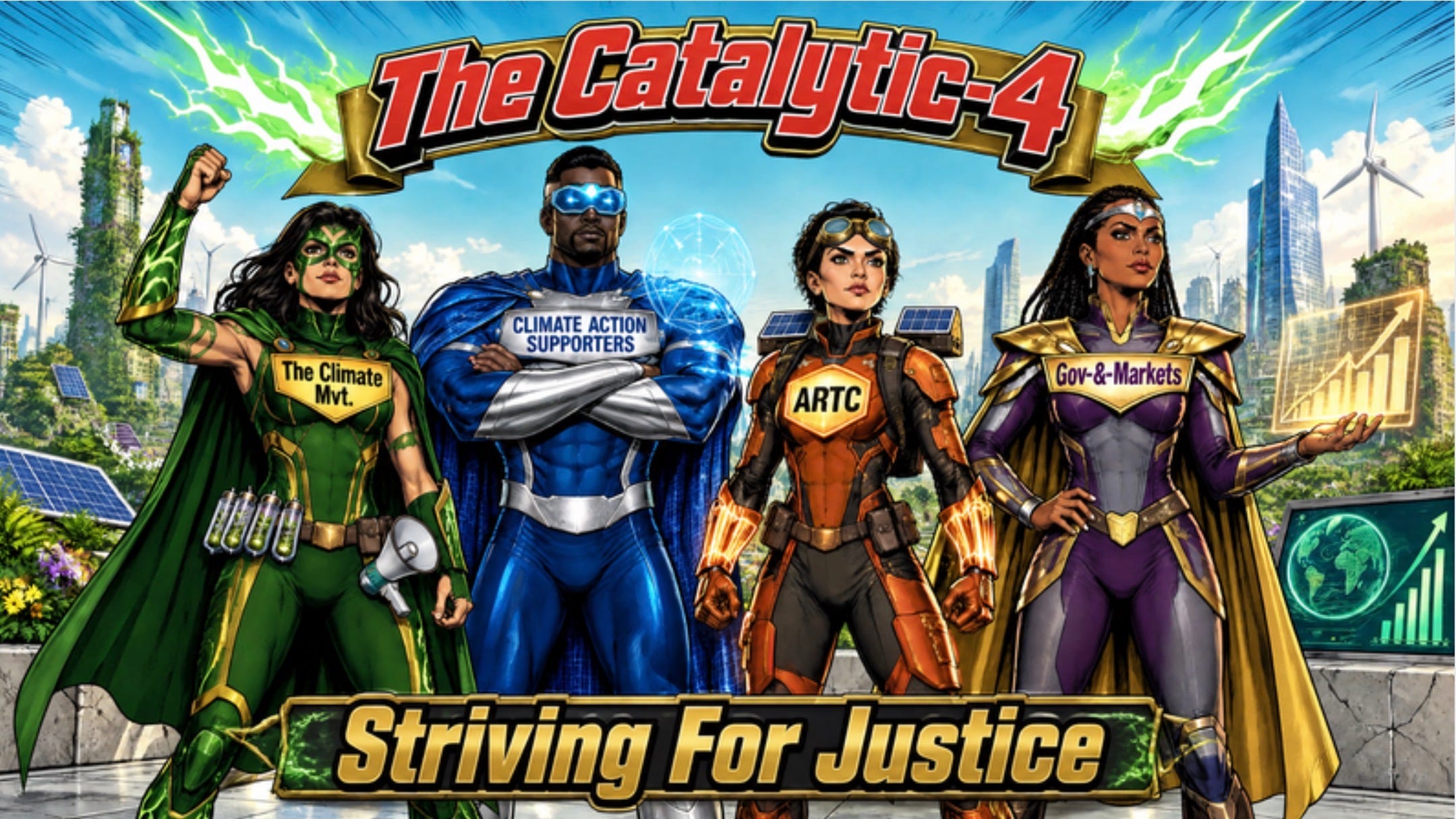
And for The Climate Movement to play our part we must become big and broad and active enough, 16 million strong in the US by 2030.
In other words, we need you! So join us!
If you are new here, check out our Intro Series. If you like this post, please “like,” comment, and share/restack. And thanks for all you’re doing.