


The Global Energy Alliance for People and Planet
The Global Energy Alliance for People and Planet (GEAPP, or, in their shorthand, “The Energy Alliance”) is a self-described “radical collaboration” spearheaded by three powerful Foundations: The Bezos Earth Fund, the Rockefeller Foundation, and The IKEA Foundation. This Alliance is made up of these three, originally called “Anchor Partners,” as well as “Upstream Partners” or agencies with relevant expertise like the International Renewable Energy Agency (IRENA), and “Investment Partners,” i.e., investment banks such as the African Development Bank and the World Bank.
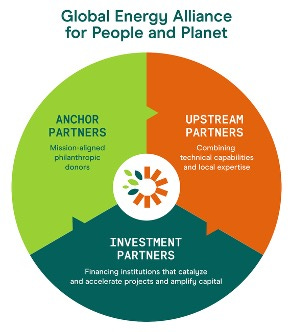
All of the partners share “a common belief: that green energy access in the world’s emerging markets is fundamental to tackle the climate crisis and end inequality.”
Like the Climate Justice Alliance and other grassroots groups, they are working towards their understanding of a just transition:
“Together we seek to tackle the challenge of energy access for all through a just transition, unlocking a new era of inclusive green economic growth for vulnerable people while enabling the global community to meet critical climate goals within the next decade” (emphasis added).
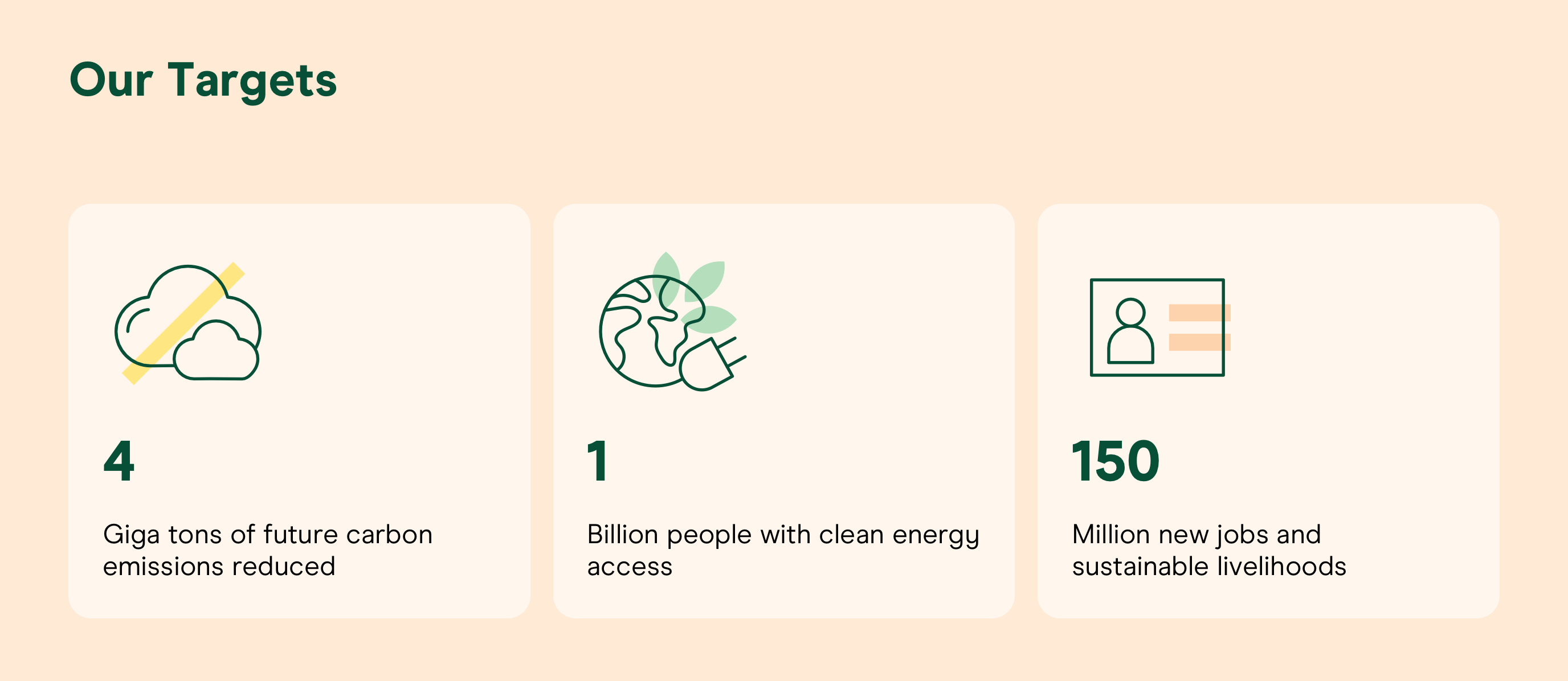
Their goals include 1 billion people with clean energy access and 150 million new jobs in the countries they are working in.
Some may question whether such an effort should be considered as part of the Climate Movement, given that many of GEAPP’s partners have been or could be targets of movement campaigns due to the power they wield — many are more powerful than most governments on the planet.
It’s a fair question. But that this Alliance is committed to helping achieve our Major Goals I have no doubt.
For their part, they think of themselves as “a collective movement working to unlock green energy access in Africa, Asia, Latin America and the Caribbean to secure an inclusive and resilient future for all.”
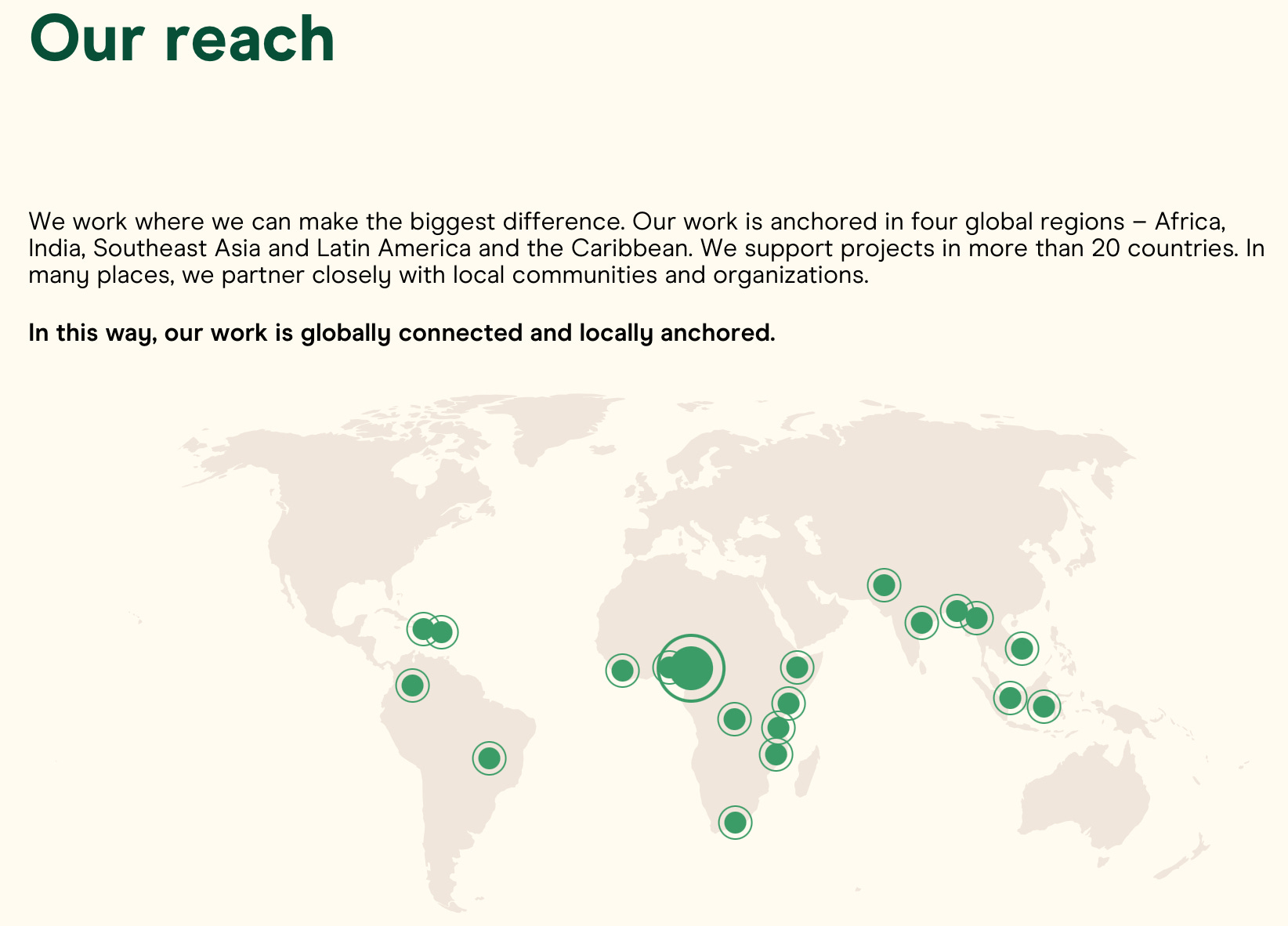
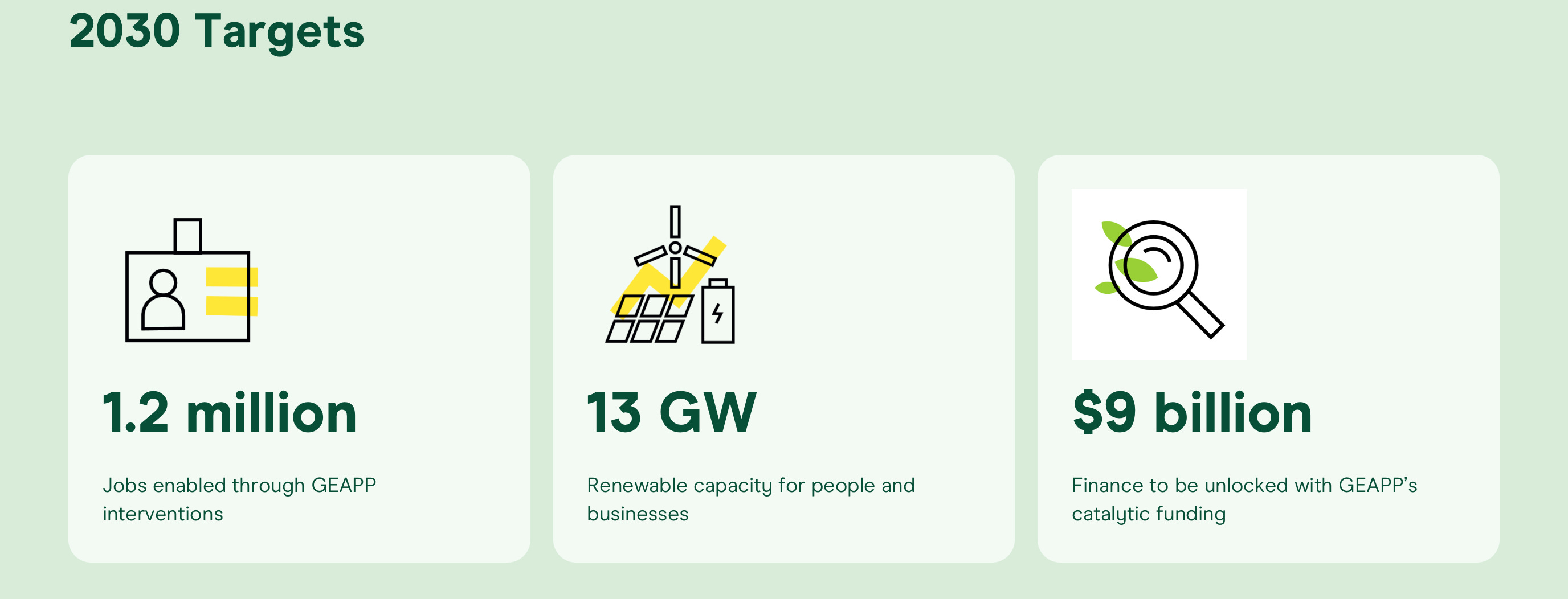
Here are their 2030 goals for India as an example:
YouTube videos tell success stories, like that of Renu Patel, a female “entrepreneur” and small mill owner in India who, by utilizing what she calls her “solar power plant,” is now producing double the flour at a lower cost with than she did with a diesel generator.
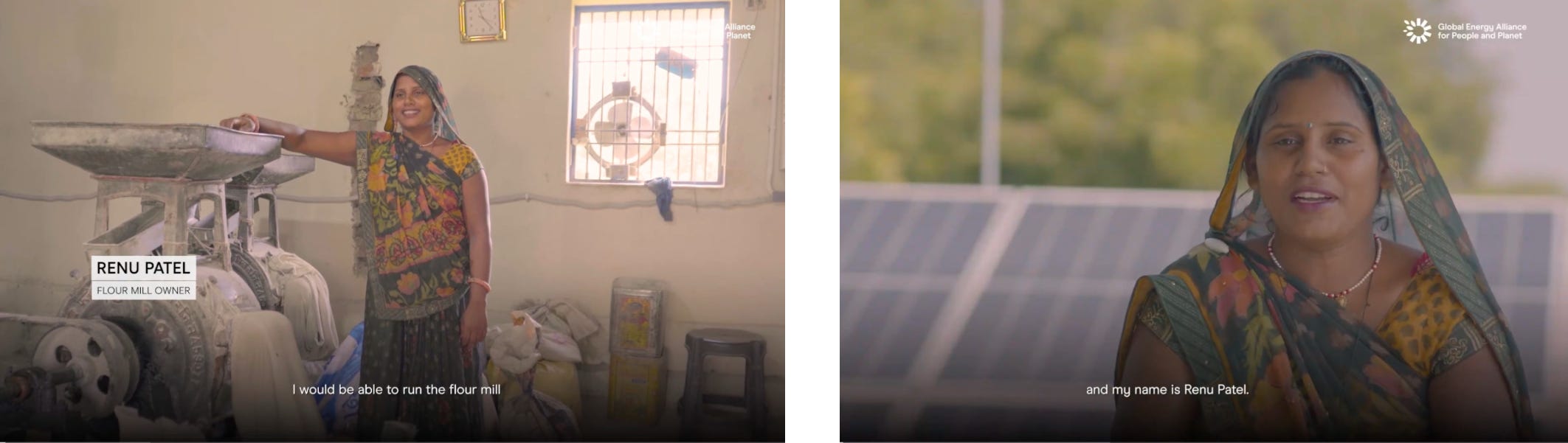
Even as they describe themselves as “a collective movement for change,” would they consider their Alliance to be a part of the Climate Movement? Are such close relationships with governments something that Movement Members can have? Is the type of power they wield compatible with being a part of our Movement?
For that matter, can elected officials who have made a sustained commitment to collective action over time to achieve our Major Goals be a part of the Climate Movement? Is, for example, Congresswoman Alexandria Ocasio-Cortez (AOC), part of the Climate Movement?
As counterintuitive — and maybe flat-out wrong —as it may sound, I would say Yes. Both this Energy Alliance and AOC are part of the Climate Movement.
The CLIMA Fund
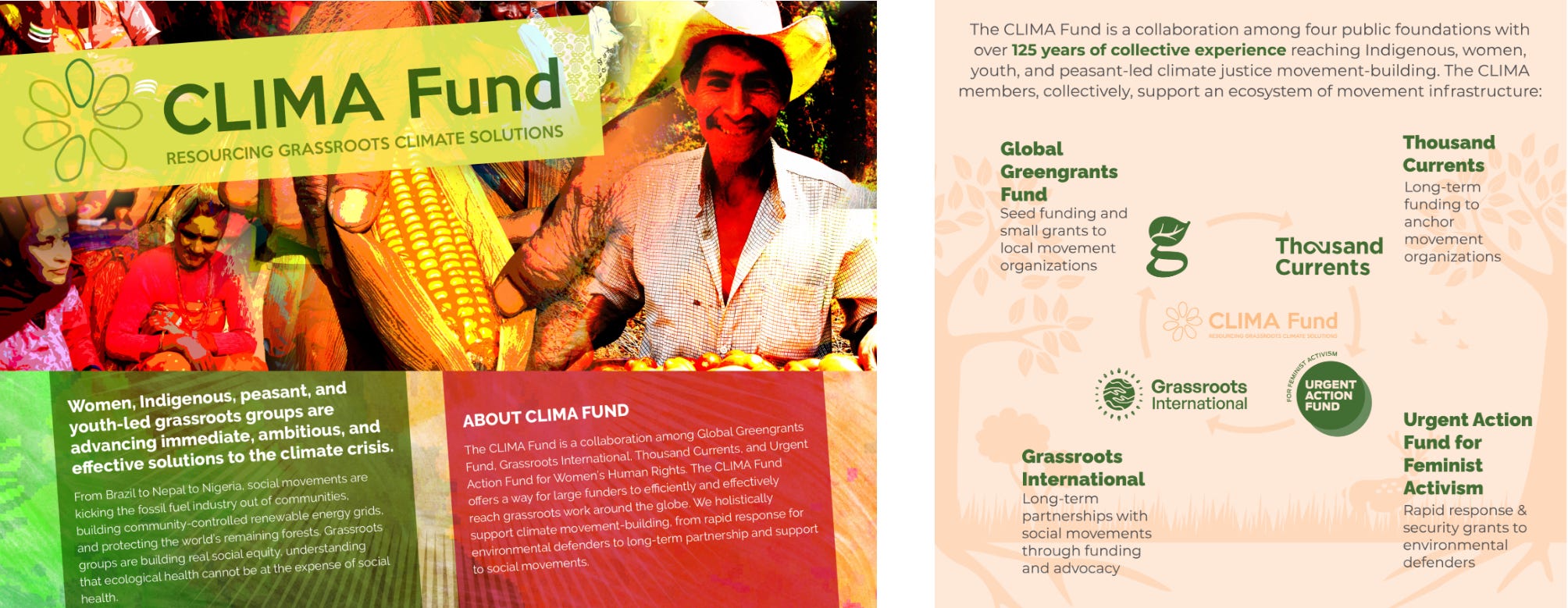
Another foundation-led coalition is The CLIMA Fund , a “collaboration” comprised of the Global Greengrants Fund, Grassroots International, Thousand Currents, Urgent Action Fund for Feminist Activism, and Youth Climate Justice Fund. CLIMA Fund members have given over 20,000 grants to grassroots groups in 168 countries over nearly four decades. These grants “address the root causes and the destructive outcomes of the climate crisis.”

They contrast their “grassroots” approach to other efforts, claiming better outcomes:
In confronting the climate crisis, policy change is often seen as the domain of governments, international agreements, and high-level negotiations. Yet, history shows that the most enduring environmental policies—those that hold up beyond political cycles, economic shifts, and industry resistance—are those that have been shaped and enforced by grassroots movements. …
In the face of rising authoritarianism, and the associated enabling of the fossil fuel industry, grassroots movements are essential for building power beyond electoral cycles and creating precedence outside the highest emitting countries where authoritarianism is on the rise. They do what governments and corporations often fail to do: build political will, enforce accountability, and drive policy ambition from the ground up, from the local to the global.

What does their grassroots support look like on the ground? They put forward as an example $80,000 in funding for local groups in Brazil in 2019 when there was:
a surge in deforestation, increasing threats to Indigenous and other frontline defenders of the forest, and devastating wildfires. In response, the CLIMA Fund provided security grants directly to defenders threatened by government violence and corporate expansion. Additionally, the CLIMA Fund supported community groups providing digital security trainings for movement leaders and journalists criminalized for resisting and exposing repression from extractive industries in the Amazon. Funding also went to local groups training youth in agroecology methods, regional organizations protecting Amazonian Indigenous cultural diversity and developing distributed community solar grids ...
Room For Both?
Can these contrasting foundation-led coalitions both be considered a part of the Climate Movement? Given our need to be big and broad and active enough, given that they both are working to achieve our vision, purpose, and Major Goal to overcome climate change by creating a just and prosperous sustainability that enhances wellbeing for everyone and everything, I say yes.

If you are new here, check out our Intro Series, as well as other posts in this Fields of Action Series. If you like this post, please “like,” comment, and share. And thanks for all you’re doing.