


This post continues our discussion of how, broadly, we are Together Enough, our sixth characteristic/imperative/goal. More specifically, this post continues our Subseries on Coalitions/Aliances/Networks by looking at one of the most remarkable coalitions in the climate space, The Global Alliance of Territorial Communities (GATC). Many of these folks literally put their lives on the line for climate and sustainability.
GATC is made up of five large regional coalitions, that are themselves made up of smaller coalitions. Thus, like nesting dolls, we have a global coalition made of regional coalitions made of smaller coalitions. At every level these inspiring coalitions are worthy of recognition in their own right.
The GATC has as its mission:
To be a single voice to fight for the collective rights of our peoples and communities, for the legal recognition of our territories, for protecting Mother Earth and all human beings, and to combat the causes of climate change.
The substance is an incredibly tall order, one I hope we all endorse.
But to be “a single voice” of so many coalitions, groups, and communities is daunting and, when it happens, an incredible accomplishment. I’m sure that within these nesting coalitions there can be strong disagreements all the way down. But unity is not the same thing as unanimity. It is, however, a recognition for all of us that we are stronger together than we are apart.
For the GATC to speak with one voice requires a tremendous amount of work. As they state:
We guarantee our legitimacy and representativeness thanks to democratic processes, ranging from the community to the plurinational level.
In total, GATC represents “35 million people in forest territories, spanning 24 countries in Asia, Africa, and Latin America and defending 958 million hectares of land.”
In no particular order, the five regional coalitions are as follows:

1. The Indonesian Alliance of Indigenous People’s of the Archipielago (AMAN). This broad-based coalition, winner in 2015 of the Elinor Ostrom Award for the Collective Governance of the Commons, is made up of nearly 2,500 communities, 21 regional chapters, 115 local chapters, 3 organizations, and 2 economic institutions. AMAN is so well respected that it has also represented the region of Asia “in various climate change forums and REDD+ (or climate and forestry) negotiations.”
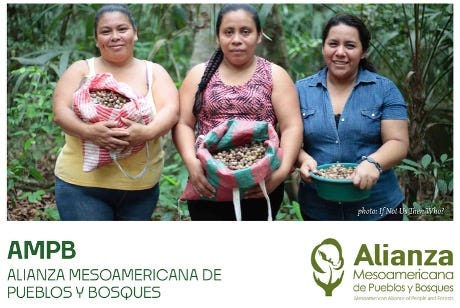
2. The Mesoamerican Alliance of People’s and Forests (AMPB) is a coalition of “traditional authorities of indigenous peoples,” indigenous organizations, local communities, and those responsible for the management of forest areas. In the face of threats from massive deforestation, climate change, and mega projects for mining, oil, and hydro electricity, AMPB fights for territorial rights to protect the forests and their way of life.
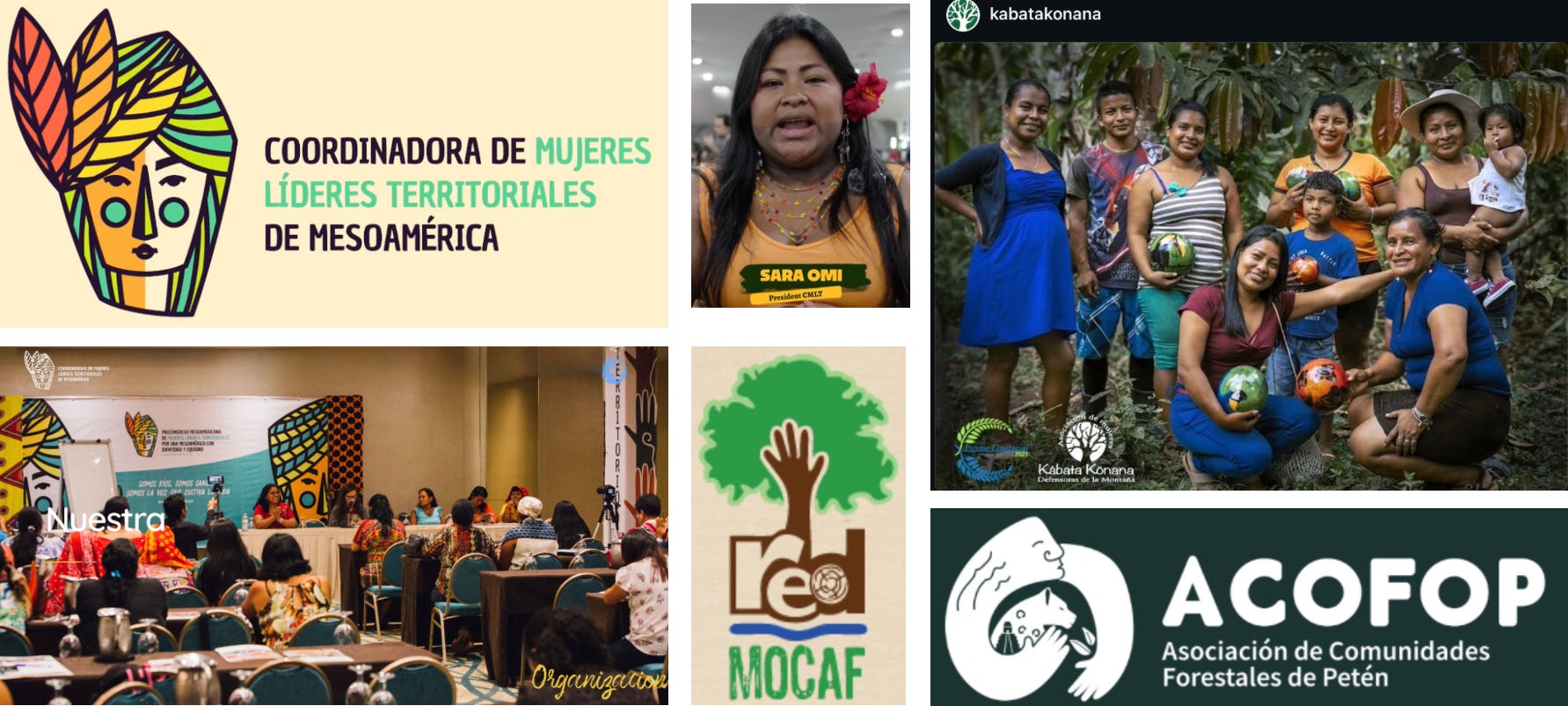
AMPB has also helped to organize the Coordinator of Territorial Women Leaders of Mesoamerica, who represent women affiliated with many national coalitions and organizations, such as Red Mocaf, a “Mexican Network of Forest Peasant Organizations,” ACOFOP or the Association of Forest Communities of Peten in Guatemala, MASTA or Moskitia Asia Takanka (“Unity of La Moskitia”) in Honduras, and Kabata Konana (“Defenders of the Mountains”) in Costa Rica.
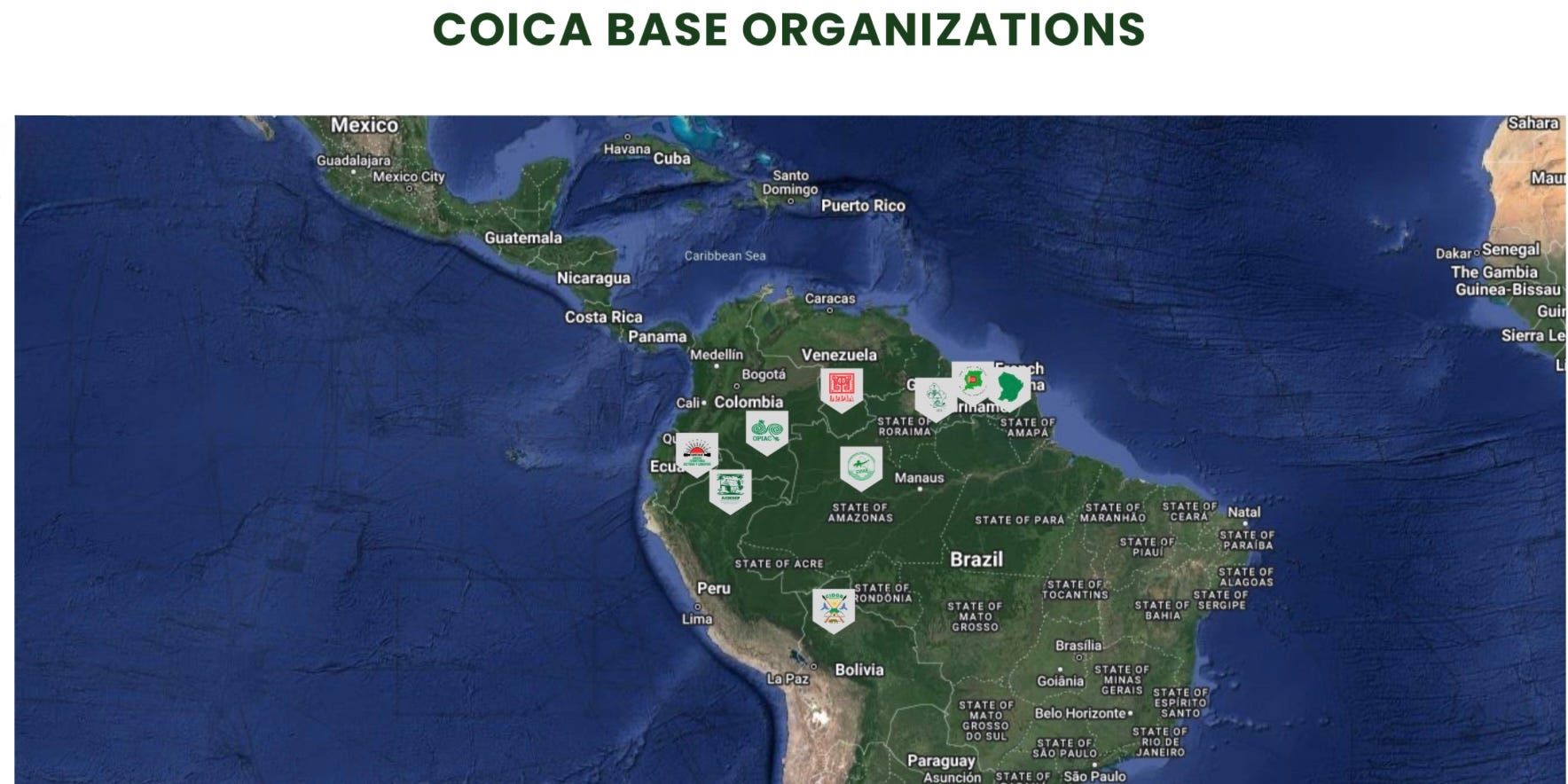
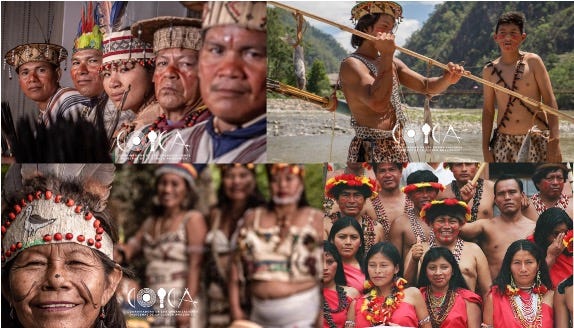
3. The Coordinator of Indigenous Organizations of the Amazon Basin (COICA) is an indigenous coalition “that acts on behalf of 511 Indigenous People’s, of which approximately 66 are Indigenous People’s in Voluntary Isolation and Initial Contact (PIACI).” The coalition is made up of collective entities present in nine Amazonian countries.
§ In Peru, the Interethnic Association for the Development of the Peruvian Jungle (AIDESP), is made up of nine regional grassroots organizations that represent “109 federations and 1,809 communities where more than 650,000 women and men live, belonging to 64 indigenous peoples grouped into 19 linguistic families.”
§ In Brazil, the Coordinator of the Indigenous Organizations of the Brazilian Amazon (COIAB) is “the largest indigenous organization in Brazil,” a country with 180 indigenous peoples with a collective population of 440,000.
§ In Venezuela, the Regional Organization of the Indigenous People’s of Amazonas (ORPIA) “brings together 35 grassroots organizations belonging to 20 indigenous peoples living in the Venezuelan Amazon.”
§ In Bolivia, the Confederation of Indigenous Peoples of Bolivia (CIDOB) unites “34 indigenous peoples … through its 13 regional organizations.”
§ In Ecuador, the Confederation of Indigenous Nationalities of the Ecuadorian Amazon (CONFENIAE) “is made up of 23 grassroots organizations and federations in the 6 Amazonian provinces of Ecuador, representing 11 nationalities: Kichwa, Shuar, Achuar, Sahara, Shiwiar, Waorani, Andwa, Quito’s, Siena, Siekopai, and AiCofan.” CONFENIAE builds “popular power within the framework of the right to autonomy and self-determination based on the principles of Unity, Territory, Justice, and Freedom.”
§ In Guyana, the Amerindian People’s Association of Guyana, has 80 “units” located throughout the country “to promote and defend the rights of the indigenous peoples of Guyana,” who number more than 70,000.
§ In Colombia, the National Organization of the Indigenous People’s of the Colombian Amazon “is made up of 20 grassroots associations that represent 56 indigenous peoples … to ensure that all the collective and individual rights of its affiliates are respected and recognized by all the actors located in the Amazon region.”
§ In Suriname, the Indigenous Organizations of Suriname (OIS) is “made up of 9 indigenous peoples who live in the 10 districts that comprise the country. OIS is the only organization certified by the President of the Republic of Suriname, to defend and promote the interest of indigenous peoples in national and international issues.”
§ In French Guyana is the Federation of Aucochthonous Organizations of French Guiana (FOAG).
Collectively, as COICA their efforts “are oriented towards the promotion, protection and security of our territories, through our ways of life, principles and social, spiritual and cultural values.” Since scientists have warned that, unless trends are reversed, the Amazon is close to a dieback and ecosystem collapse, COICA is spearheading a campaign to create:
a global agreement for the permanent protection of 80% of Amazonia by 2025 as an urgent measure to avert an imminent tipping point and the planetary crisis and to reach a transformative change. It is time for the international community (governments, civil society, businesses, etc.) to join us in our effort to protect the planet.
The campaign wants such a pact to be implemented by 2030.
4. The Articulation of the Indigenous People’s of Brazil (APIB) is a coalition made up of coalitions and organizations from each of the seven states of Brazil. They state:
Our struggle is for our lives and our territories, for the defense of the last ancestral lands and to confront the climate crisis on our planet. Our struggle is for the healing of the Earth. Therefore, we reiterate the urgency of the demarcation and land tenure rights of our territories.

5. The Network of Indigenous and Local Populations for the Sustainable Management of Central African Forest Ecosystems (REPALEAC) “brings together civil society organizations working for good governance and sustainable management of forests in Central Africa …” It has “active national networks in Burundi, Cameroon, Congo, Gabon, Equatorial Guinea, the Central African Republic of the Democratic Republic of Congo, the Republic of Chad, and Rwanda.” REPALEAC defends “the rights of Indigenous People’s and Local Communities as well as the sustainability of the ecosystems to which they are intimately linked and on which their survival depends.”
Putting Their Lives on the Line
In many situations those who make up the nesting coalitions, organizations, and peoples that collectively make up the Global Alliance of Territorial Communities literally put their lives on the line. Fear of harm or even murder is a fact of life for all involved. Over 2,000 environmental activists and defenders have been killed since 2012, when the organization Global Witness began tracking these murders. In 2023 a defender was killed more than every other day on average, 196 in total. “Lethal attacks often occur alongside wider retaliations against defenders who are being targeted by government, business and other non-state actors with violence, intimidation, smear campaigns and criminalisation. This is happening in every region of the world and in almost every sector.” Things are especially bad in Latin America, where 85% of the killings took place in 2023 (Global Witness, Missing Voices, Sept 2024, p. 14).
Such persecution and martyrdom inspire a deep and costly hope the rest of must not treat lightly or squander. Their courage, along with the breadth of Climate Movement coalitions around the world such at GATC, inspire all of us to dig deep and match their courage and commitment with our own. Join us!
If you are new here, check out our Intro Series and other posts in this Olympian Fields of Action Series. If you like this post, please “like,” comment, and share. And thanks for all you’re doing.