

“We must move away from the practice of chasing others and become architects and leaders of the green market ourselves.”
— South Korean President Lee Jae Myung
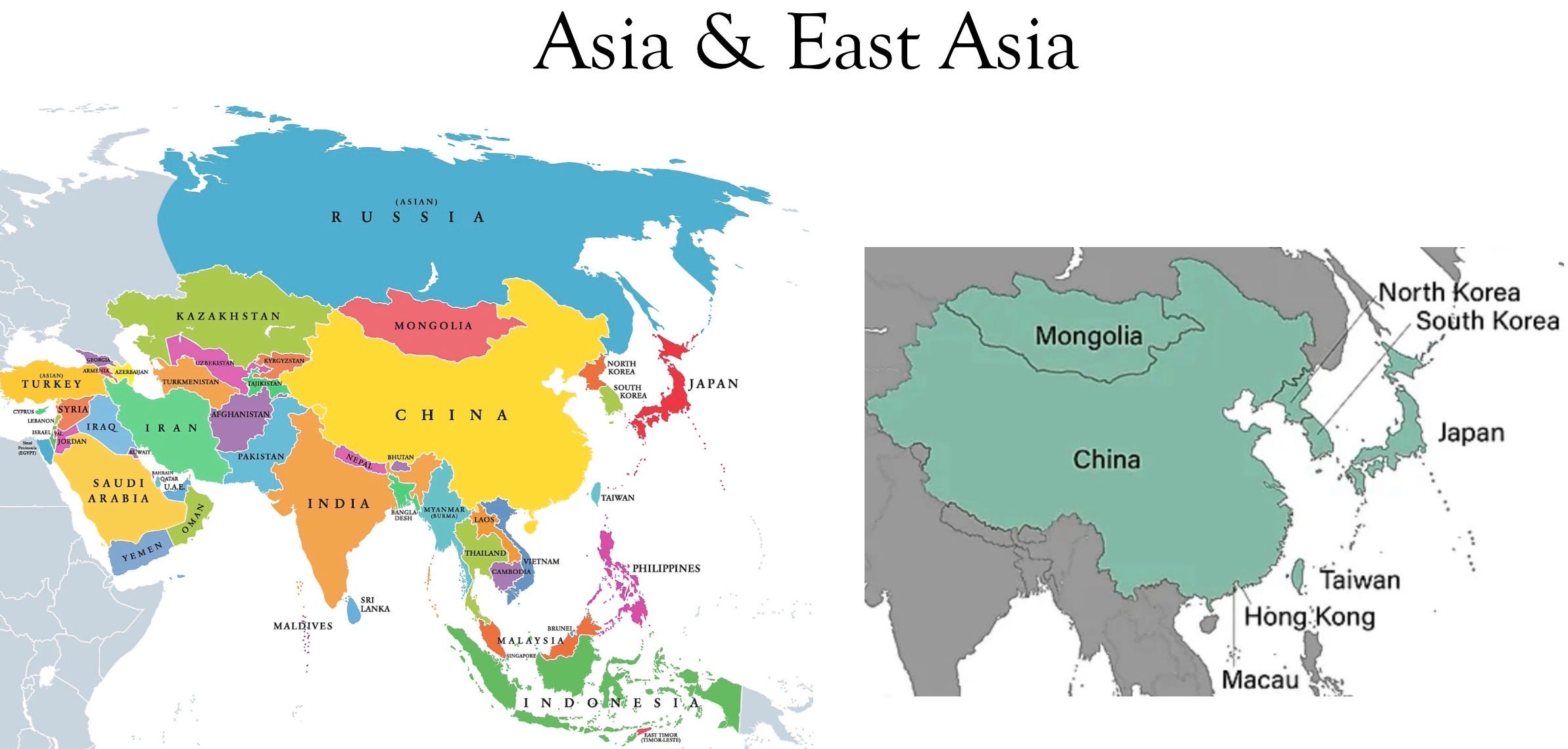
East Asia Leading The Charge
East Asia might just help save the world’s bacon when it comes to climate consequences.
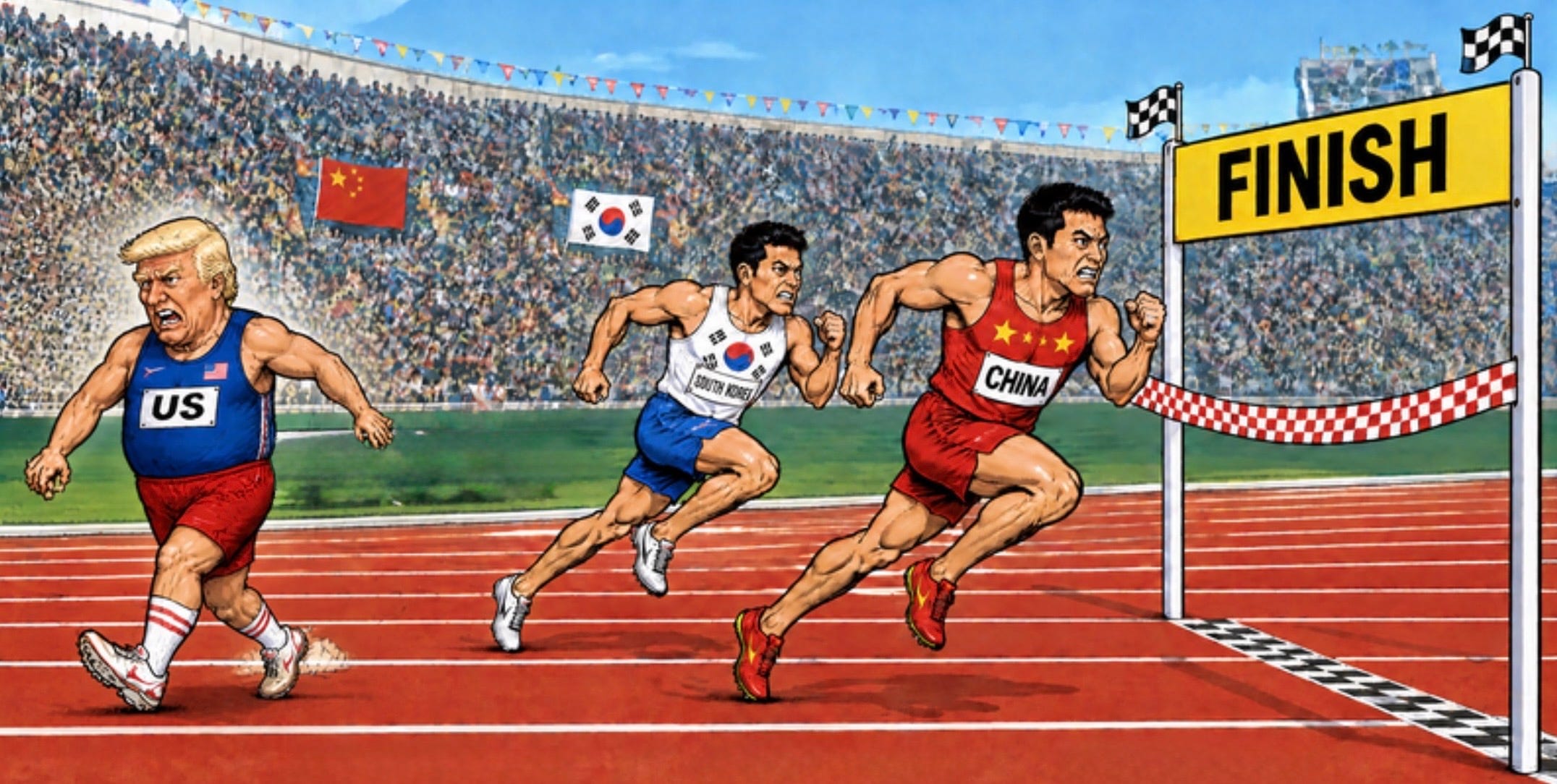
While Trump’s vindictive, stupid, dangerous, and fossilized efforts to take the US backwards on clean energy and pollution reduction have damaged our energy, economic, climate, and national security, China and others are forging ahead.
China, of course, is leading the way on the green economy because it is in their national interest. (See my earlier post on how China has turned a corner on clean energy.)
And now folks in their neck of the woods have decided to give China some competition based in their national interest. But they’ve been pushed to do so by The Climate Movement in their country. It’s an excellent example of The Catalytic-4 working together.
South Korea’s $747 billion+ Decarbonization Plan
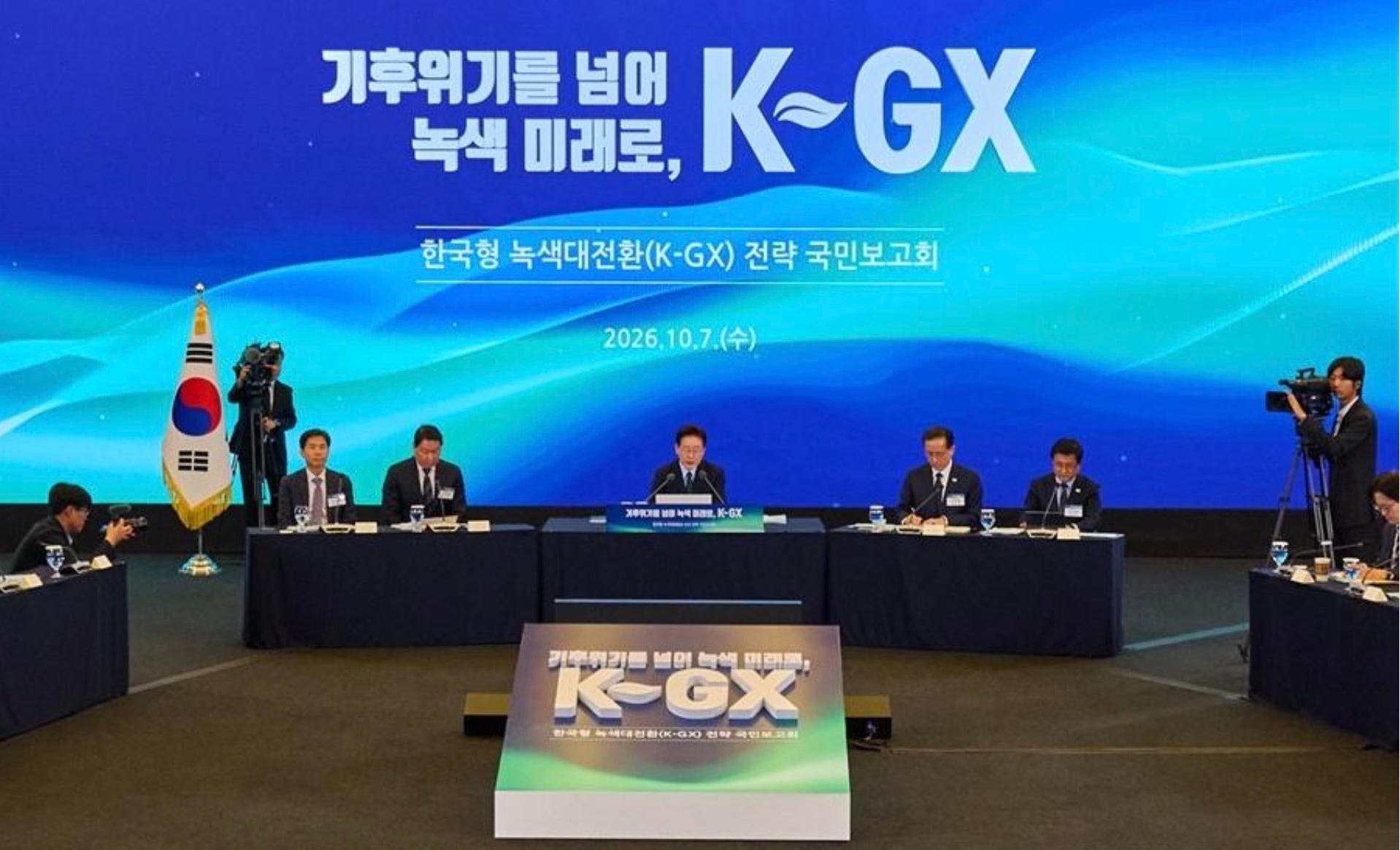
South Korea just announced a 10-year $747 billion+ plan — the “K-GX Strategy” — designed to have them be leaders and not followers, to get rich by going green. As President Lee Jae Myung said when introducing this strategy:
“We must move away from the practice of chasing others and become architects and leaders of the green market ourselves.”
The plan also includes mobilizing about $172 billion of private sector investment as well, encouraged by incentives and supported by public-private partnerships. All told, we’re looking at about $920 billion.
As Forbes describes it:
the 10-year plan aims to overhaul the nation’s energy, industrial and transportation sectors to turn South Korea into a clean-tech superpower.
This includes decarbonizing their dirtiest industries and selling their solutions to the world:
steel,
petrochemicals,
cement, and
semiconductor and display manufacturing.
But South Korea is also investing in high-growth areas to give China a run for their money in clean-tech exports:
EVs,
batteries,
solar panels,
wind turbines,
heat pumps,
small modular reactors,
hydrogen tech,
power semiconductors, and
power grid infrastructure.
K-GX’s goals include:
70% of new vehicle sales by 2030 will be EVs and hydrogen-powered vehicles;
100 gigawatts of renewable energy capacity by 2030.
Crucial to their success is to put the Third Catalytic Source of Transformation, the accelerating rate of tech change or ARTC, to work on creating the solutions: strategic ARTC.
Governments-&-Markets Working Together
As pictured above, it’s no coincidence that (1) the President, Lee Jae Myung, announced K-GX, and (2) he did so at the Korean Chamber of Commerce.
This is not some half-hearted PR stunt to appear green, a smoke and mirrors scam pretending to be carbon-neutral. This is a plan to transform their economy and get a big slice of the ever-growing global green market.
The K-GX Strategy was put together by a joint government-business task force comprised of 13 government ministries and 17 business and industry organizations.
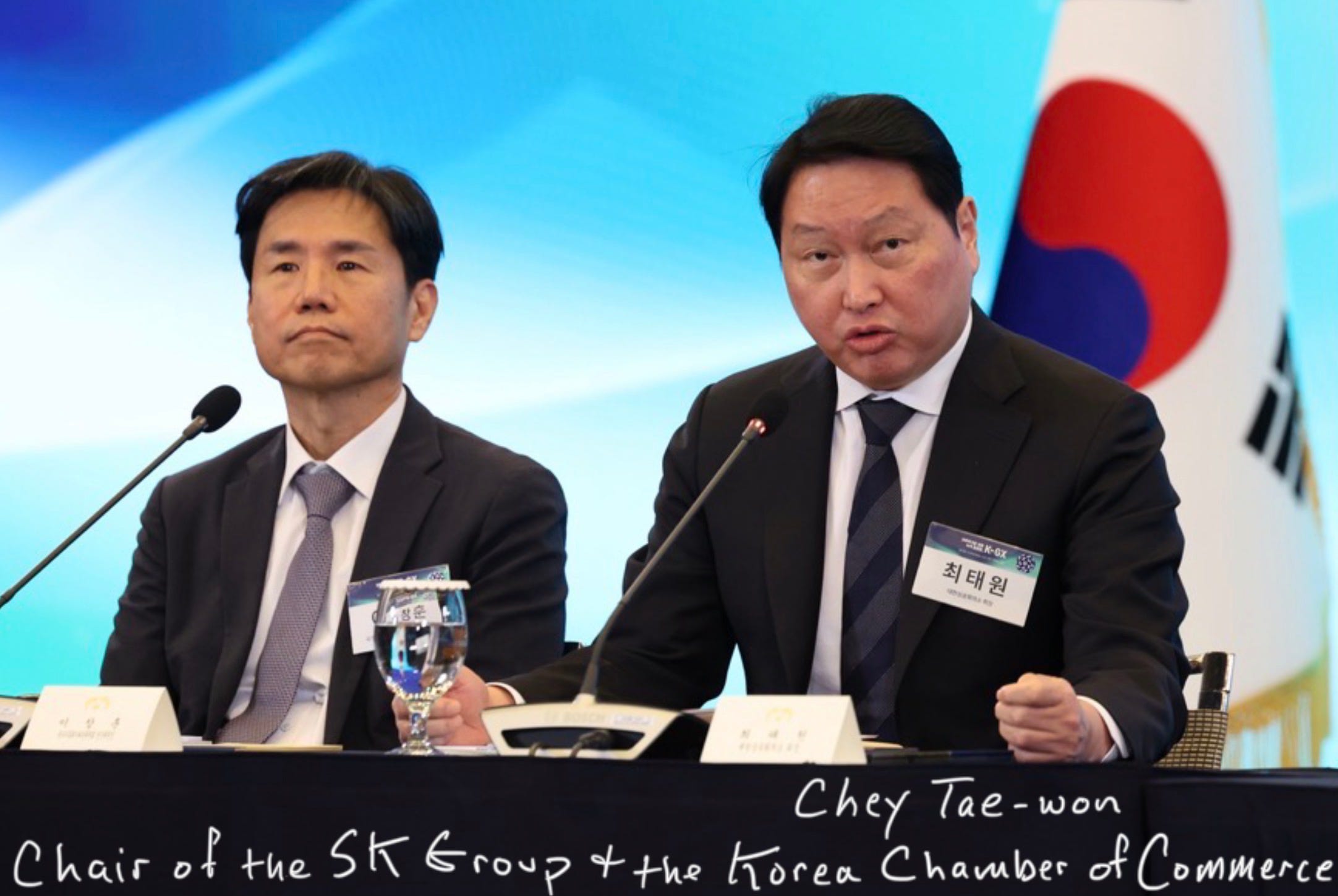
SK Group Chairman Chey Tae-won, led the private-sector arm of the joint K-GX task force as chairman of the Korea Chamber of Commerce. In his day job he is Chair of the SK Group, South Korea’s second largest conglomerate, encompassing energy, petrochemicals, semiconductors, AI, wireless and digital telecommunications and IT, and biopharmaceuticals and drug manufacturing.
According to The Korea Herald:
Chey said companies had hesitated to make long-term investments in carbon neutrality not because they lacked commitment, but because they had been expected to shoulder the risks of uncertain technologies, markets and policies on their own.
Now they have a true partner in the government. As South Korea’s Finance Minister Lee Hyoung-il put it:
“The K-GX Strategy is not just an environmental policy; it is an absolute structural rebirth of Korea’s industrial landscape. By combining aggressive fiscal backing with regulatory relief, we are giving our core manufacturing sectors the predictability and capital they need to lead the global green economy.”
What the President and the Finance Minister (not the environment minister) are describing are many of the ways our Fourth Catalytic Source of Transformation, Governments-&-Markets, should work. The government leads by helping, channeling, prodding, and supporting industry and business as they move in the right direction. K-GX support includes low-interest loans, green bonds, and credit guarantees.
South Korea’s K-GX Strategy is setting industry and business up to make money both at home and abroad. That’s exactly how Governments-&-Markets should work in overcoming climate change.
As one investment analysis concludes:
The combination of long-term financing, industrial decarbonisation targets and support for emerging technologies could create opportunities for manufacturers, component suppliers, engineering companies, and climate technology businesses.
I’ve emphasized the business side, but President Lee was clear about the need for climate action, and that Governments-&-Markets must work together to overcome climate change.
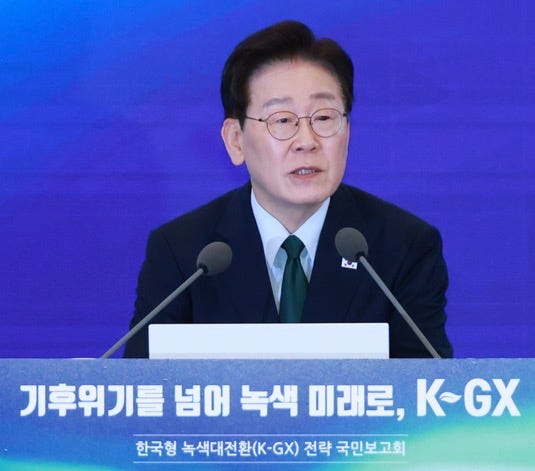
“Responding to the climate crisis should no longer mean sacrificing either the environment or economic growth. We need a sweeping transformation … Moving proactively on the green transition is a clear strategy for the future — one that will both secure our global competitiveness and protect people’s lives and livelihoods from the climate crisis.”
And The US?
Of course, President Trump offers the exact opposite of leadership, vindictive stupidity on steroids: kneecapping massive clean energy projects about to go online, killing as much of Biden’s clean incentives as he can; forcing old uneconomic coal-burning power plants to keep running costing hundreds of millions of dollars, etc.
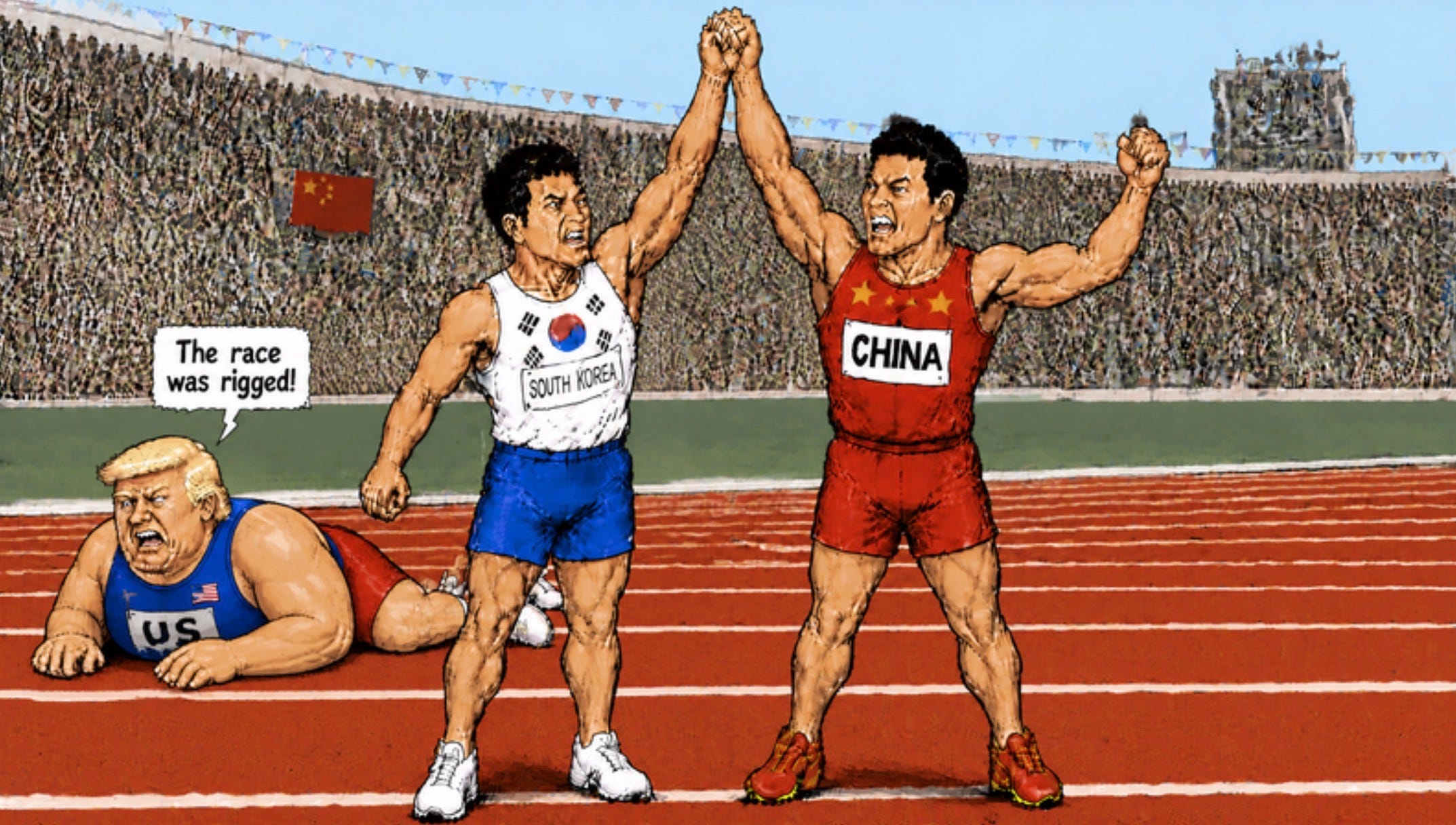
China and South Korea will be competing with one another, making each other better, moving their countries towards prosperous sustainability. Meanwhile the rest of the world will benefit from the cheaper, cleaner products they produce and sell, moving all of us forward with climate action.
In contrast, Trump and his Administration are working hard to make the US less competitive and more polluted out of spite, stupidity, and greed, taking the country backwards.
Thankfully, smart countries like South Korea are not following Trump’s lead, but making their way into a cleaner, more prosperous future.
That’s part of the leadership the world needs.
Our Job? Justice and Wellbeing for Everyone & Everything
South Korea’s Government-&-Markets is demonstrating some of the leadership the Climate Movement around the world must push their government and business leaders into providing as we overcome climate change by creating a just and prosperous sustainability that enhances the wellbeing of everyone and everything.
I’ve heaped a lot of positive ink on South Korea’s government in this post. But let’s be crystal clear. Governments and markets will never, ever, ever, ever get the job done on their own.
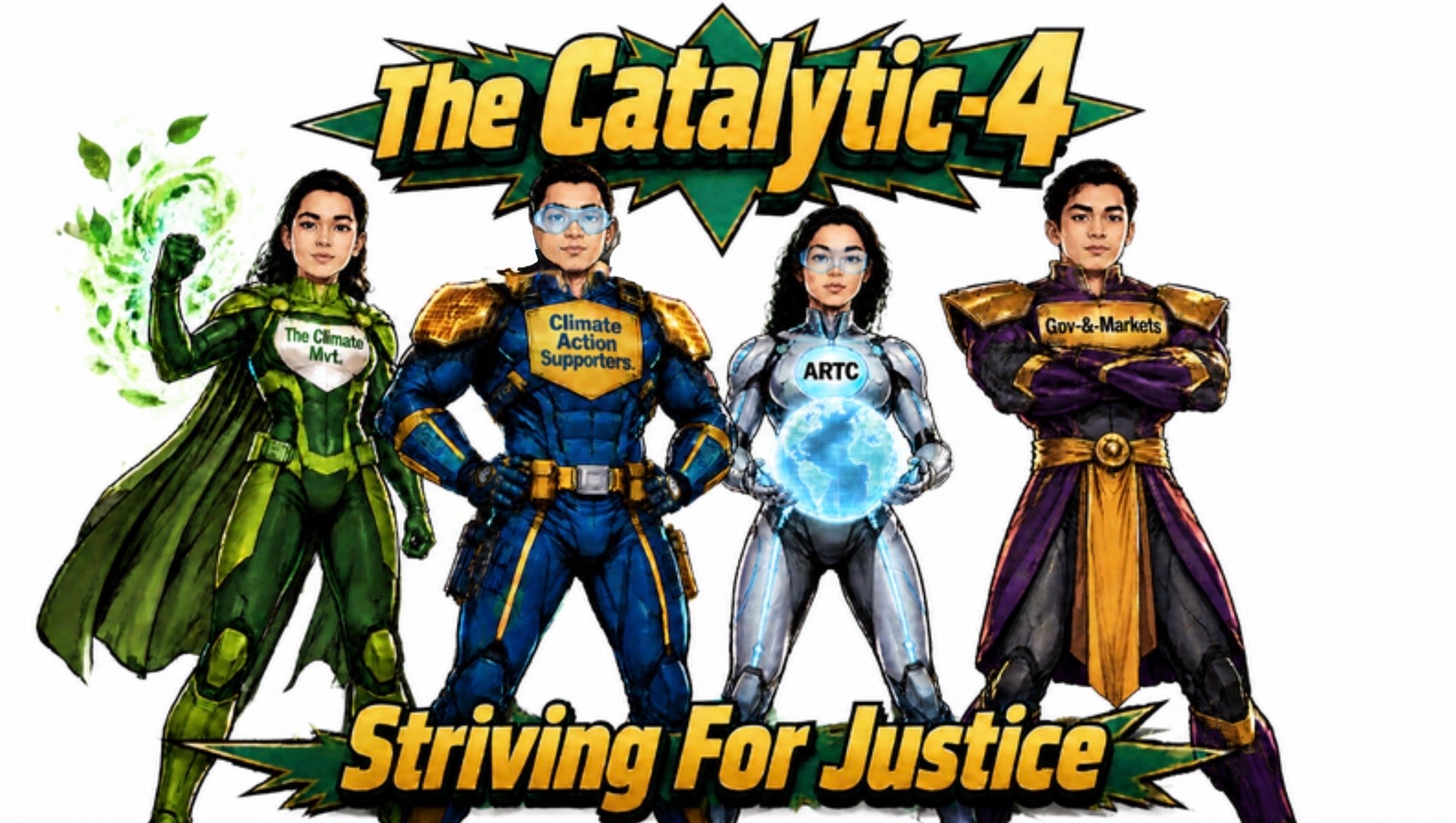
That’s why our hope is based on The Catalytic-4 working together: (1) The Climate Movement; (2) Climate Action Supporters; (3) ARTC or the accelerating rate of tech change, and; (4) Governments-&-Markets. In a nutshell: 1 and 2 must push 4, with 4 making 3 work for us.
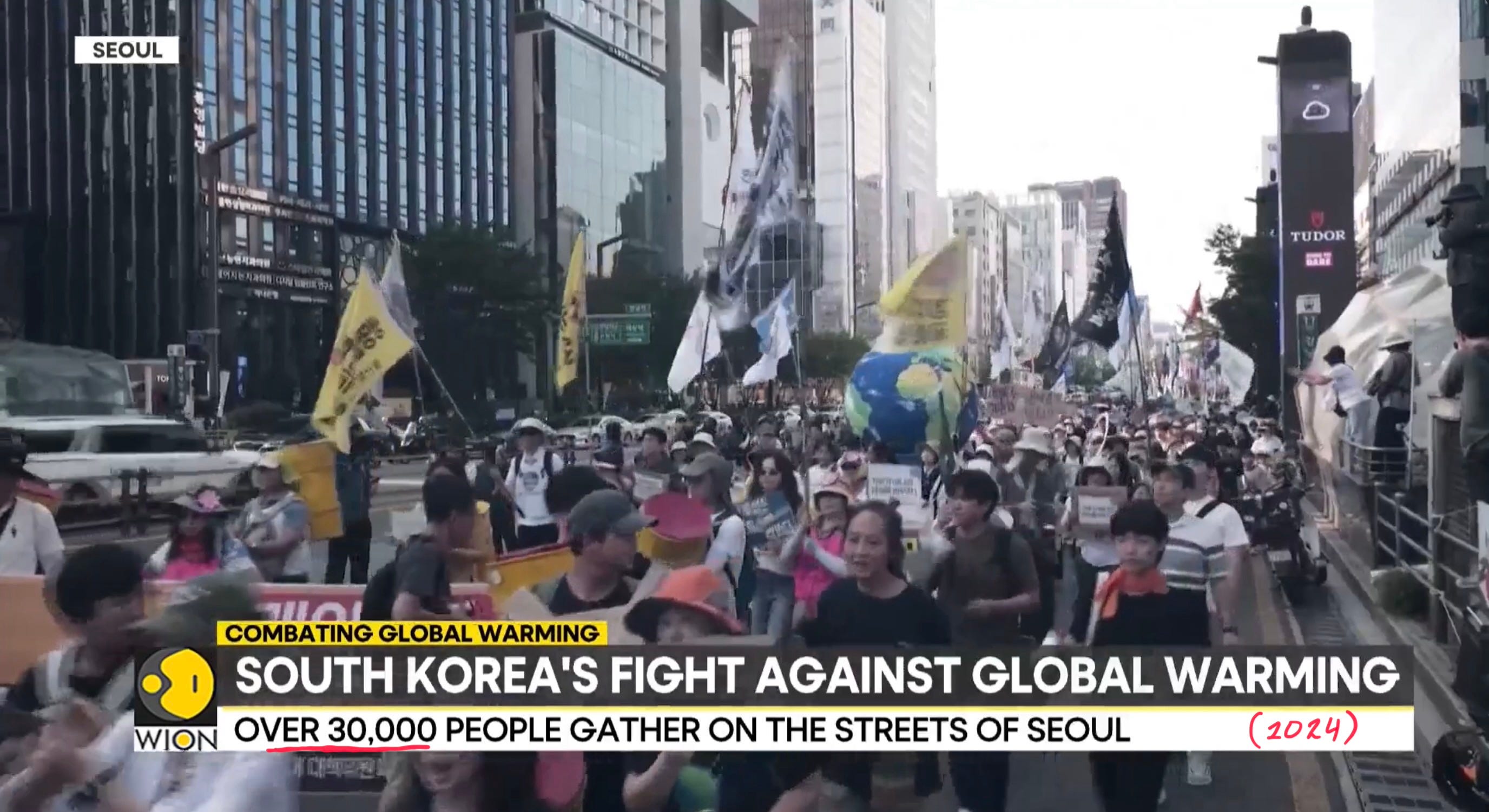
K-GX is a case in point. It was The Climate Movement and Climate Action Supporters in South Korea that pressured and forced the government to act, including a monumental court victory in 2024 that ruled the government must protect future generations from climate change. The suit was brought by 19 teenagers involved in Youth 4 Climate Action, which is part of the school strike movement.
K-GX is basically Governments-&-Markets saying, in effect, “Hey, if we’re going to be pushed into serious climate action, let’s make some money out of this deal.”
K-GX isn’t all that’s needed, and South Korea’s Climate Movement must continue to push to make the government’s response not just about reducing pollution, not just about creating a green economy. It must include the creation of a just and prosperous sustainability that enhances wellbeing for everyone and everything.
South Korea and China may help lead the world in creating cheap clean tech, but we must make sure justice and wellbeing are also a part of the world’s future.
If you are new here, check out our Intro Series. If you like this post, please “like,” comment and share/repost. And thanks for all you’re doing.