


This week a conference of nations is taking place in Santa Marta, Columbia, cohosted by Columbia and The Netherlands to move forward the effort to transition away from fossil fuels, explicitly for the purpose of dealing with climate change. (Our friends at The Climate Reality Project have a good brief primer on the Santa Marta conference.)
Those attending are “57 countries representing more than half of global GDP, 30% of the world’s population and 20% of global fossil fuel production.”
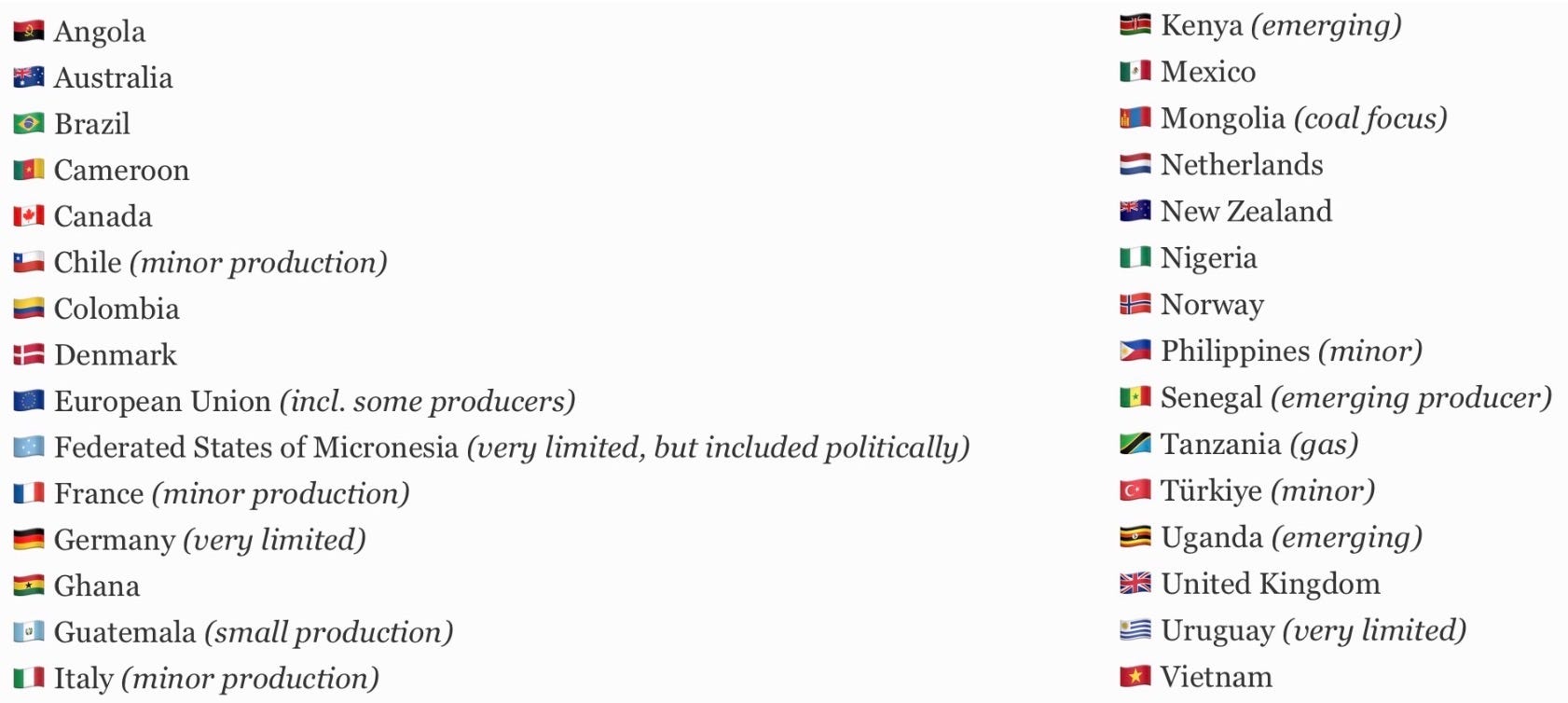
As you can see from the list above, what we don’t have are the three largest polluting countries: China, the US, and India. Does that matter? Surprisingly, no.
This conference grew out of the failure of last year’s international climate negotiations called COPs (or Conference of the Parties to the 1992 Rio Climate Treaty) to live up to their commitment at COP 28 in DuBai in 2023 to transition away from fossil fuels. Rather than continue to be stymied by fossil-states at the COPs, these 57 countries are coming together to create “a coalition of the willing” to move forward at a faster pace. It is intended to complement, not replace, the COPs.
Here’s a positive view of what could be accomplished by Ingmar Rentzhog of We Don’t Have Time:
A group representing more than half of global GDP and one-fifth of fossil fuel production is large enough to begin shaping markets. Not by announcing the end of oil tomorrow, but by creating policy certainty around what comes next: clean energy investment, fossil fuel subsidy reform, debt relief, legal protections for climate policy, transition planning for workers and communities, and national roadmaps aligned with science (emphasis added).
Shape markets? Yes. But we’re going to need more than that. This could turn out to be an historic turning point — but not without The Climate Movement.
Santa Marta Can Help
What we want, market-wise, is to drive the fossils off a cliff in a way that overcomes climate change while simultaneously making the transition to clean as pain-free and just as possible, especially when it comes to workers, communities, and low-income folks.
Tipping point market transformations driven by tech change don’t require everybody or every business or every nation. They just require enough to create the tipping point. Could this “coalition of the willing” provide it for clean tech driving climate action?
Unlike the international climate talks, tech change market transformations like dirty-to-clean don’t need an international consensus of nation-states.
The same is true with overcoming climate change by stopping the bad stuff, i.e. greenhouse gas pollution enough to hold warming to 1.5C. As I discussed in an earlier post, we already have the market conditions necessary to do so: about 75% of needed mitigation efforts are cost competitive today (55%) or nearly so (20%).
These favorable market conditions mean clean energy is dominating new investment and has surpassed coal in terms of power generation, as this snapshot from Ember illustrates:
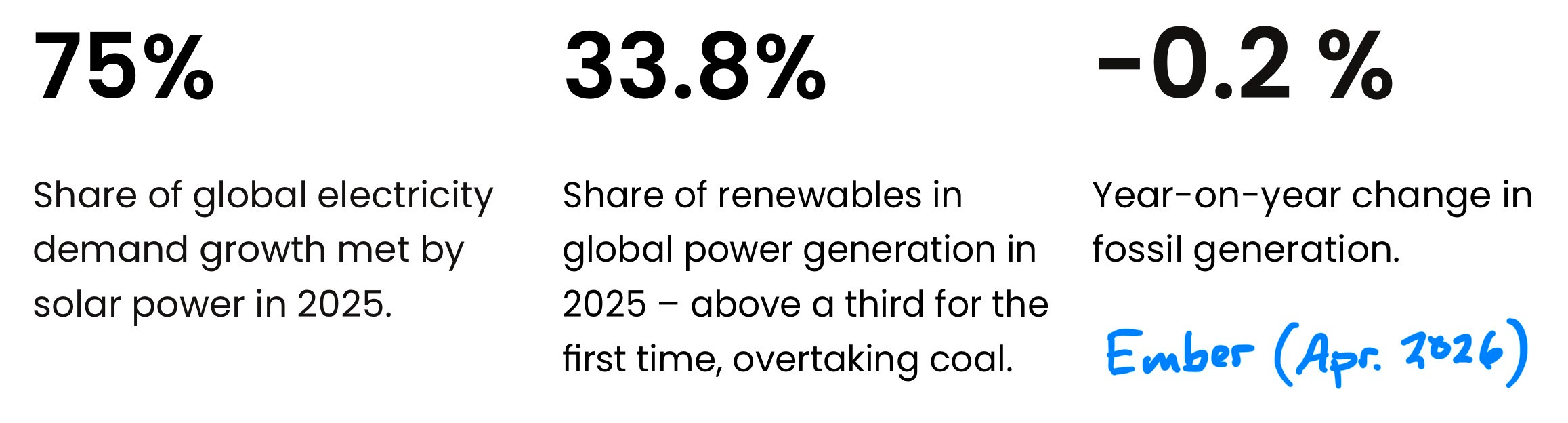
So, in general, profits and price are on our side, and these factors will continue to grow. Good.
The Iran War fiasco has also made it clear that energy security = economic security. And economic security creates conditions for stable and productive societies.
Economic security from energy security. Also good.
Bottom Line — it’s pretty simple: cheap, home-grown, clean energy is much better than dirty fossil energy, especially if it’s imported.
Unfortunately, the climate-friendly clean-tech tripping point market transformation has a major impediment standing in the way.
Untangling the Fossils From Government
There’s no “free” market in energy, dampening and even neutralizing the power of profit and price. Governments are heavily involved. This is true for both the production and consumption of fossil fuels.
On the production side, according to our friends at Carbon Majors, in 2024 “state-owned companies accounted for 54.0% of emissions,” while major investor-owned companies accounted for about 24%. Furthermore, their pollution is growing: 54% of state-owned companies increased their pollution, while 57% of investor-owned companies reduced theirs.
So governments don’t just allow the Big Producers of Polluting Products to pollute. Many of them are Big Producers: they have a controlling interest or they own-and-run fossil energy producers.
On the consumption side, many countries subsidize fossil energy to make it cheaper for consumers to buy. Some also subsidize investor-owned fossil companies, which is justified by the same rationale: keep consumer prices cheap.
An excellent new report from the International Institute for Sustainable Development (IISD) shows that:
“Global public financial support for fossil fuels exceeded USD 1.2 trillion in 2024—nearly five times the USD 254 billion that went to clean energy.”
Here it is in graphic form:
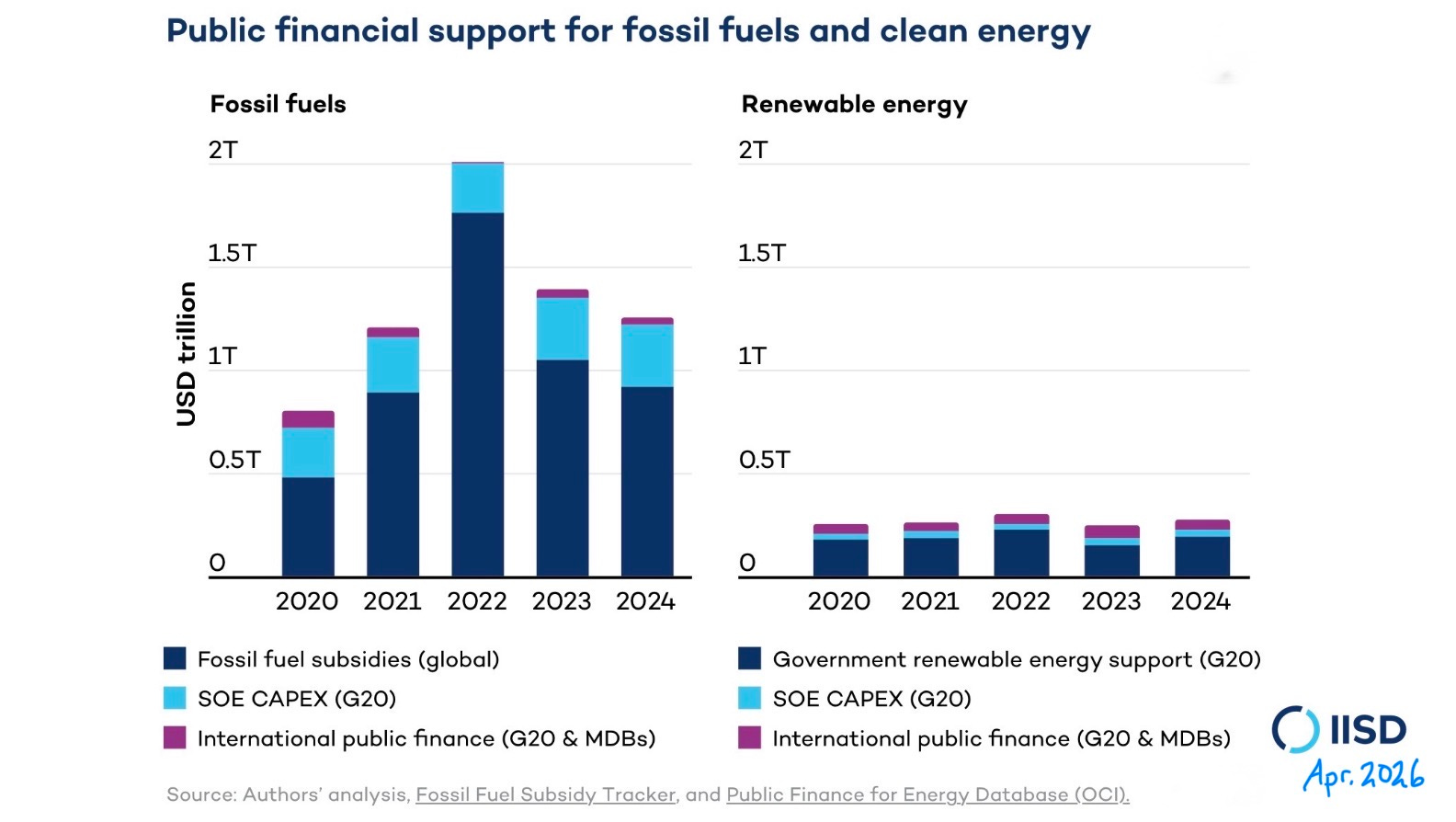
Worldwide, 90% of these subsidies went to consumers and 10% to producers. But it all helps the fossils because consumers are buying their deadly product; the subsidies are really going to them; they may “help” the consumers, but the fossils end up with the $$.
In effect, consumers are just a pass-through for taxpayer $$ going to fossil corporations. This is reverse “money-laundering” taking clean taxpayer $$ and making it fossil-dirty by the consumer pass-through.
Another new IISD report highlights that the consumer subsidies are regressive, with most of the benefits going to the wealthy. For example, “In middle-income countries, the top-earning 20% of the population receives 11 times as much in subsidies as the lowest 20%.”1 Instead of subsidizing the price, a better way is direct cash transfers to the lowest 20%.
Furthermore, the countries most vulnerable to fossil fuel price spikes due to things like the Iran war are subsidizing their own dependence. Here’s their dirty v. clean scorecard:
2.5 to 1, dirty v. clean
for every $1 dirty gets, renewables get $0.39.
So how do we untangle this government-fossil dysfunctional relationship? How do we break the pusher-addict destructive spiral?
Our Challenge: keep prices cheap and job transitions fair as we switch from dirty to clean while we creating speed and scale needed to overcome climate change.
We can’t just get rid of fossil subsidies without having cheap clean energy and related technologies ready to take the place of the fossils. We don’t want yellow-vest type protests popping up in countries where the cost of climate action is suddenly thrust upon working people. We also don’t what this because it would be, you know, frikkin’ wrong.
But we also must tackle the governments-as-producers side. We must get them out of the pollution business. That’s why we can’t just shape markets or even reform fossil subsidies. In addition, there are all kinds of laws and public investments in infrastructure designed with the fossils in mind. It’s a deep entanglement. However much Santa Marta can help will be beneficial. But we must be realistic about what it can accomplish.
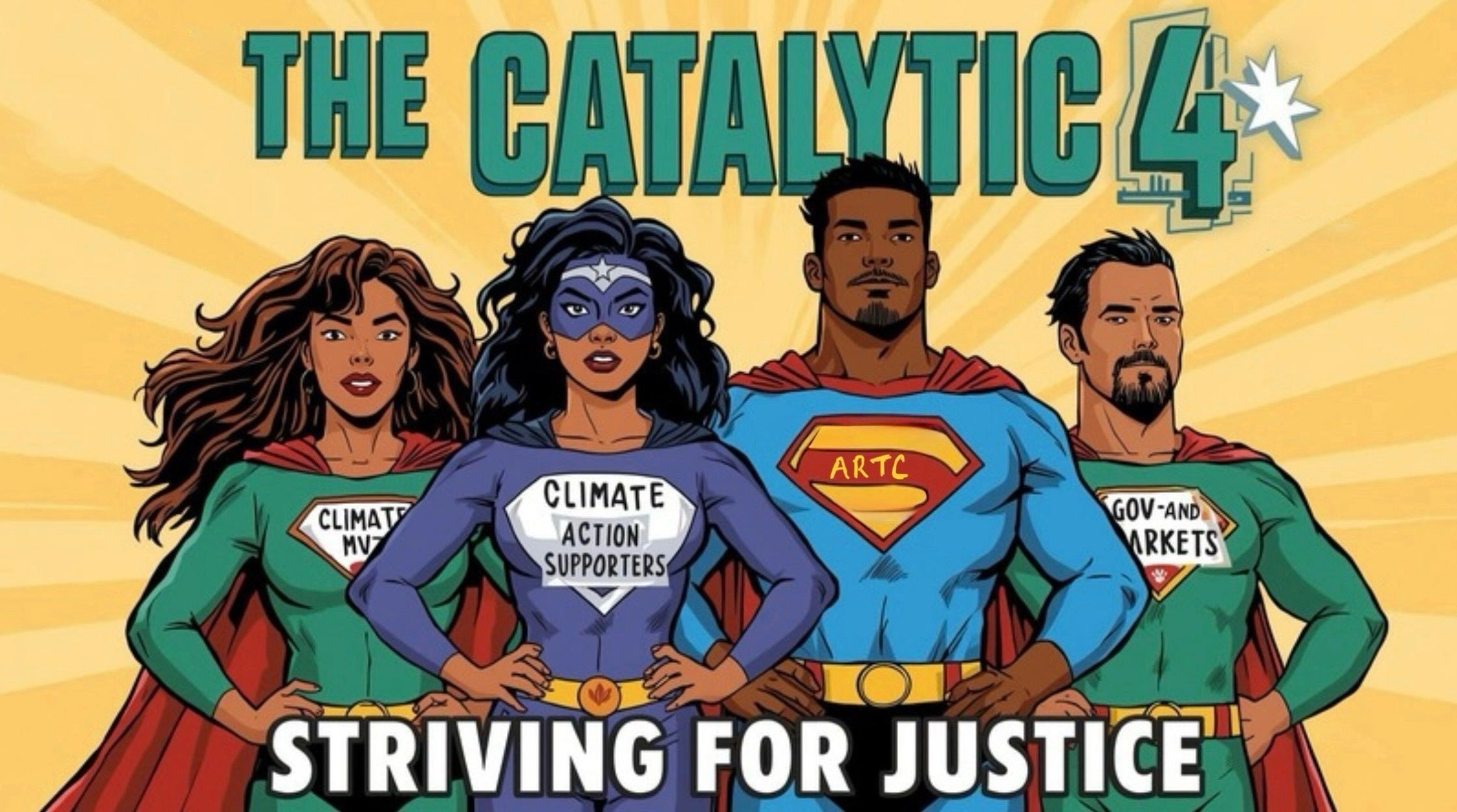
The Catalytic-4 Together Is The Answer
Since the Industrial Revolution ARTC (or the accelerating rate of technological change) and markets, with some modest help from government, have created waves or “great surges” of economic and societal transformation. These are historical facts.
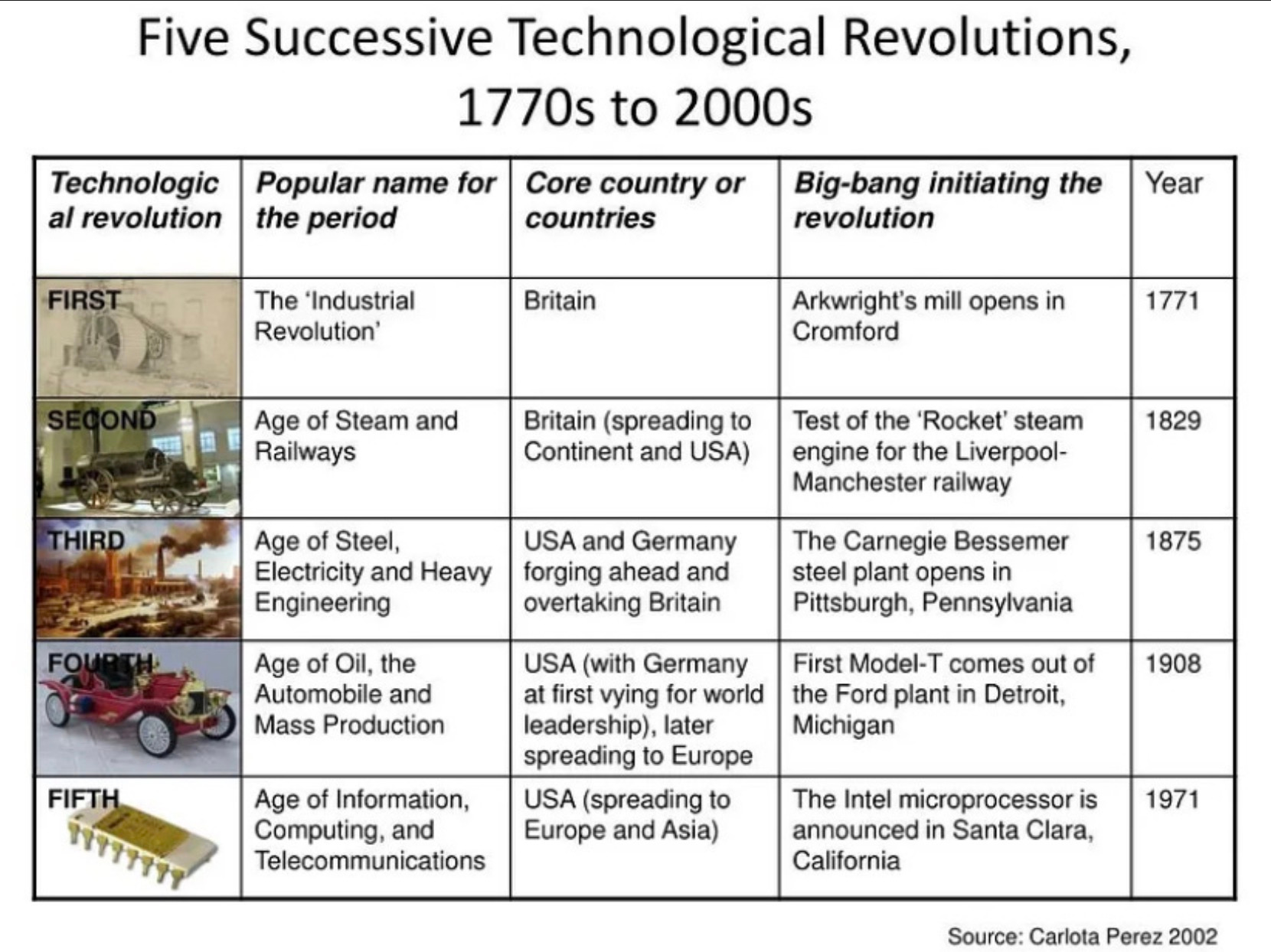
However, past is not prologue, or prophecy. Concerning tech-economic change, the future will be different — but it won’t be that different. How new waves/surges happen won’t exactly be the same. But will we continue to have them? Yes.
Here’s the difference as I see it: for past waves/surges there has never been the deep structural, financial, political, and policy entrenchment like we have with the fossils.
The good news is that we’re in the midst of a beneficial surge: the transformation from dirty to clean energy. The bad news is it won’t happen fast enough.
Markets, mainly on their own, combined with ARTC, can create transformative waves/surges.
Governments, on their own — i.e., without sufficient popular support and pushing from The Climate Movement and Climate Action Supporters — can help markets with economic change driven by tech waves/surges. But not fast enough for our needs.
Bottom Line: Each of The Catalytic-4 on their own or in binary combos won’t deliver speed and scale in time to avoid 1.5C or even 2C — let alone do so by creating a just and prosperous sustainability that enhances wellbeing for everyone and everything.
But together they can.

As I’ve discussed previously, polls show that in most countries we already have the volume of popular support we need — 80% or greater supporting action. But what we need to do is intensify that support so that climate action is a top priority. In other words, we need this 80+% to become Climate Action Supporters, our Second Catalytic Source of Transformation.
We need all four of The Catalytic-4 working together. But that won’t happen without The Climate Movement working to make it happen — we are the catalyst of The Catalytic-4, the catalyst of catalysts.
To intensify popular support, to make ARTC strategic, and to have Governments-&-Markets working together to create speed and scale will require The Climate Movement to pull its destiny into the present and become what we are meant to be.
Every nation on earth needs a Climate Movement that is big and broad and active enough — 5% of the population — to push change at speed and scale.
The more countries who kick the fossil addiction, as importers, exporters, consumers, and producers or any combo thereof, the faster we can bring our future into the present.
To stop the bad stuff, greenhouse gas pollution, we don’t need all of the countries of the world to agree at the same time. Santa Marta can give us a needed boost.
But it is The Climate Movement pushing the rest of The Catalytic-4 that will bring us home. That’s why growing and improving The Climate Movement is the most important thing we can be doing right now. Join us!
If you are new here, check out our Intro Series. If you like this post, please “like,” comment, and share. And thanks for all you’re doing.