

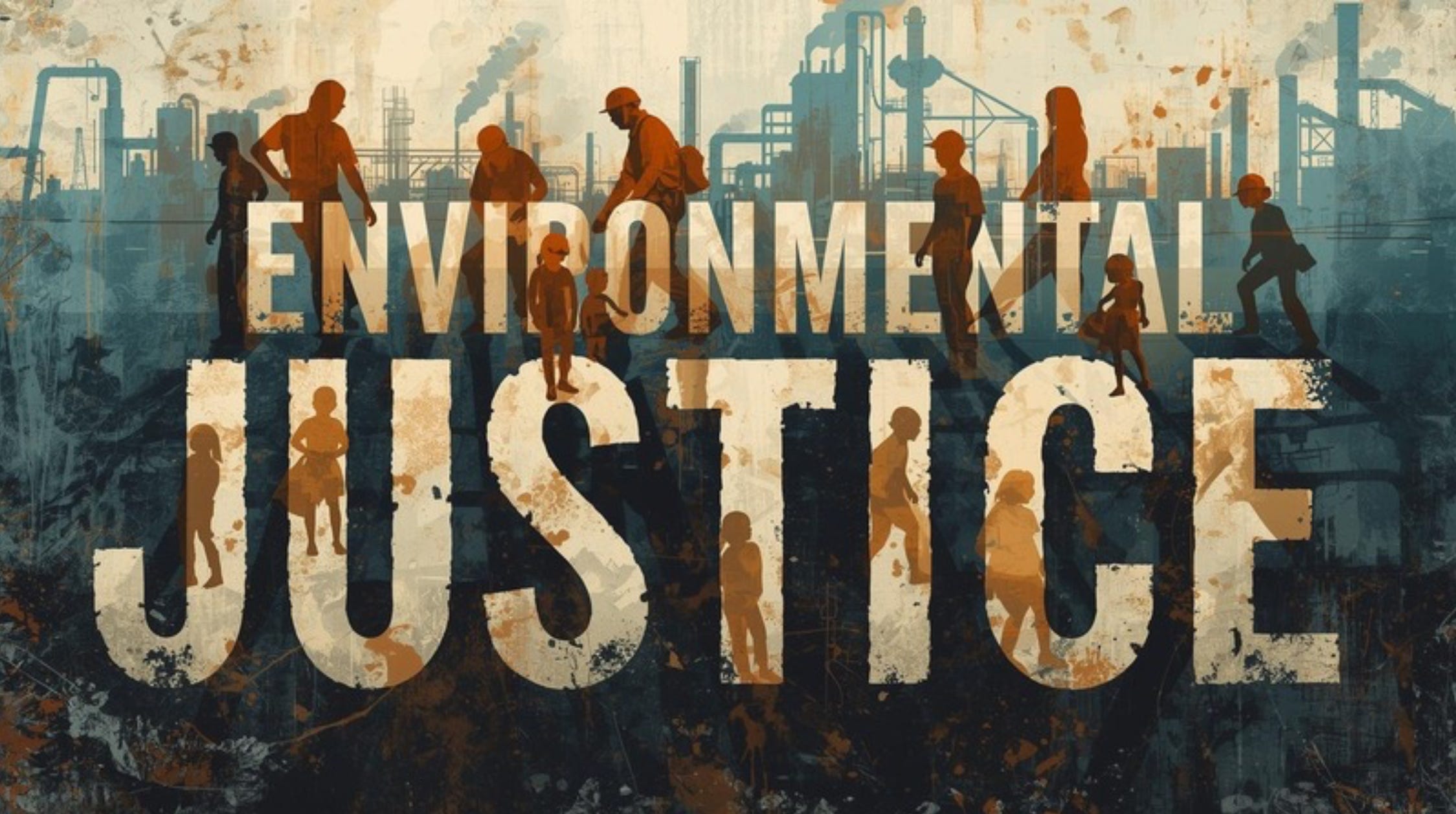
Everyone should have a fair share of opportunities to enjoy the benefits of a just and prosperous sustainability.
Unfortunately, throughout history this has too often not been the case. In our time this has come to be known as Environmental Justice.
It’s hard to know when environmental injustice began. Pollution is too much of something in the wrong place that causes harm. Ever since human beings started living in cities, and perhaps even before, the concentration of pollution and human waste has been a problem.
When pollution and environmental degradation are combined with prejudice, racism, and classism, so that those with less power, those deemed inferior or undesirable, bear a disproportionate burden, we have environmental injustice.
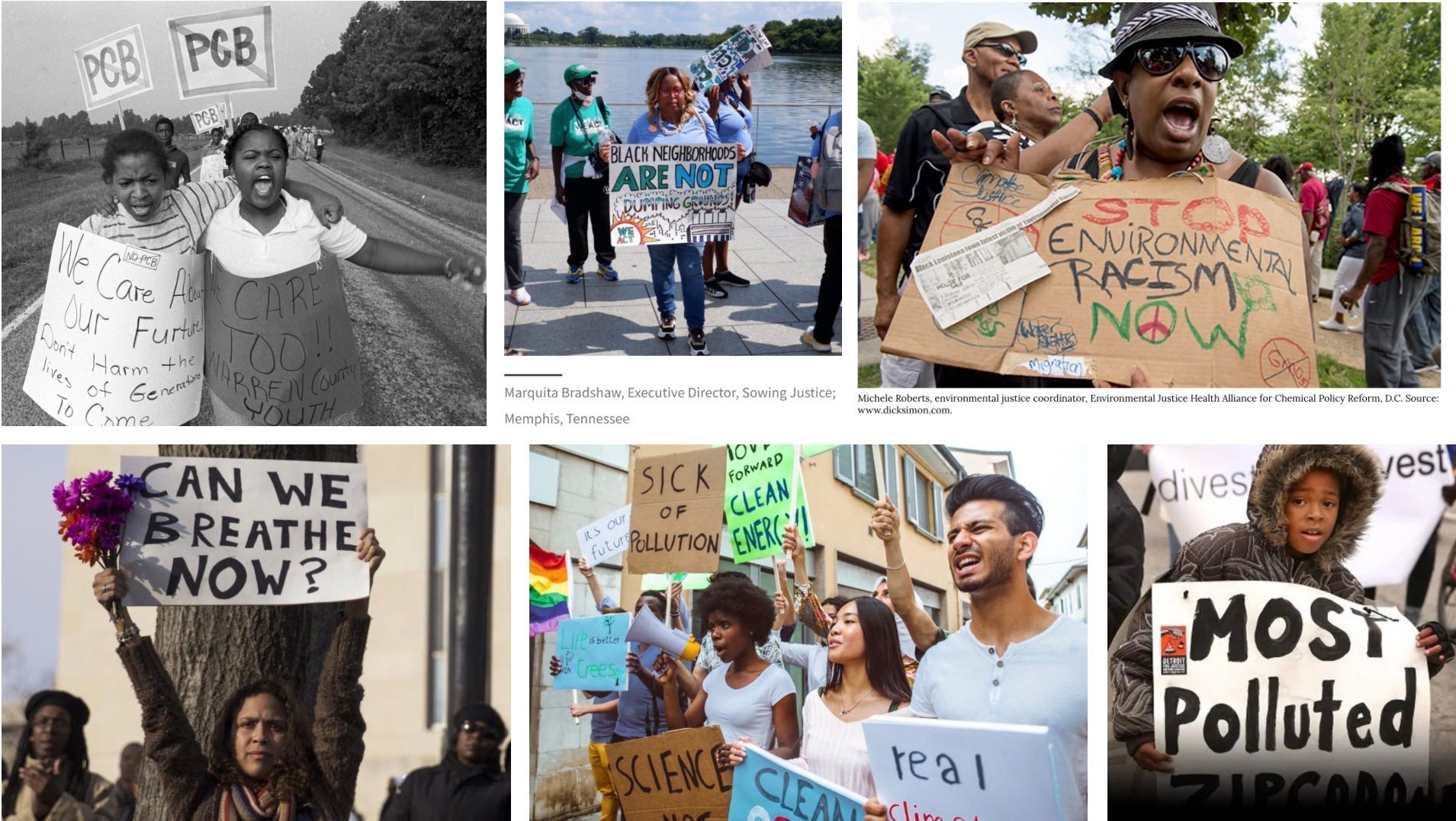
When these groups are forced to live in undesirable, unhealthy, and unsafe places due to climate impacts, or have no place left to go, or when pollution gets concentrated where they live, or environmental degradation diminishes or even destroys a way of life, we have environmental injustice, and the creation of what are now known as frontline communities.
When environmental policies, including climate policies, allow the dangerous concentration of certain kinds of pollution — e.g. carbon trading mechanisms that don’t clean up other pollutants — this creates what are called “sacrifice zones” for those living in fenceline communities close to polluting sources.
This is something justice cannot brook. Any trading schemes must be a part of a suite of policies that ensure sacrifice zones are not created; moreover, there must be compensation for past harm and policies requiring that these communities benefit from the solutions, such as good paying jobs and any necessary skills training needed to acquire them, and seed capital for local sustainable businesses.

That’s because justice is more than just saying no.
When we apply the three actions of justice to this subject — stopping bad stuff, setting wrong right, and making things better — we find that Environmental Justice is not simply the absence of the bad stuff.
It’s the presence of good stuff, in this case a safe, healthy, thriving, beautiful environment for everyone. That is the birthright of every person. It is also the presence of compensation for past harm.
Environmental injustice is not simply the presence of bad stuff and the creation of frontline and fenceline communities, it is the absence of the good stuff and opportunities we are all entitled to as human beings.
Thus, Environmental Justice, like all forms of justice, requires setting wrong right and making things better.

Unfortunately, in the United States, the birthplace of the Environmental Justice Movement, environmental racism has produced environmental injustice. For example, Black Americans, especially poor Black Americans, have borne a much higher burden of pollution because polluting sources (e.g. a power plant, a freeway) have been located near where they live, and toxic pollution has been dumped in their neighborhoods. Today this is the case for black, brown, and indigenous frontline communities.
A higer burden is also true for climate risk and climate impacts both in the US and around the world. Many live in poverty due to past injustices resulting from prejudice and oppression that continue today. They have been forced by poverty or continued oppression to live in unsafe places and marginal lands, and because of their lack of economic resources they are much more vulnerable to climate impacts.

The endangerment of such frontline communities is just plain wrong. For the Climate Movement, achieving justice means we must challenge racism and the unfair treatment of any group head on.
As we work to overcome climate change and create prosperous sustainability we have a chance to set things right and make things better and our future come faster. We must work to eliminate the bad stuff, compensate victims and survivors of past harm, and ensure that everyone has the opportunity to enjoy the good stuff. The benefits The Catalytic 4 creates must enhance the lives of everyone. And we must do so quickly, given that justice delayed is justice denied, as Dr. Martin Luther King reminded us in his Letter From Birmingham Jail.
Because a just world is what we hope for, every step we take towards justice creates hope. As such, striving together for justice we are the hope we’ve been waiting for. Ours is a time for regular folk to become heroes together. Join us!
If you are new here, check out our Intro Series, as well as other posts in this Hope & Justice Series. If you like this post, please “like,” comment, and share. And thanks for all you’re doing.